- Flooring
How to Choose Flooring for Montana’s Mudroom: Durable Options for Boots, Snowmelt, and Wet Paws
August 16, 2026
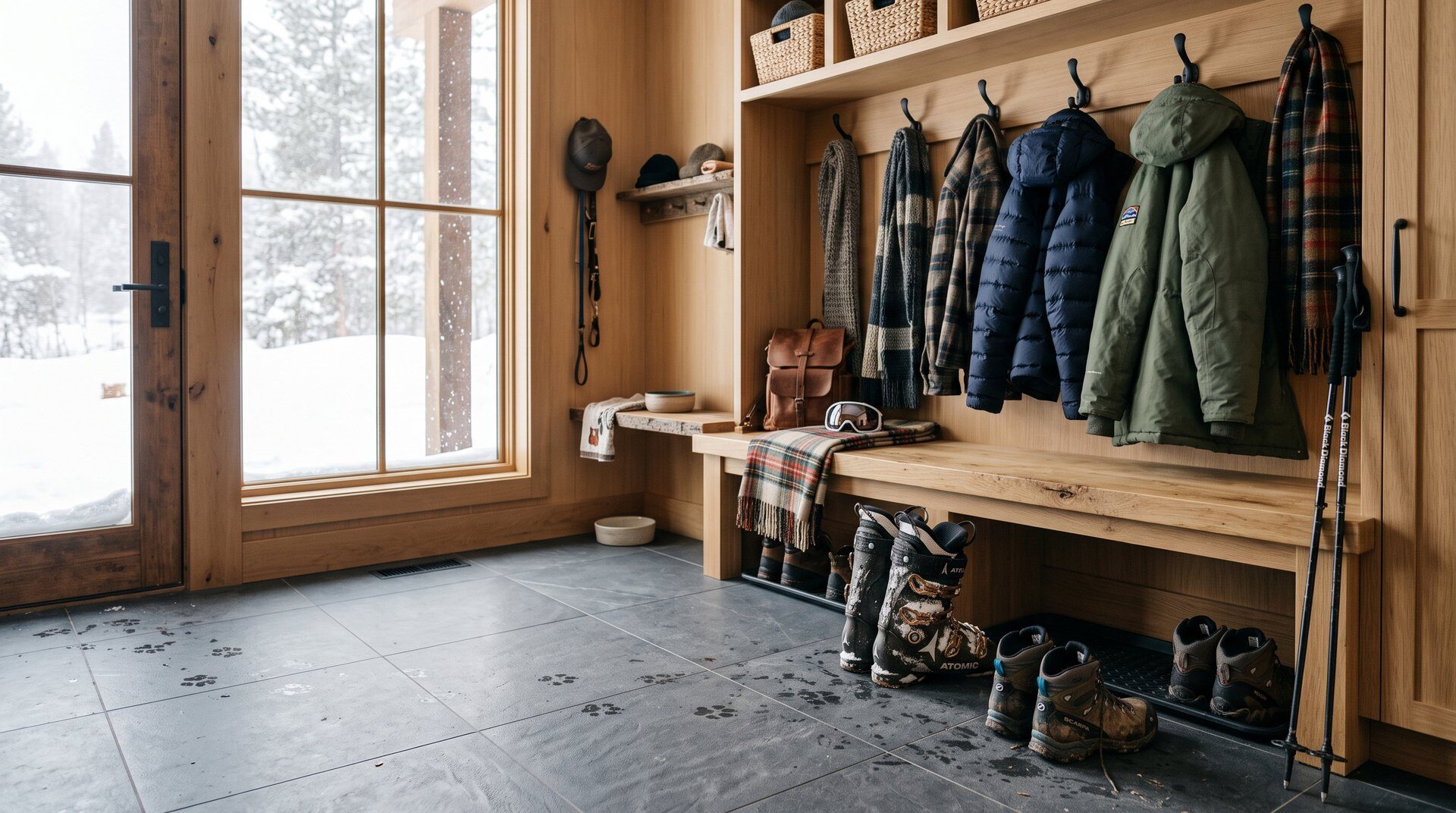
The mudroom is the most abused floor in any Montana home. From October through May, it absorbs wet ski boots, snowmelt laced with road salt, muddy hiking shoes, and whatever a wet dog decides to shake off at the door. Carpet in a Bozeman mudroom is not a design choice — it is a problem waiting to be discovered.
This guide covers what actually survives a Montana mudroom: how porcelain tile, SPC LVP, and sheet vinyl compare on traction, durability against chloride salt, and ease of cleaning after Bozeman’s mud season.
Stop by our Bozeman showroom at 1921 West Main Street or call (406) 587-5428 — a design specialist will walk you through the options. No appointment needed.
What Montana Mudroom Flooring Actually Faces
A Bozeman mudroom sees conditions that most flooring guides treat as edge cases. They are not edge cases here — they are every-day reality from October through late May.
Road salt infiltration. Bozeman’s roads are treated with chloride-based deicers through winter and into early spring. That salt comes in on boot soles and accumulates in porous surfaces and at seams. Chloride salts chemically degrade cement-based grout over multiple seasons, causing it to powder and spall at the surface and eventually crumble at joints. Salt solution also infiltrates LVP click-lock seams and can degrade joint adhesion over time. A mudroom floor that is not properly specified and sealed will show salt damage within two to three seasons.
Freeze-thaw cycling. A Bozeman mudroom connected to an exterior entry experiences temperatures that cycle through freezing multiple times per day during shoulder seasons. Any flooring with standing water in joints or seams during a freeze cycle experiences expansion stress at those points. The Tile Council of North America (TCNA) specifically rates tile products for freeze-thaw cycling — that rating matters for any mudroom with an exterior door.
Abrasion from grit. Bozeman’s access to Bridger Bowl and Story Hills trails means ski boot cleats, crampon marks, and fine silica grit are ground into mudroom surfaces from October through April. Any flooring with a soft wear layer degrades quickly under this abrasion pattern.
High-moisture traffic. Wet gear, dripping snow, and pet shakeoffs mean the mudroom floor sees direct liquid exposure that most other rooms never experience. The floor must be impervious to liquid at the surface and protected at every seam and joint.
Pro-Tip from the Pierce Flooring Bozeman Team: The single most common mudroom mistake we see in Bozeman homes is an LVP or SPC floor installed up to but not sealed at the exterior door threshold. Road salt solution — essentially brine — flows under that gap every time a wet boot crosses it. It works into the click-lock seam at the first plank and begins degrading the joint from below. A properly designed mudroom floor uses a sealed threshold strip that eliminates that gap entirely. It is a five-minute installation detail that prevents a multi-year problem.
The Best Mudroom Flooring Options for a Bozeman Home
Porcelain Tile — The Top Choice for Montana Mudrooms
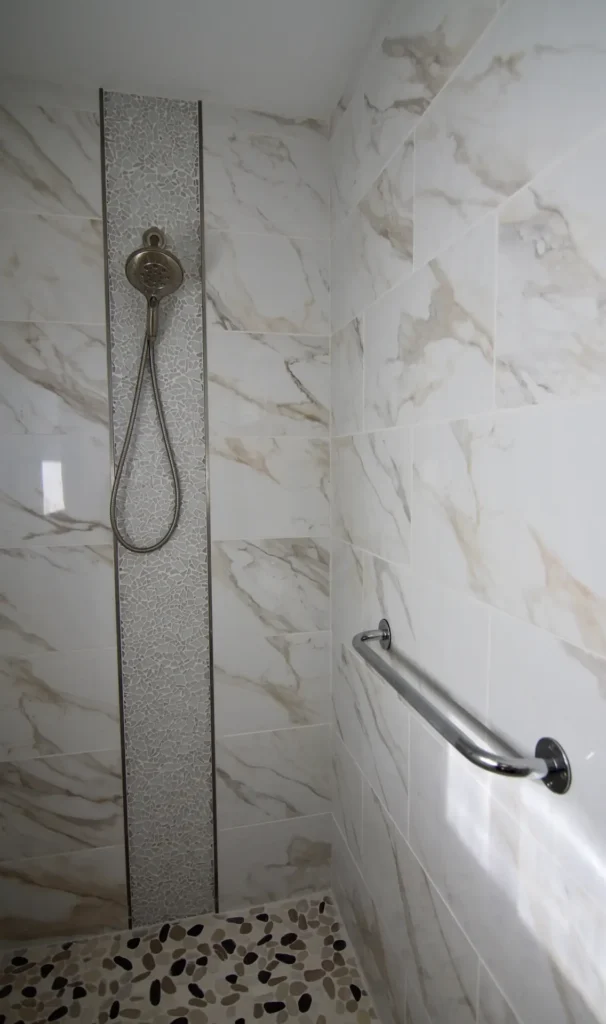
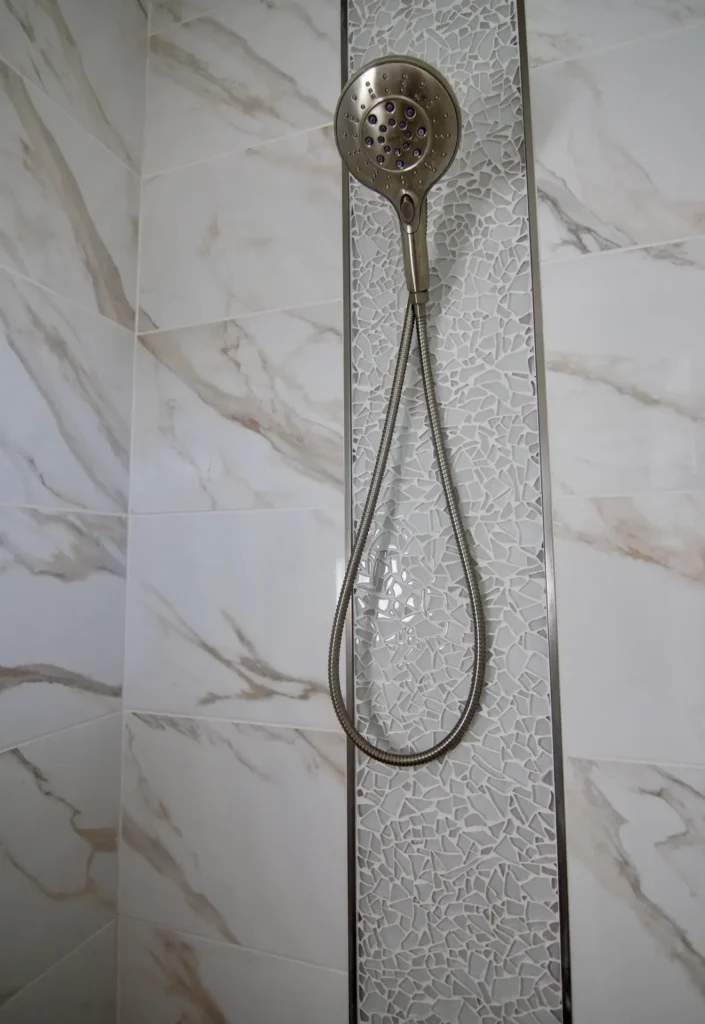
Porcelain tile’s water absorption rate below 0.5% per ANSI A137.1 means chloride salt solution cannot penetrate the tile body. It is scratch-proof under any boot or claw traffic Montana produces. Look for the freeze-thaw snowflake symbol on tile specifications — that rating covers the tile body’s resistance to thermal cycling. Confirm that your installer also specifies a polymer-modified mortar and epoxy grout, both of which handle freeze-thaw conditions without special note; unsealed cement grout is vulnerable to salt-accelerated freeze-thaw damage at the joint.
For a mudroom, traction is the first specification. A wet Dynamic COF (DCOF) above 0.42 per ANSI A326.3 is the minimum ANSI threshold for level interior wet areas — but for a mudroom with wet boots and pet traffic as standard conditions, target a DCOF of 0.60 or higher for meaningful slip resistance. Matte and textured porcelain finishes consistently achieve the higher threshold. Polished or high-gloss finishes typically do not.
Large-format tile (18×18 or larger) reduces grout lines, which reduces the surface area available for salt infiltration. For large-format tile in a mudroom entry — where boot-heel impact loading is heavier than in a bathroom — back-buttering is required to achieve 95% mortar coverage. A tile with a void behind it will crack under repeated impact regardless of the tile body’s strength.
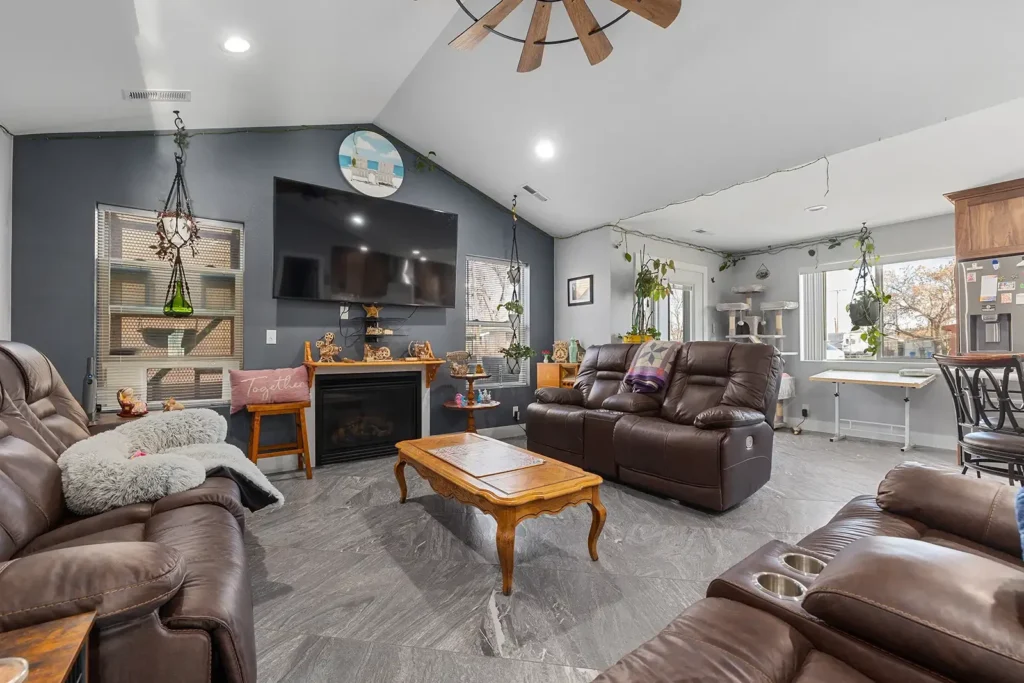
For a mudroom with significant road salt exposure, large-format matte porcelain with epoxy grout is the most durable combination available. Emser, MSI, and Florida Tile all produce freeze-thaw rated matte porcelain collections at the Pierce Flooring Bozeman showroom that meet this specification. The grout choice matters as much as the tile: epoxy grout is not porous, does not require sealing, and is resistant to chloride salt degradation. For a mudroom, it is the correct specification rather than a premium upgrade.
SPC LVP — The Warm-Underfoot Option for Adjacent Zones
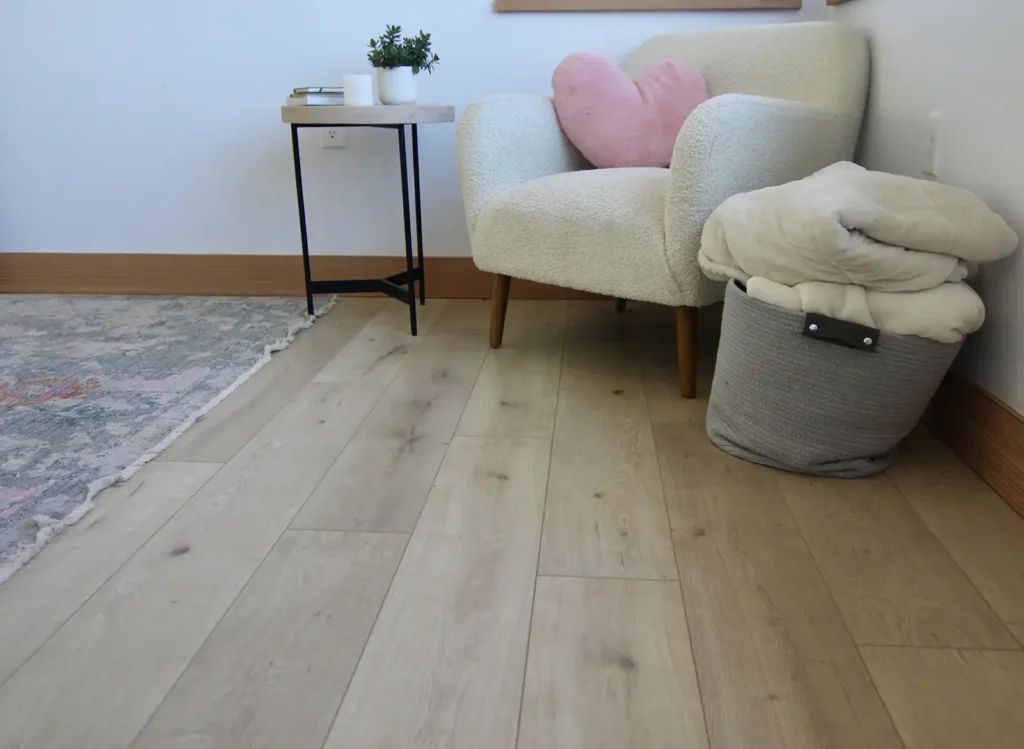
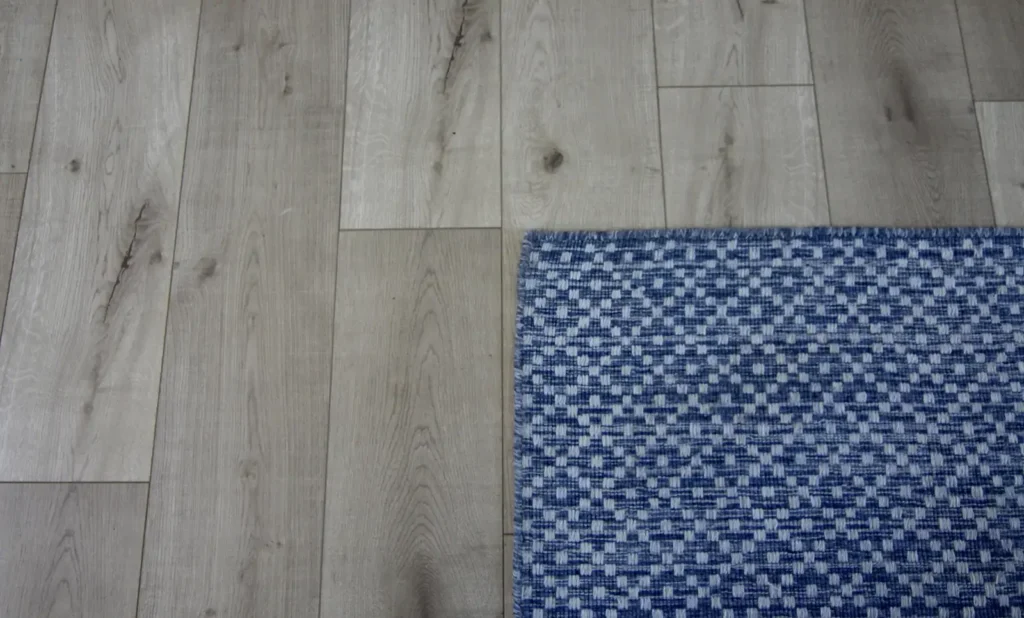
SPC rigid-core LVP is a strong choice for the transition zone between the mudroom’s hardest-working entry point and the main living area. It is warmer underfoot than tile, easier on dropped gear, and performs well in the lower-moisture conditions of an interior transition zone.
For the primary exterior-door zone — maximum boot and pet traffic — SPC has one meaningful limitation. The click-lock seam at the threshold is the point of maximum salt exposure. Without a sealed transition strip, road salt solution infiltrates that first seam every time wet boots cross it. That failure mode is preventable with correct installation, but tile is generally the more reliable specification for the highest-exposure zone. For a full comparison of mudroom traction specifications and wet paw performance, see our pet flooring guide for Montana homes.
Where SPC excels: locker zones, bench areas, and adjacent hallways where traffic is lighter and direct liquid exposure is secondary. A Bozeman mudroom designed with tile at the exterior-door zone and SPC LVP in the transition areas gets the best of both materials. Mohawk and Cali both produce SPC collections with appropriate wear-layer thickness and COF ratings for Bozeman mudroom secondary zones.
Sheet Vinyl — The Practical Budget Option
Sheet vinyl is the lowest-cost mudroom flooring option that is still genuinely waterproof. Its single-sheet installation eliminates seams in most rooms, removing the primary salt infiltration point. It is less scratch-resistant than tile or SPC and will show abrasion from heavy boot traffic sooner — but for a homeowner who needs to replace failed mudroom carpet immediately on a budget, it is a meaningful upgrade. The Resilient Floor Covering Institute (RFCI) recommends proper seam and threshold sealing for any sheet vinyl in high-moisture applications — those two steps are critical in a Montana mudroom.
What Does Not Work in a Bozeman Mudroom
Carpet does not survive a Montana mudroom — the combination of wet traffic, road salt, and abrasive grit ruins it faster than almost any other residential application. Solid and engineered hardwood are wrong for the primary mudroom zone: wood is hygroscopic and responds to the moisture variation a mudroom sees by expanding and contracting, which damages finish coatings and opens seams. Standard laminate is not appropriate regardless of waterproof marketing claims — the core is vulnerable to the moisture infiltration that mudroom seams experience.
“We just added new wood flooring and remodeled our kitchen. We purchased the flooring and the back splash tile from this business, and I love what we purchased, I enjoyed my relationship with Jeff, and the work was done when it was scheduled to be done.”
B. Miller — Tile and Wood Flooring
Design Details That Protect Your Mudroom Floor
Choosing the right material is necessary but not sufficient. The installation details around that material determine whether it actually survives.
Threshold sealing. The transition between an exterior door and the mudroom floor is the most critical detail in a Montana mudroom installation. A properly sealed threshold strip with no gap between the door bottom sweep and the floor surface eliminates the pathway for road salt solution to infiltrate seams and joints.
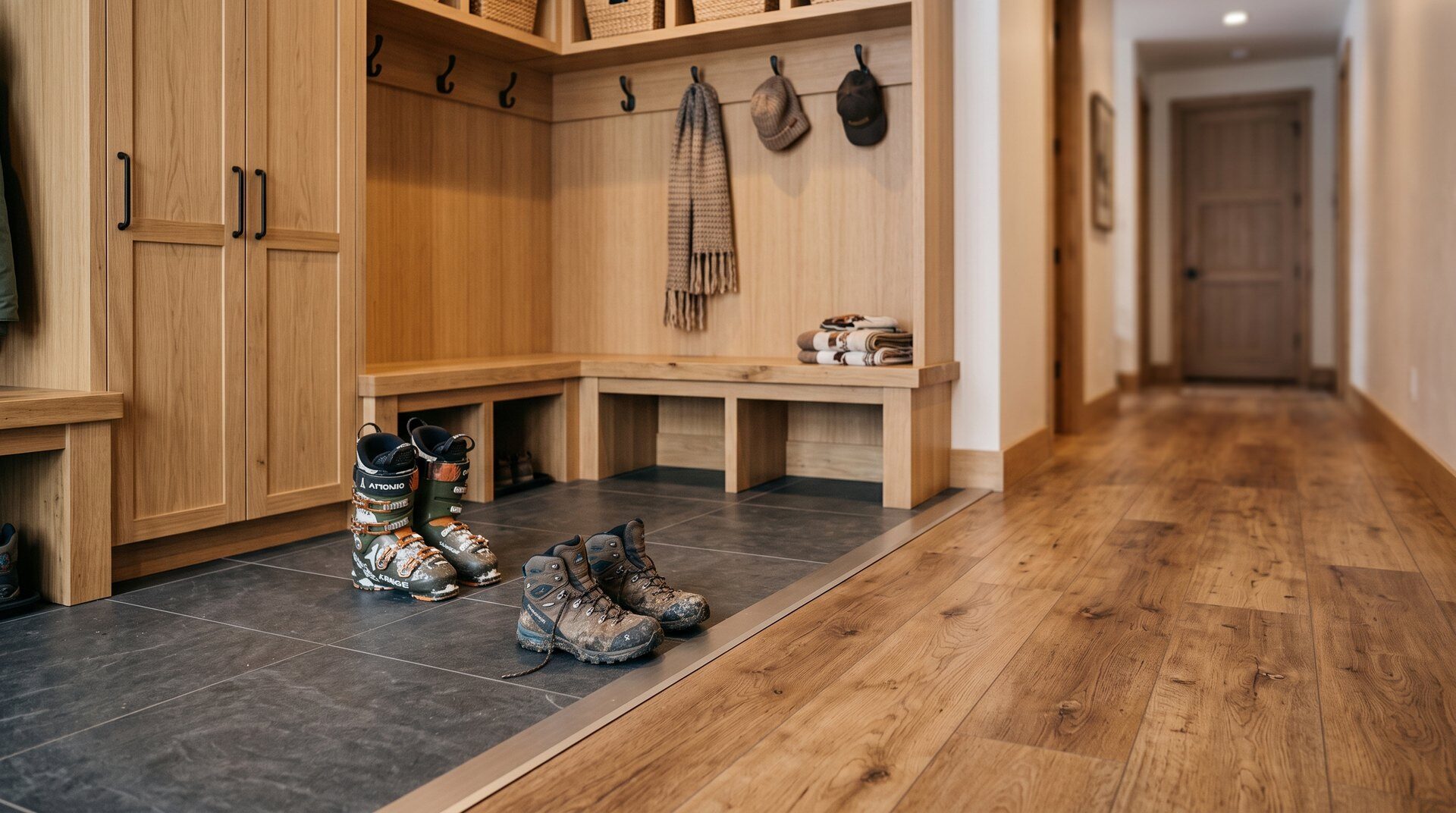
Transition strips. The transition between mudroom tile and an adjacent LVP or hardwood floor should use a T-molding or reducer strip that covers both floor edges without creating a gap. Open edges at flooring transitions are salt infiltration points in a mudroom application.
Coved base and wall tile. In high-traffic mudroom zones, installing base tile coved up the wall 4-6 inches eliminates the wall-floor joint where water, mud, and salt accumulate — the same approach commercial kitchens use for the same reason. For the detailed installation specifications that apply equally to bathroom and mudroom tile projects, see our Bozeman bathroom tile and installation guide.
Drain consideration. For new mudroom additions or substantial remodels, a floor drain in the primary zone is the most practical long-term solution for meltwater and wet pet management. It requires planning during the design phase but eliminates the standing-water problem that stresses every flooring material.
Maintaining Your Bozeman Mudroom Floor Through the Seasons
For porcelain tile with epoxy grout, the maintenance routine is low: sweep regularly during mud season, mop with a pH-neutral cleaner, inspect the threshold seal annually. During the salt season (November through April), add a once-weekly wet mop with clean water to rinse chloride residue from grout joints before it can accumulate and accelerate degradation. Epoxy grout does not require annual sealing.
For porcelain tile with cement-based grout, apply a penetrating sealer in early fall before the salt season begins and again in late spring after the season ends. Two applications per year in a Montana mudroom are justified by the chloride exposure. Without consistent sealing, cement grout in a Bozeman mudroom degrades noticeably within two to three seasons.
For SPC LVP in secondary mudroom zones, dry sweep daily during mud season to remove abrasive grit before it is ground into the wear layer. Damp mop only — no standing water, no steam mops. Inspect the threshold seal annually and address any gap before salt season begins.
For sheet vinyl, the threshold and seam seals are the annual maintenance focus. Any lifting or separation at the perimeter should be re-adhered promptly — in a Montana mudroom, a lifted edge is a salt infiltration pathway within days.
Frequently Asked Questions
What is the best flooring for a Montana mudroom?
Large-format matte porcelain tile rated for freeze-thaw cycling, with a target DCOF of 0.60 or higher and epoxy grout, is the most durable mudroom flooring for Bozeman and the broader Montana market. It is impervious to road salt, scratch-proof under boot and pet traffic, and requires minimal maintenance. For adjacent transition areas, SPC LVP with a sealed threshold strip is a warm-underfoot complement to the tile zone.
Can you use LVP in a Bozeman mudroom?
Yes, with proper installation details. The key vulnerability for LVP in a Montana mudroom is the exterior-door threshold — road salt solution infiltrates the first click-lock seam if the threshold is not properly sealed. SPC LVP with a sealed transition strip performs well in secondary mudroom zones (locker areas, bench zones, adjacent hallways). For the primary exterior-door zone with maximum traffic and salt exposure, porcelain tile is generally the more reliable specification.
What COF rating do I need for mudroom tile in Bozeman?
ANSI A326.3 specifies a minimum wet DCOF of 0.42 for level interior wet areas. For a mudroom where wet boots and pet traffic are the standard condition rather than the exception, target a DCOF of 0.60 or higher for meaningful slip resistance. Matte and textured porcelain finishes consistently achieve this higher threshold. Always confirm the specific product’s wet DCOF rating before specifying — it is a safety specification, not an aesthetic one.
Does road salt damage mudroom flooring?
Yes. Chloride salts chemically degrade cement-based grout over multiple seasons, causing it to powder and spall at the surface and crumble at joints. Salt solution also infiltrates LVP click-lock seams and can degrade joint adhesion over time. The correct countermeasures are: epoxy grout for tile installations (not porous, not salt-reactive), proper threshold sealing to prevent salt solution from entering seams, and annual grout sealing for any cement-based grout applications.
Should I use epoxy grout in my mudroom?
Yes. For a Bozeman mudroom with significant road salt exposure, epoxy grout is the correct specification rather than a premium upgrade. It is not porous, does not require sealing, and is resistant to chloride salt degradation. The installation is more demanding — epoxy grout sets faster and requires precise timing — but the long-term performance difference in a Montana mudroom is substantial. For full epoxy grout installation guidance, see our bathroom tile guide which covers the same specifications.
Ready to Build a Bozeman Mudroom That Survives Montana?
A mudroom floor that fails in the first two seasons is not a flooring problem — it is a specification problem. The right materials, the right installation details, and the right grout choice produce a floor that handles everything a Bozeman winter delivers without asking for anything beyond a sweep and a mop.
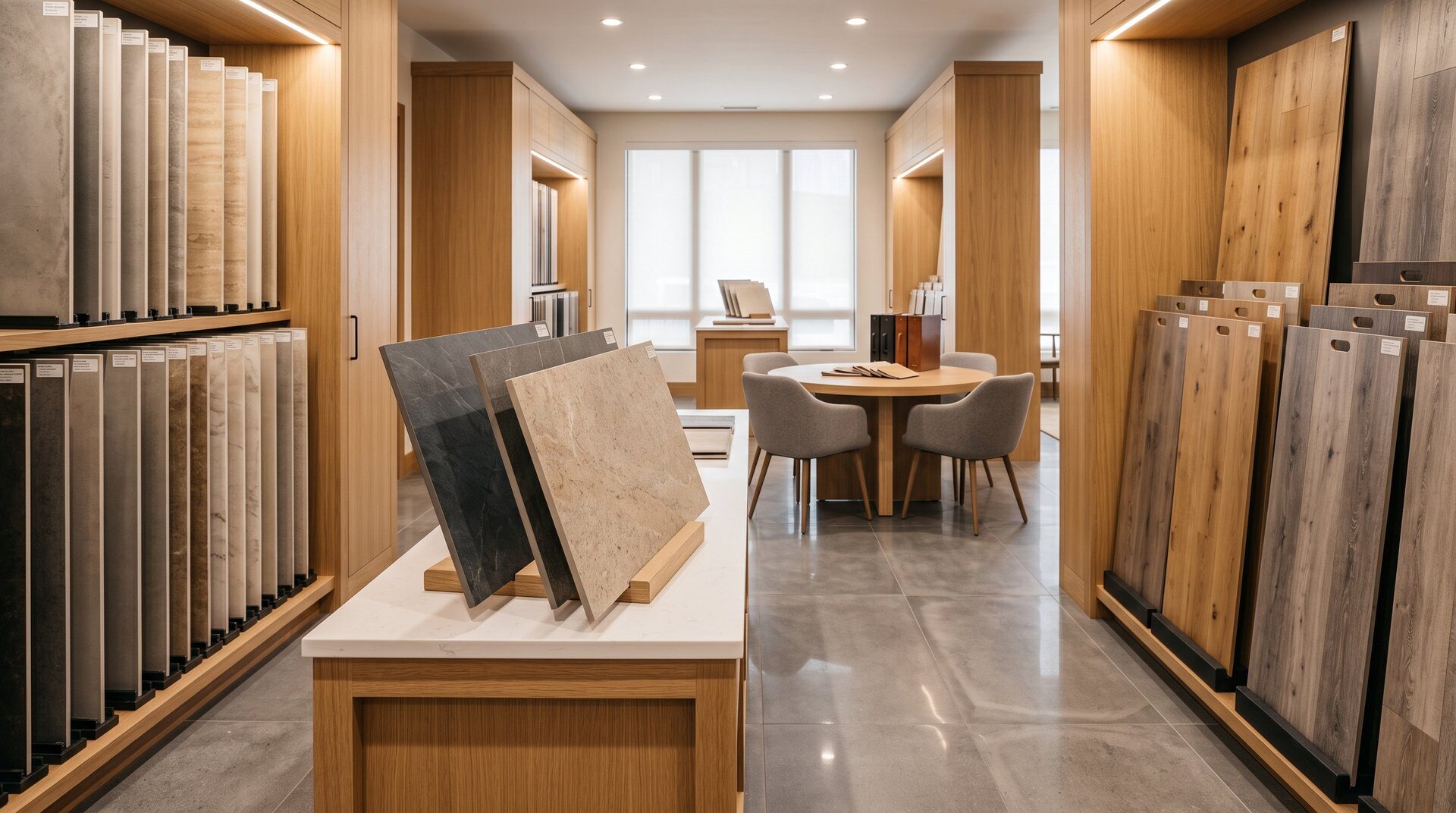
The Pierce Flooring Bozeman team on West Main Street works through mudroom specifications as part of every free design consultation. Come see the Emser, MSI, and Florida Tile freeze-thaw rated matte porcelain collections alongside Mohawk and Cali SPC options, and let a specialist walk you through the threshold and grout details that make the difference in Montana. Before you visit, use our Roomvo Room Visualizer to preview flooring options in your space.
Pierce Flooring & Cabinet Design Center — Bozeman
1921 West Main Street, Bozeman, MT 59718
(406) 587-5428
Monday through Friday, 8 AM to 6 PM. Saturday, 9 AM to 5 PM.
Browse tile and stone | Browse LVP and SPC | Schedule a free design consultation
You Might Also Like
-
- Flooring
October 7, 2026
Commercial Flooring in Billings: What Property Managers and Business Owners Need to Know
-
- Flooring
September 16, 2026
Flooring for New Homes in Ennis and the Madison Valley: What Builders and Homeowners Need to Know
-
- Flooring
August 25, 2026
What Does Waterproof Flooring Actually Mean? A Montana Homeowner’s Guide to LVP Claims
Ready to Transform Your Home?
Contact Us Today to Get Started on Your Dream Space