- Tile & Stone
Tile Flooring for Bozeman Bathrooms: What to Know About Radiant Heat, Grout, and Montana Winters
July 23, 2026
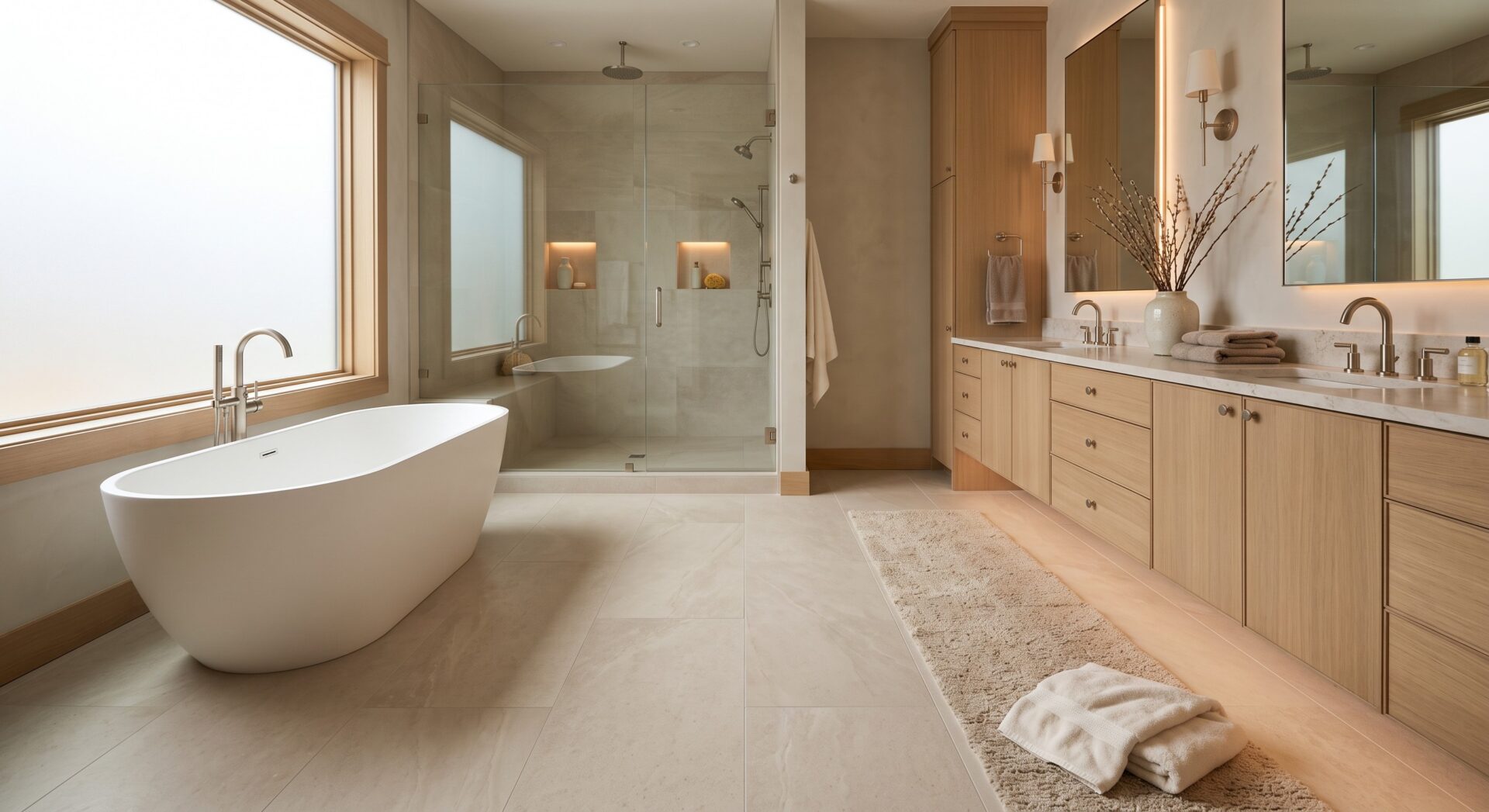
Cracked grout lines in a bathroom floor are almost always preventable. In Bozeman, the most common cause is not product failure — it is an installation that did not account for conditions specific to this climate, this elevation, and increasingly, in-floor radiant heat systems.
Bozeman’s new-construction boom in Baxter Meadows, Flanders Mill, and South 19th has produced hundreds of primary bathrooms with heated tile floors. Done right, a radiant tile floor in a Bozeman bathroom is one of the best flooring investments a homeowner can make. Done without understanding the local variables, it becomes a regrouting project within three years. This guide covers what actually matters.
Stop by our Bozeman showroom at 1921 West Main Street for a free design consultation with a tile specialist, or call (406) 587-5428.
Why Bozeman Bathrooms Create Specific Tile Challenges
At 4,800 feet, Bozeman’s indoor environment from November through March runs significantly drier than most tiling guides assume. Without active humidification, interior relative humidity drops below 30% for weeks at a time. That dryness affects two things that matter for bathroom tile: grout curing and ongoing movement at grout joints.
Portland cement grout requires moisture to complete its chemical cure. In a Bozeman winter, dry air pulls moisture out of fresh grout faster than the curing reaction can complete. The result is grout that looks finished but has not reached full compressive strength — more porous, more susceptible to staining, and more likely to crack when the season changes. The fix is straightforward: slow the cure. Keep the bathroom door closed, mist the grout lightly for the first 72 hours, and do not run the radiant system until the grout has fully cured.
The second challenge is thermal cycling. A tile floor over radiant heat expands when the heat cycles on and contracts when it cycles off. In Bozeman’s wide temperature swings between morning and evening, that cycling is more pronounced than in a temperate climate. Properly designed movement joints — soft joints at perimeter walls and field interruptions — absorb that movement. Skipping them is the most common installation shortcut, and it shows up as cracks within the first heating season. Movement joints must be filled with flexible sanded caulk matched to the grout color, or a flexible polyurethane sealant — never with grout, which has no flexibility and will crack under thermal cycling.
Pro-Tip from the Pierce Flooring Bozeman Team: We see more grout failures in Bozeman bathrooms from the first winter than from any other cause. The pattern is almost always the same: tile installed in fall, grout rushed in dry conditions, radiant system turned up fast before the grout fully cured. We now tell every radiant-heat bathroom customer to plan for 7 days before the system goes back to operating temperature. That one protocol change eliminates most of the callbacks we used to see.
Porcelain vs. Ceramic: The Right Specification for a Bozeman Bathroom
Porcelain for Primary Bathrooms With Radiant Heat
Porcelain tile is fired at higher temperatures and to a denser result than ceramic. Its water absorption rate is below 0.5% per ANSI A137.1 standards — essentially impervious. For a Bozeman bathroom with a radiant system, that density matters in two ways. First, porcelain conducts heat more efficiently than ceramic, so the radiant system works less hard to reach set temperature. Second, porcelain’s low absorption rate means it is less affected by the moisture cycling a bathroom environment creates, reducing stress on the bond between tile and mortar.
The Tile Council of North America (TCNA) classifies porcelain as having a water absorption rate of 0.5% or less — the threshold most radiant-heat tile specifications require. Emser, MSI, Florida Tile, and Glazzio all produce porcelain collections that meet this standard and are carried at the Pierce Flooring Bozeman showroom.
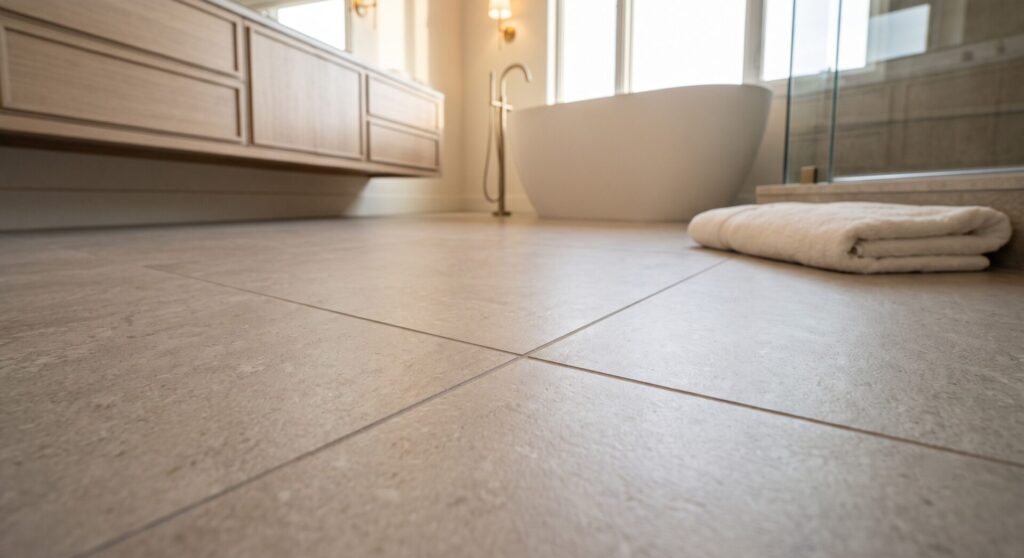
Large-format porcelain — 24×24 or larger — is increasingly popular in Bozeman new construction for its minimal grout-line look. It performs well over radiant heat but demands near-perfect subfloor flatness: TCNA standards specify no more than 1/8-inch variation over 10 feet for large-format tile. In a new-construction slab that is usually achievable; in a bathroom remodel over an existing subfloor it often requires leveling compound first.
Ceramic for Secondary Bathrooms
American Olean ceramic tile is a good choice for secondary bathrooms and powder rooms without radiant heat. Ceramic is less dense than porcelain, absorbs more moisture, and conducts heat less efficiently — which matters less without a radiant system and with lighter daily traffic. For a primary bathroom with radiant heat, porcelain is the correct specification. For a secondary bath, ceramic is a capable and often more affordable option.
Natural Stone — High Performance With Specific Requirements
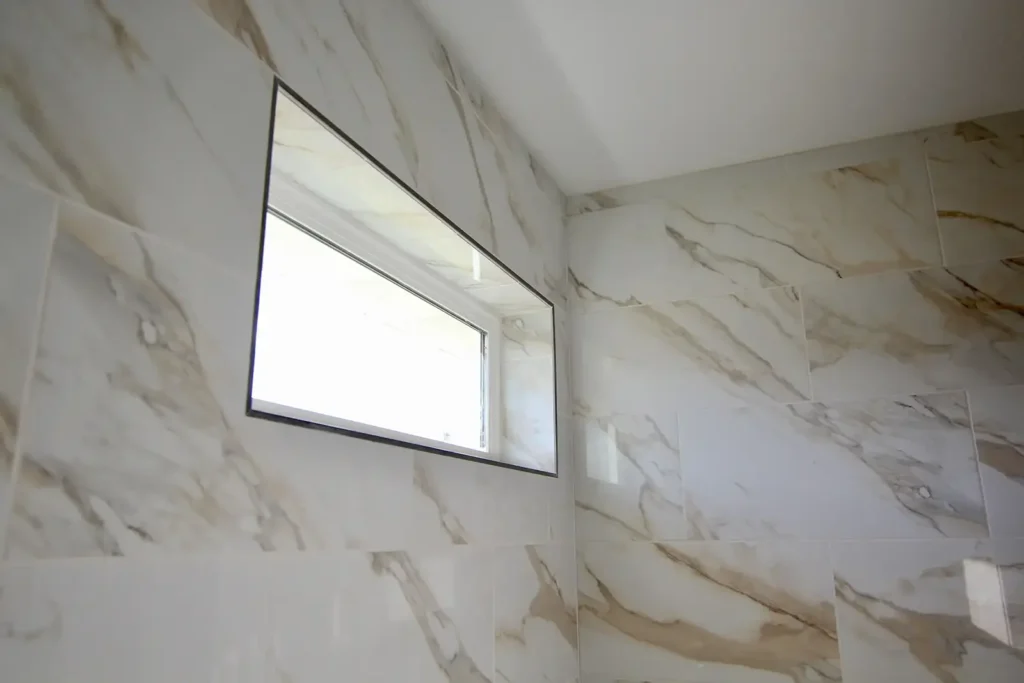
Natural stone — marble, travertine, slate — conducts heat exceptionally well and looks genuinely different from any ceramic or porcelain product. The maintenance requirements are more demanding: stone is porous and requires sealing at installation and annually thereafter. For stone applications where porosity is a concern, epoxy grout is recommended.
The Natural Stone Institute (NSI) maintains installation standards for stone over radiant heat. Most stone products specify a maximum subfloor surface temperature of 80°F — above that threshold, thermal expansion in the adhesive bond can stress the mortar. Confirm your system’s operating temperature against the specific stone product’s spec sheet before ordering.
Choosing the Right Grout for Bozeman’s Climate
Epoxy Grout — The Most Durable Option
Epoxy grout is the most reliable choice for a Bozeman primary bathroom with radiant heat. It does not require sealing, is not porous, and handles thermal cycling without cracking the way cement-based grout can. According to the National Tile Contractors Association (NTCA), epoxy grout is specifically recommended for high-moisture environments and installations over heating systems.
The tradeoffs are installation difficulty and cleanup timing. Epoxy grout has a shorter working time than cement grout and in Bozeman’s dry winter air sets faster than in humid climates — the installer works in smaller sections to compensate. More critically, epoxy grout haze must be cleaned from the tile surface immediately after application. If it sets overnight, it bonds permanently to the tile surface and cannot be removed without damaging the tile. An experienced installer manages both constraints without issue.
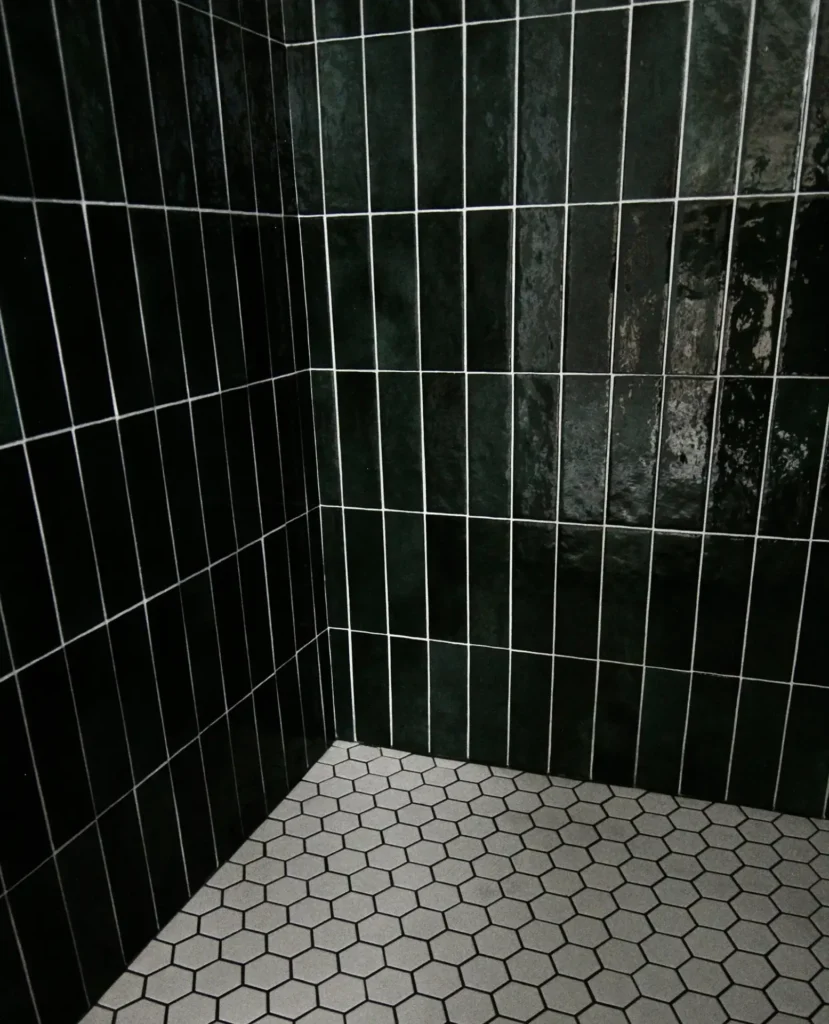
In bathrooms with radiant heat, thermal cycling moves moisture repeatedly through grout joints. Light-colored grout shows efflorescence — white mineral deposits from moisture migration — more visibly than medium or charcoal tones. Grout color is a practical maintenance decision as much as an aesthetic one.
Cement Grout With Bozeman Winter Protocol
For homeowners who prefer cement-based grout for its wider color range and lower cost, the protocol matters in this climate:
Keep the bathroom door closed for 72 hours after grouting.
Mist the grout surface lightly twice daily for the first three days.
Keep the radiant system at 65°F or below until the grout has cured for seven full days.
Apply a quality penetrating sealer once fully cured.
These steps compensate for Bozeman’s low-humidity installation environment and produce a cement grout result that performs comparably to the same product installed in a temperate climate.
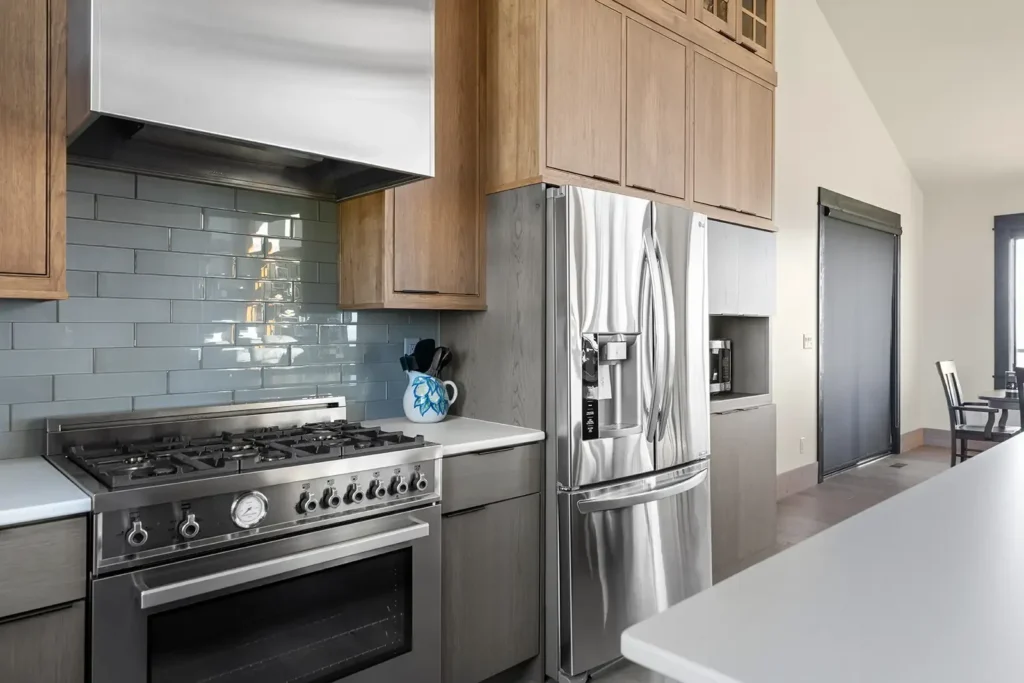
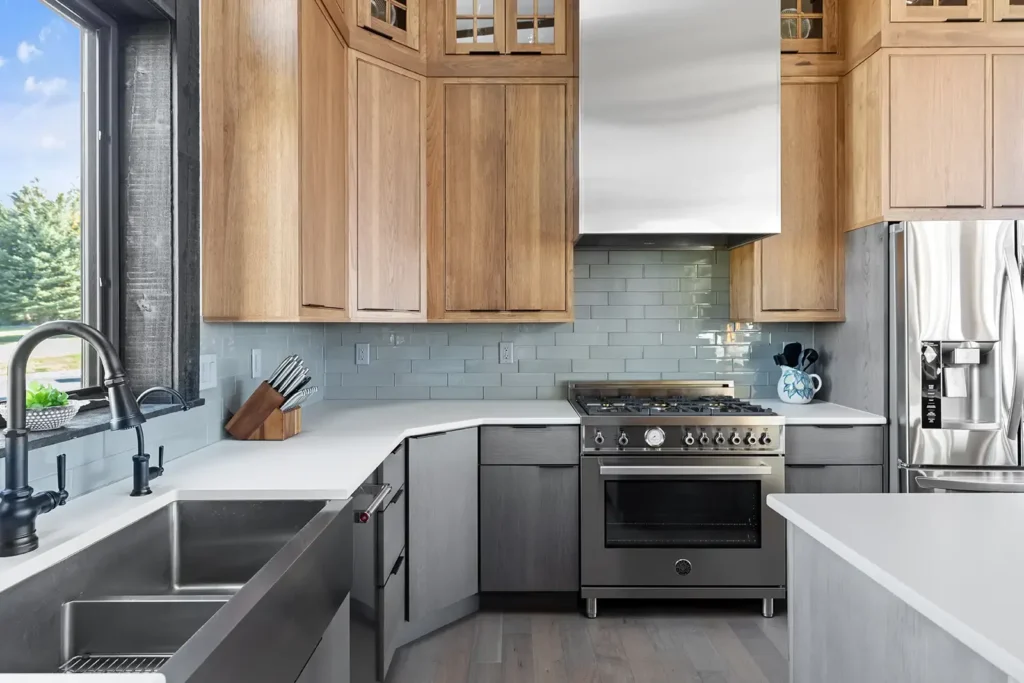
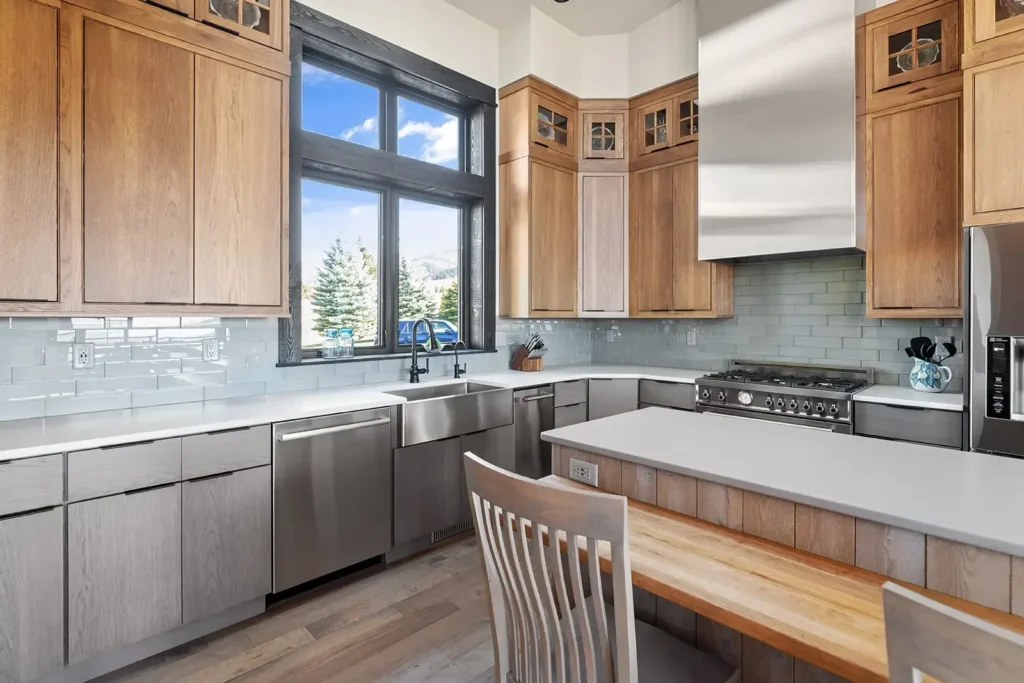
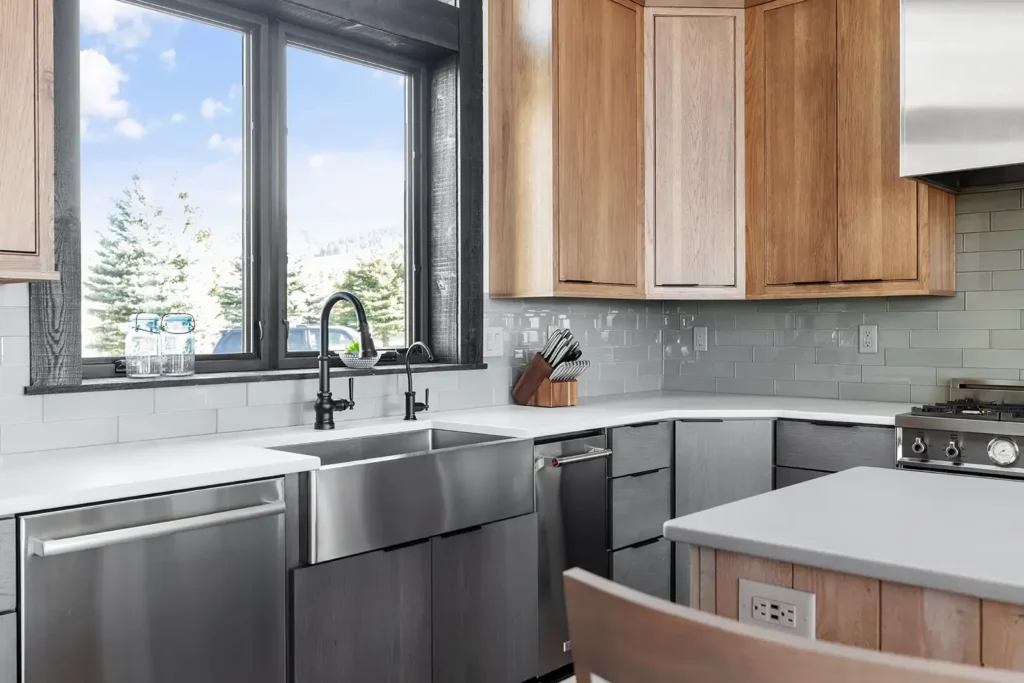
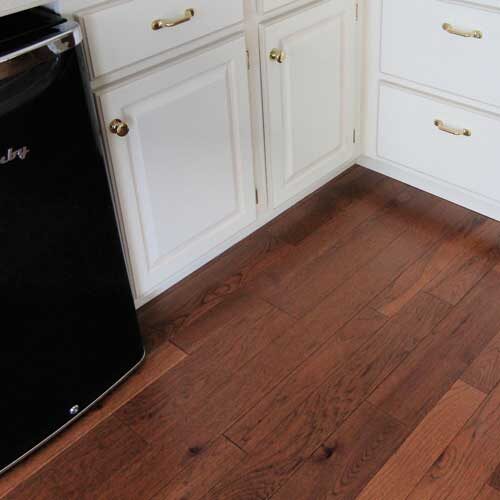
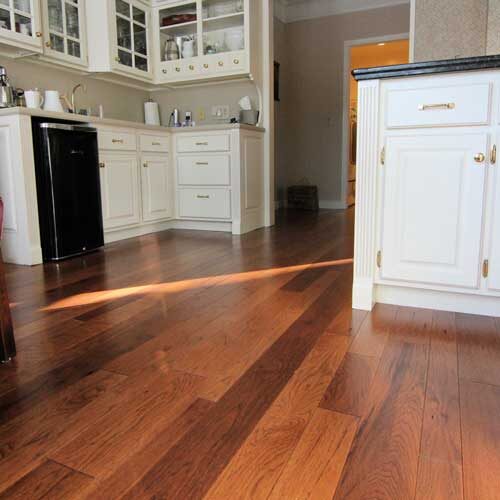
“We just added new wood flooring and remodeled our kitchen. We purchased the flooring and the back splash tile from this business, and I love what we purchased, I enjoyed my relationship with Jeff, and the work was done when it was scheduled to be done.”
B. Miller — Wood Flooring and Backsplash Tile
What the Tile Installation Phase Requires Over Radiant Heat
Before Installation Starts
Run the radiant system to equilibrium for at least two weeks before tile installation begins. This brings the slab to its operational moisture content so the mortar bonds to a stable surface rather than one that will later shrink. Lower the system to 65°F two days before the tile crew arrives and keep it there throughout installation.
What Proper Installation Looks Like
Use a polymer-modified thin-set mortar rated for radiant heat applications — confirm that the thin-set carries a temperature rating that matches or exceeds your system’s peak output, as standard polymer-modified thin-set may not be rated for some Bozeman hydronic systems.
The TCNA specifies minimum 95% mortar coverage for all wet-area tile applications, including radiant heat bathrooms. Coverage at 95% means the tile is fully bonded with no voids where thermal expansion can lever the tile off the slab. For large-format tile (24×24 and larger), back-buttering — applying thin-set to the back of the tile in addition to the substrate — is required to achieve that coverage. Without it, coverage typically falls to 70-80% even with a skilled installer.
The TCNA Handbook also recommends an anti-fracture uncoupling membrane for tile over radiant heat slabs — Schluter DITRA is the most widely specified product for this application. It is particularly important in Bozeman new-construction homes where the slab may still be completing its cure cycle. For further guidance on moisture management in your installation, see our guide to floors that handle moisture.
The Protocol After the Grout Goes Down
Follow the 7-day grout cure protocol before ramping the system back to operating temperature. Ramp gradually — no more than 5°F per day — to allow mortar and grout to acclimate to operating conditions. Thermal shock from a fast ramp is one of the most common causes of early grout and adhesive failure in Bozeman bathroom remodels.
Choosing the Right Installer for a Bozeman Bathroom Tile Project
A tile installation over radiant heat is more demanding than a standard bathroom floor. Ask any installer these questions before committing.
Do they specify a thin-set mortar with a confirmed temperature rating for your system’s output? Standard polymer-modified thin-set and radiant-rated thin-set are not the same product. An installer who does not ask about your system’s operating temperature likely does not distinguish between them.
Do they install movement joints at all perimeter walls and field interruptions, filled with flexible caulk rather than grout? This is non-negotiable for a radiant tile floor in Bozeman’s thermally active climate. If the answer is vague, keep asking.
Do they follow the pre-installation heat commissioning protocol and the post-grout cure wait before ramp-up? These two protocols prevent the majority of early failures. An installer who is unfamiliar with them has not done many Bozeman radiant-heat tile projects.
The Pierce Flooring Bozeman team carries Emser, MSI, Florida Tile, Glazzio, and American Olean tile collections and includes a free design consultation as part of every project quote. The Pierce Promise covers installation errors with a one-year warranty. Pierce Flooring has served Montana since 1924. For buyers also considering LVP or engineered hardwood for other rooms in the same project, see our Bozeman flooring comparison guide.
Frequently Asked Questions
What is the best tile for a bathroom with radiant heat in Bozeman?
Large-format porcelain tile rated for radiant heat is the top choice for Bozeman primary bathrooms. Porcelain’s water absorption rate below 0.5% (ANSI A137.1) and high thermal conductivity make it the most efficient and durable choice over a radiant system. Emser, MSI, Florida Tile, and Glazzio all produce collections well-suited to Bozeman conditions. Natural stone is an option at the high end with specific adhesive and maximum-temperature requirements.
Why does grout crack in Bozeman bathrooms?
The most common causes are low-humidity installation conditions that accelerate moisture loss during Portland cement grout curing, insufficient movement joints at perimeter walls and field breaks, and radiant systems ramped up too fast after installation. All three are preventable with proper protocol. Epoxy grout eliminates moisture-dependent curing entirely and is the most reliable long-term solution for a Bozeman bathroom with radiant heat.
Should I use porcelain or ceramic tile in my Bozeman bathroom?
For a primary bathroom with in-floor radiant heat, porcelain is the correct specification. Its water absorption rate below 0.5% meets the threshold most radiant-heat tile specifications require, and its density conducts heat more efficiently than ceramic. For a secondary bathroom or powder room without radiant heat, ceramic is a capable and often more affordable option.
How long should I wait before turning on radiant heat after tiling a Bozeman bathroom?
Seven days minimum after grouting before ramping the system back to operating temperature, increasing no more than 5°F per day. In Bozeman’s dry winter air, Portland cement grout cures more slowly than in temperate climates — rushing the ramp-up is the most common cause of early grout failure in the Gallatin Valley. Epoxy grout reduces this risk considerably since it does not rely on moisture for curing.
Does large-format tile work over radiant heat in Bozeman?
Yes, with proper preparation. Large-format tile (24×24 or larger) requires subfloor flatness within 1/8 inch over 10 feet per TCNA standards, a polymer-modified thin-set rated for radiant heat, back-buttering to achieve 95% mortar coverage, and movement joints at all perimeter walls. Done correctly, large-format tile performs exceptionally over Bozeman radiant systems and produces the minimal-grout-line aesthetic common in Gallatin Valley new construction.
Ready to Plan Your Bozeman Bathroom Tile Project?
A tile floor done right in a Bozeman bathroom lasts decades and outperforms almost any other surface under radiant heat. The difference between one that lasts and one that needs regrouting by year three is the protocol — the mortar spec, the coverage percentage, the curing timeline, and the heat ramp procedure.
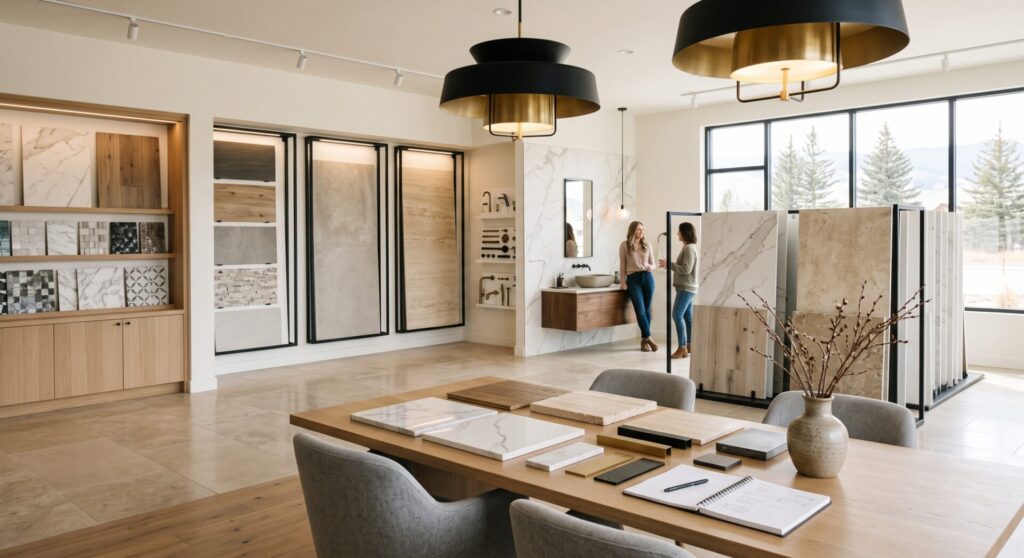
The Pierce Flooring Bozeman team on West Main Street works through all of it as part of every free design consultation. Come see the Emser, MSI, Florida Tile, and Glazzio porcelain collections alongside our natural stone options. Before you visit, use our Roomvo Room Visualizer to preview tile options in your actual space.
Pierce Flooring & Cabinet Design Center — Bozeman
1921 West Main Street, Bozeman, MT 59718
(406) 587-5428
Monday through Friday, 8 AM to 6 PM. Saturday, 9 AM to 5 PM.
You Might Also Like
Ready to Transform Your Home?
Contact Us Today to Get Started on Your Dream Space