- Hardwood
LVP vs. Engineered Hardwood: Which Is Right for a Bozeman Home? (2026 Guide)
July 19, 2026
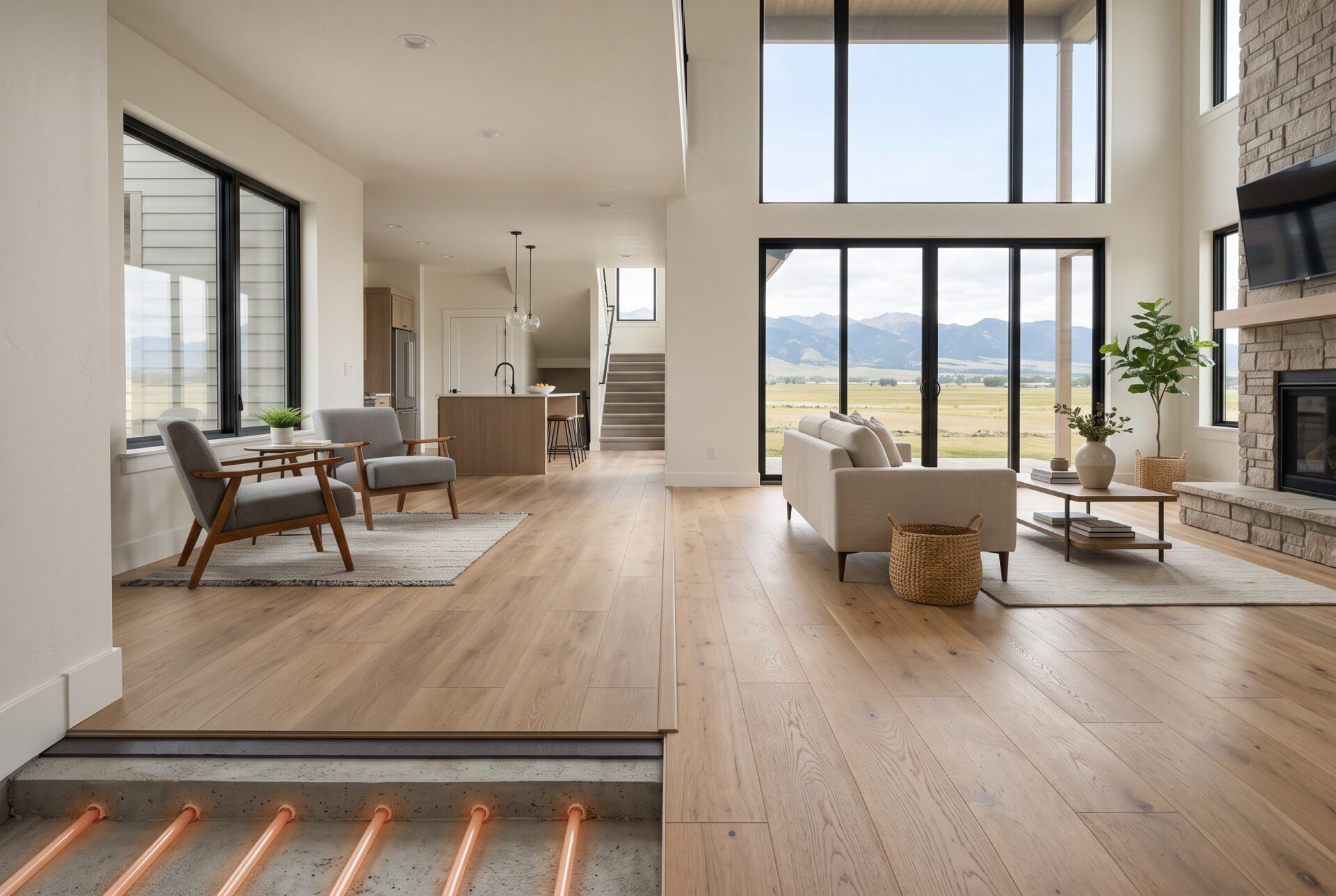
Bozeman’s new-construction boom has created a flooring decision point for thousands of Gallatin Valley homeowners in the last three years. New homes in the Belgrade corridor, Bridger Canyon area, and Baxter Meadows subdivision typically land on slab-on-grade foundations with in-floor radiant heat — and that combination changes the LVP vs. engineered hardwood conversation in ways that most national comparison guides simply do not address.
This guide is built for the Bozeman buyer who is mid-funnel: you have narrowed your options to LVP or engineered hardwood, you want to understand how radiant heat affects that choice, and you want an honest comparison before committing. Both can work beautifully in a Bozeman home. The question is which works for your specific system, your timeline, and your long-term plans.
Schedule a free in-home measurement with the Pierce Flooring Bozeman team at (406) 587-5428, or stop by our West Main Street showroom to see these products side by side.
Why the Bozeman Market Makes This Decision More Complex
Most national LVP vs. hardwood comparisons are written for temperate climates with stable indoor humidity. Bozeman is not that. The Gallatin Valley sits at approximately 4,800 feet of elevation, with summer highs that push into the 90s and winter lows that drop well below zero. Indoor humidity without active management swings from roughly 20% in January to 65% in July — a 45-point seasonal range that stresses both products differently.
Add in-floor radiant heat and the decision becomes more product-specific. Radiant systems heat from below, which creates a fundamentally different thermal environment than forced-air HVAC. Engineered hardwood over radiant heat dries from the underside outward during heat cycles. LVP expands at the surface as the system cycles on. Both can perform well. Both can fail with the wrong product selection or installation protocol.
The Belgrade and Baxter Meadows corridors have produced thousands of new homes since 2020, most on slab foundations with hydronic radiant heat. The Pierce Flooring Bozeman team on West Main Street works through this conversation daily with new-construction clients — and the answers are more nuanced than any online comparison chart. For a broader look at how moisture affects flooring choices across the home, see our guide to floors that handle moisture.
Pro-Tip from the Pierce Flooring Bozeman Team: Bozeman’s temperature swings are more extreme than most buyers account for. We have seen engineered hardwood floors installed correctly in fall — proper species, correct adhesive, right moisture reading — develop visible gapping by January because the radiant system was turned up higher than the acclimation scenario anticipated. The fix is not a different product. It is a more conservative heat ramp-up protocol and the right species for the system’s operating temperature. We walk every radiant-heat customer through that protocol before installation starts.
LVP vs. Engineered Hardwood Over Radiant Heat: What Bozeman New-Construction Buyers Need to Know
Dimensional Stability and Humidity
LVP’s advantage in Bozeman is dimensional stability. A quality SPC (rigid-core LVP) product changes dimensions very little across the Gallatin Valley’s humidity swings. The rigid limestone-infused core absorbs almost none of the seasonal moisture movement that causes wood products to expand and contract. For a Bozeman homeowner who does not want to manage indoor humidity year-round, SPC LVP removes one significant variable.
Engineered hardwood is designed to perform better than solid hardwood in variable climates — the cross-ply plywood core resists the cupping and warping solid hardwood develops under the same conditions. That said, engineered hardwood does still move seasonally. With proper installation, acclimation, and expansion gaps, that movement is managed rather than problematic. The key is maintaining indoor humidity between 35-55% year-round, which in Bozeman means running a humidifier from October through April.
Radiant Heat Compatibility — The Most Important Part of This Decision
Not all engineered hardwood is rated for radiant heat, and not all radiant systems operate the same way. Most manufacturers specify a maximum subfloor surface temperature of 80-85°F for their radiant-heat-rated collections, but these thresholds vary by product — always confirm the specific collection’s specification sheet before ordering, as different lines within the same brand can differ.
Kahrs, Anderson Tuftex, and DuChateau all produce engineered hardwood collections with confirmed radiant-heat ratings. These are the collections Pierce Flooring Bozeman carries for slab-with-radiant applications. For most radiant-heat-rated products, adhesive-down installation is required over radiant heat, not a floating installation — though some manufacturers do permit floating with specific approved underlayment. Confirm the specific product’s installation method before committing.
Two separate protocols matter here. Before installation: run the radiant system for 1-2 weeks to bring the slab to moisture equilibrium, then lower the heat to 65°F two days before installation begins. After installation: ramp the heat back up gradually — no more than 5°F per day — until the system reaches operating temperature. For day-to-day thermostat management once the floor is established, the NWFA recommends no more than a 2-3 degree per hour change to avoid thermal shock cycles at the adhesive bond.
LVP over radiant heat is simpler from an installation standpoint, but rigid-core SPC is required — not standard flexible LVP. Flexible LVP over radiant heat can soften and lose dimensional stability as the system cycles. SPC’s rigid core maintains its integrity at the temperatures Bozeman radiant systems produce. Also confirm that your SPC product’s underlayment is rated for the temperatures your system produces — not all underlayments are appropriate for high-temperature radiant applications. Cali and Mohawk both produce SPC collections rated for radiant heat.
Scratch Resistance and Long-Term Durability
LVP’s durability comes from its wear layer. It does not dent or scratch the way wood does, and surface damage is uniform rather than grain-specific. Engineered hardwood’s advantage is refinishability — and here the specific number matters. A 2mm veneer can typically be lightly sanded once or twice over its life. A 4mm veneer allows two to three refinishings. That distinction makes a material difference for a Bozeman homeowner planning a 20-year stay: a refinished hardwood floor in year 15 looks new; a worn LVP floor at year 15 is done.
Appearance and Resale Value
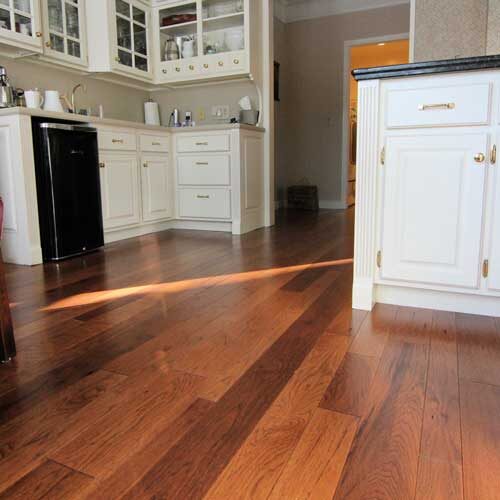
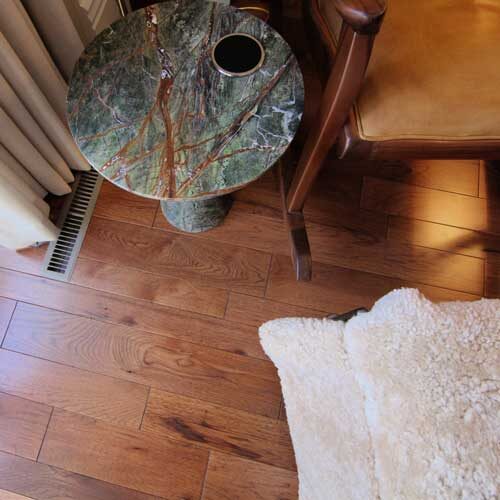
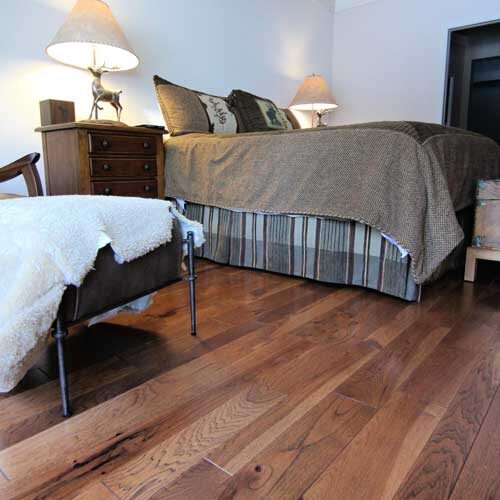
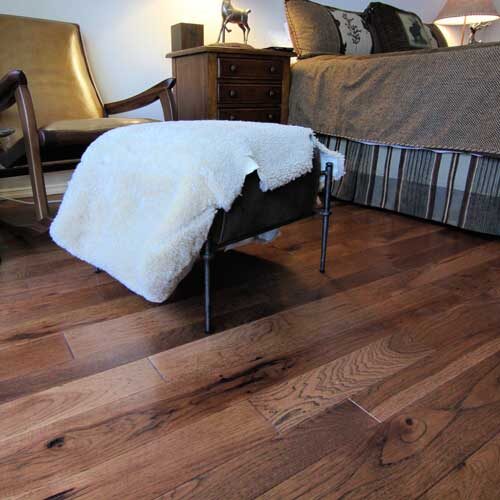
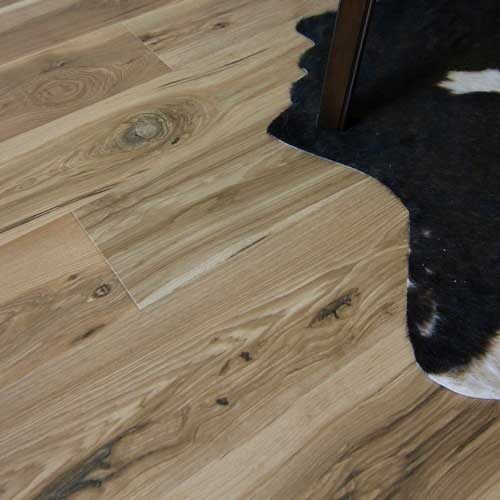
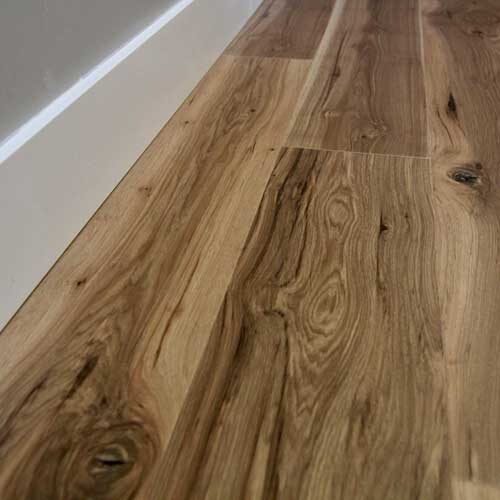
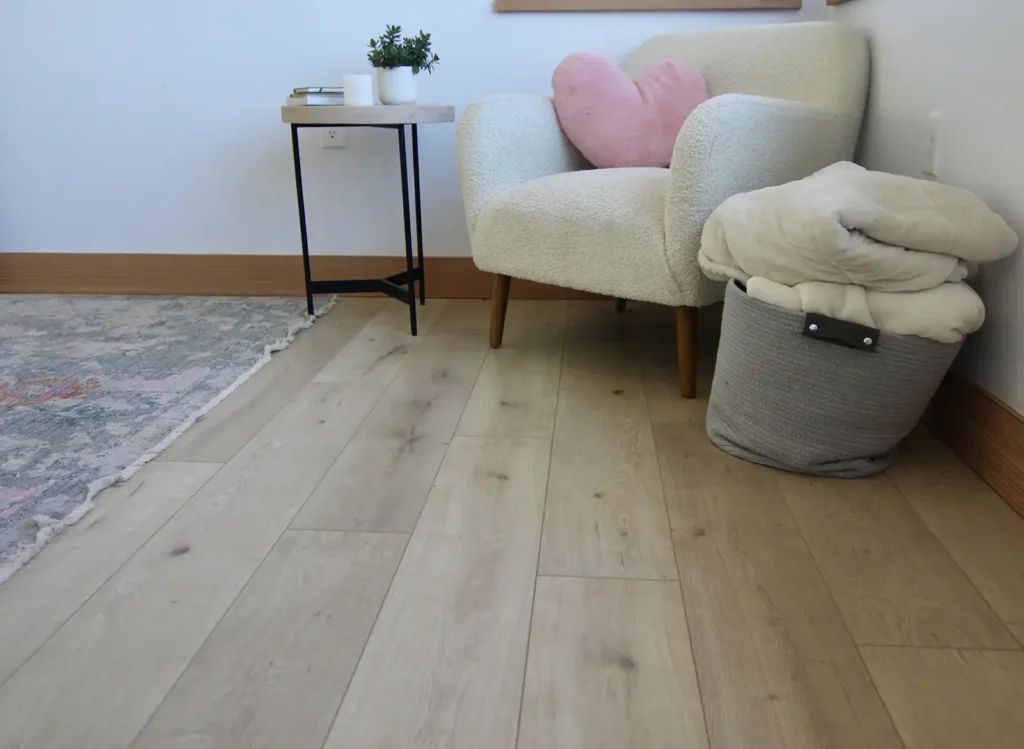
Engineered hardwood looks like wood because it is wood. The grain variation, the texture, the way light plays across it is genuine material, not a print layer. For design-forward Bozeman buyers targeting the Bridger Canyon area and South 19th Street neighborhoods where real wood is expected at that price point, engineered hardwood is the harder choice to second-guess at resale.
High-end SPC products have closed the visual gap significantly. But buyers who look closely — and appraisers who measure — note the difference. At the upper tier of Bozeman’s escalating market, engineered hardwood’s perceived value advantage is real.
The Honest Tradeoff Summary
Choose SPC LVP if: you have children or pets, you want minimal humidity management, your radiant system runs at or near the upper temperature threshold, or you are working with a tight installation timeline and want the simpler protocol.
Choose engineered hardwood if: aesthetics and resale value matter, you are willing to manage indoor humidity (35-55% year-round), your radiant system’s surface temperature stays within manufacturer specs, and you want the option to refinish in 15-20 years.
“All of the staff at Pierce Flooring and Design were very knowledgeable and helpful in our decisions on choosing the perfect hickory laminate flooring, transition pieces and underlayment. All of Renee and Tracy’s suggestions were spot on. The warehouse staff were friendly and prompt in loading all our ordered items.”
Craig M. — Hickory Laminate Flooring
Maintaining Your Floor Through Bozeman’s Climate Extremes
For engineered hardwood, the National Wood Flooring Association (NWFA) recommends maintaining indoor humidity between 35-55% year-round. In Bozeman, that means a humidifier running from October through April and, in some homes, a dehumidifier for summer humidity spikes. A hygrometer — not outdoor weather apps — tells you what your specific home actually reads.
For adhesive-down engineered hardwood, wait for the adhesive manufacturer’s specified cure time — typically 24-72 hours — before any cleaning. Cleaning too soon after installation can cause adhesive to wick up through seams.
For SPC LVP, the Resilient Floor Covering Institute (RFCI) recommends water-based, pH-neutral cleaning. For both products: damp mop only, no standing water, no steam mops.
For radiant-heat homes on a daily basis: program gradual thermostat changes rather than sharp set-backs and fast recoveries. A 2-3 degree per hour ramp rate protects both engineered hardwood adhesive bonds and LVP’s dimensional stability through Montana’s heating season.
[REVIEW NEEDED: Insert a genuine 4-5 star Google review mentioning Bozeman, new construction, radiant heat, LVP, engineered hardwood, or hardwood flooring from Pierce Flooring Bozeman Google Business Profile. Format: “Quote text.” Name, Last Initial, Bozeman / Neighborhood — Floor Type. Source: Pierce Flooring Bozeman GBP.]
Choosing an Installer Who Understands Bozeman Radiant-Heat Conditions
The installer matters as much as the product for a radiant-heat floor in a Bozeman new-construction home. Ask these questions before any commitment.
Do they have specific radiant-heat installation experience? Adhesive-down engineered hardwood over radiant heat requires a specific adhesive type, a controlled commissioning protocol, and a post-installation heat ramp plan. An installer without radiant experience typically treats it like any other glue-down, which is not the same procedure.
Do they document the radiant system’s operating temperature and compare it to the manufacturer’s threshold? This single check prevents the majority of radiant-heat flooring failures. If your installer does not ask what temperature your system runs, ask them why not.
Do they perform a subfloor moisture test on the slab before product selection? Even well-controlled new construction in Bozeman benefits from a pre-installation moisture reading — concrete continues to cure and release moisture long after the building envelope is closed.
Pierce Flooring’s Bozeman team on West Main Street carries Kahrs, Anderson Tuftex, and DuChateau engineered hardwood collections with radiant-heat-rated lines, alongside Cali and Mohawk SPC LVP. Every installation quote includes an in-home assessment. The Pierce Promise covers installation errors with a one-year warranty. Pierce Flooring has served Montana since 1924.
Frequently Asked Questions
Is LVP or engineered hardwood better for a Bozeman home with radiant heat?
Both can work, but they have different requirements. Engineered hardwood requires an adhesive-down installation with a radiant-heat-rated product and a controlled commissioning and post-install heat ramp protocol. SPC LVP is simpler to install and more forgiving of temperature variation, but rigid-core SPC is required — not flexible LVP. The right choice depends on your system’s operating temperature, your aesthetic priorities, and your long-term plans.
Does Bozeman’s elevation and climate affect which flooring I should choose?
Yes. At 4,800 feet with humidity that swings from 20% in winter to 65% in summer, Bozeman homes put more stress on flooring than temperate-climate homes. SPC LVP handles this range with essentially no dimensional response. Engineered hardwood manages it well with proper year-round humidity control (35-55%). Both are significantly better choices than solid hardwood or standard laminate in this climate.
How long does engineered hardwood last compared to LVP?
Both products can last 20-30 years or more with proper care. The key difference is refinishability. A 2mm veneer engineered hardwood can typically be lightly sanded once or twice over its life; a 4mm veneer allows two to three refinishings. LVP cannot be refinished — when the wear layer is gone, the floor is replaced. For a Bozeman homeowner planning a long-term stay, that distinction is meaningful at year 15-20.
Can you put engineered hardwood over radiant heat in Bozeman?
Yes, with the right product and protocol. Look for engineered hardwood with a confirmed radiant-heat rating and maximum subfloor temperature specification that matches your system’s output. Kahrs, Anderson Tuftex, and DuChateau all produce radiant-heat-rated collections. Adhesive-down installation is generally required, and the commissioning protocol — running and stabilizing the heat before and after installation — is as important as the product itself.
How does LVP compare to engineered hardwood for resale value in Bozeman?
At the upper tier of Bozeman’s market — Bridger Canyon area, South 19th, newer builds at higher price points — engineered hardwood retains a perceived-value advantage at resale. Buyers and appraisers distinguish the materials, and genuine wood is valued accordingly. At mid-market price points, high-quality SPC LVP is largely comparable. The resale calculation depends on the home’s overall price tier and target buyer.
Ready to Make the Call for Your Bozeman Home?
This decision comes down to two questions: how much humidity management are you willing to do, and how important is real wood to you and your future buyer? The Pierce Flooring Bozeman team can walk you through both answers with the actual products in front of you.
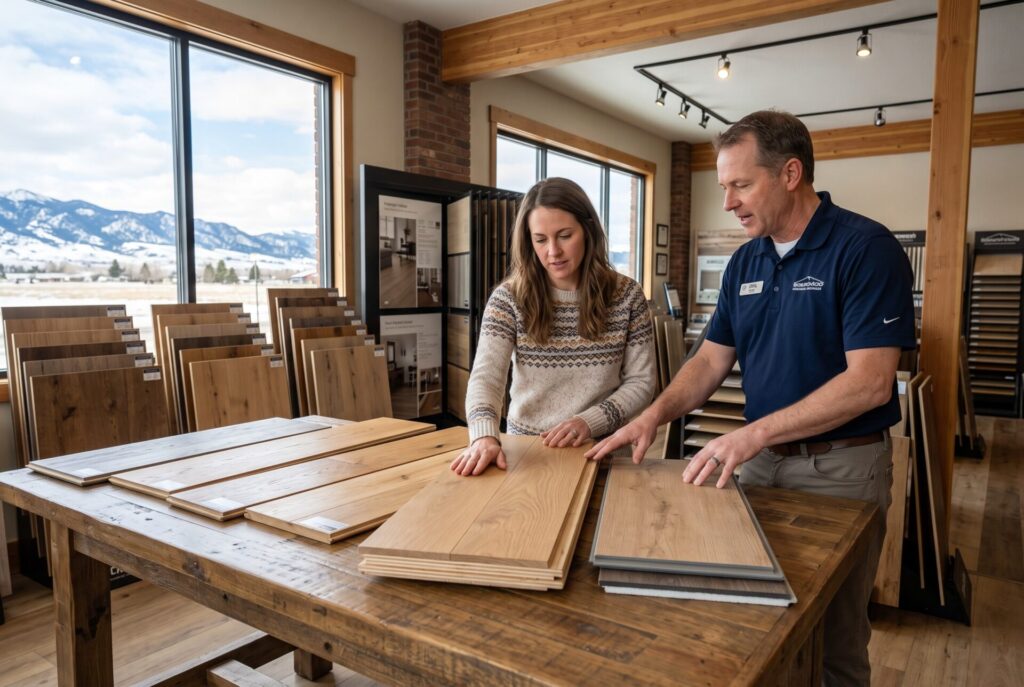
Visit our Bozeman showroom at 1921 West Main Street. See Kahrs, Anderson Tuftex, and DuChateau engineered hardwood side by side with Cali and Mohawk SPC LVP. Our team knows which products are rated for Bozeman’s radiant-heat systems and which installation protocols hold up through a Gallatin Valley winter. Before you visit, use our Roomvo Room Visualizer to see how different floors look in your actual space.
Pierce Flooring & Cabinet Design Center — Bozeman
1921 West Main Street, Bozeman, MT 59718
(406) 587-5428
Monday through Friday, 8 AM to 6 PM. Saturday, 9 AM to 5 PM.
Browse engineered hardwood | Browse LVP and SPC | Schedule a free in-home measurement
You Might Also Like
-
- Hardwood
July 24, 2026
Engineered Hardwood vs. Solid Hardwood in Montana’s Dry Climate: What Billings Homeowners Need to Know
Ready to Transform Your Home?
Contact Us Today to Get Started on Your Dream Space