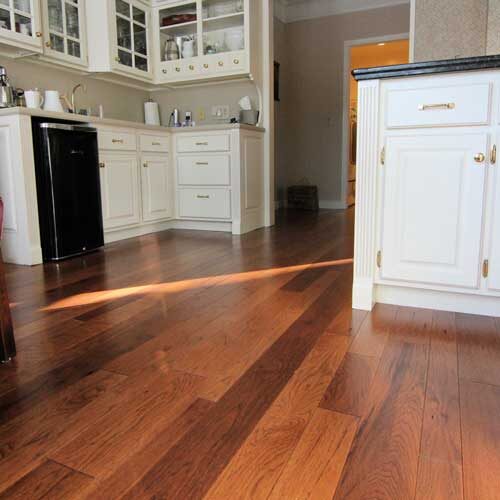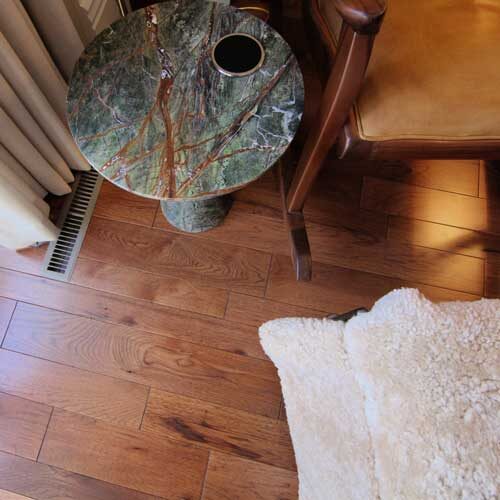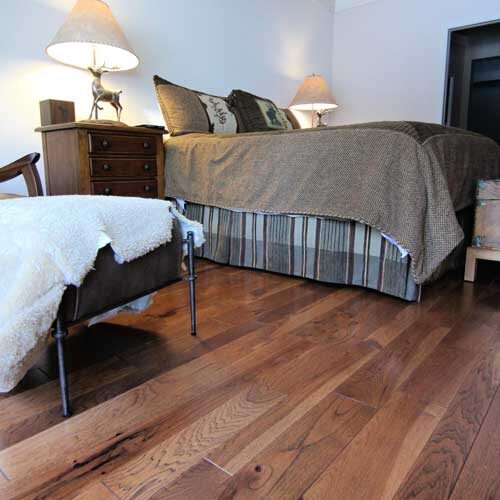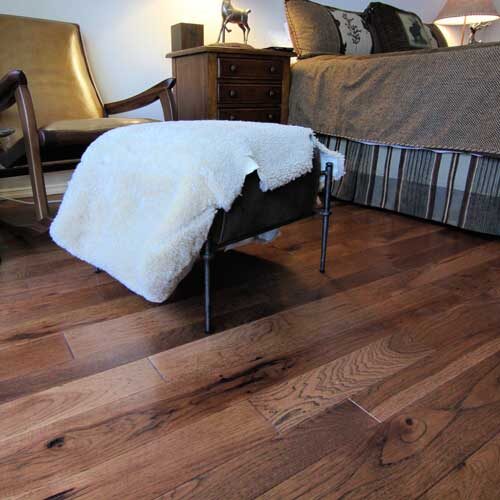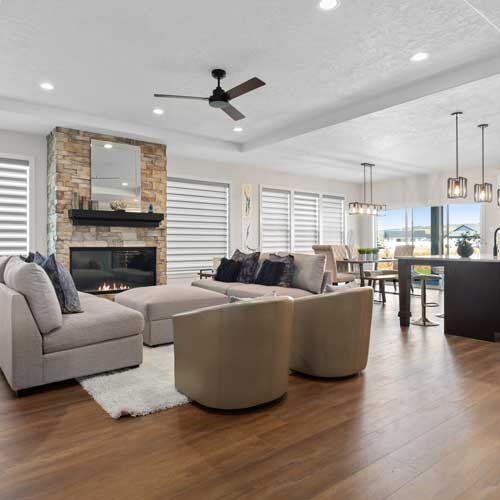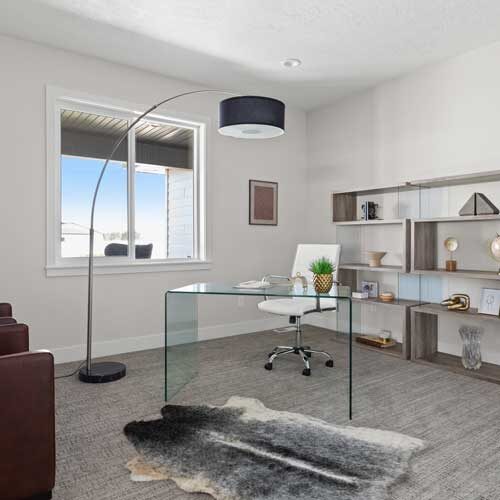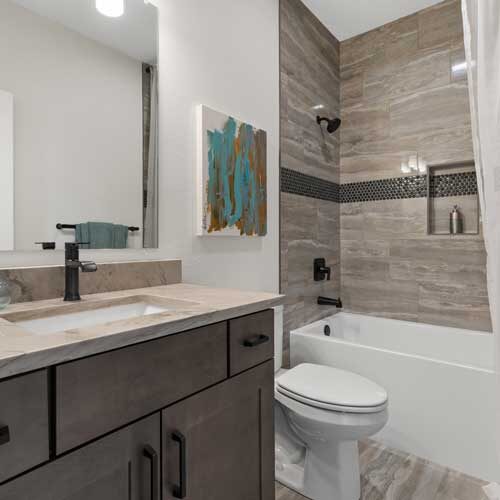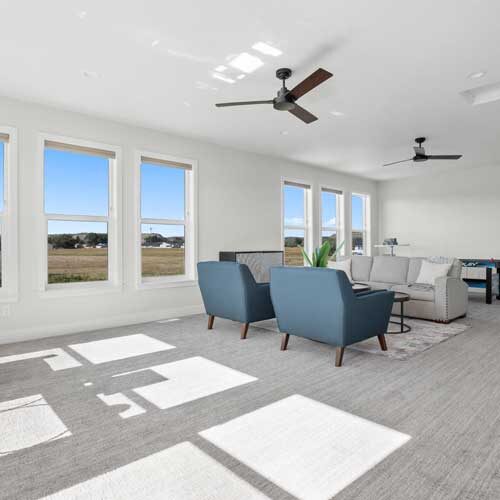
- Hardwood
Engineered Hardwood vs. Solid Hardwood in Montana’s Dry Climate: What Billings Homeowners Need to Know
July 24, 2026
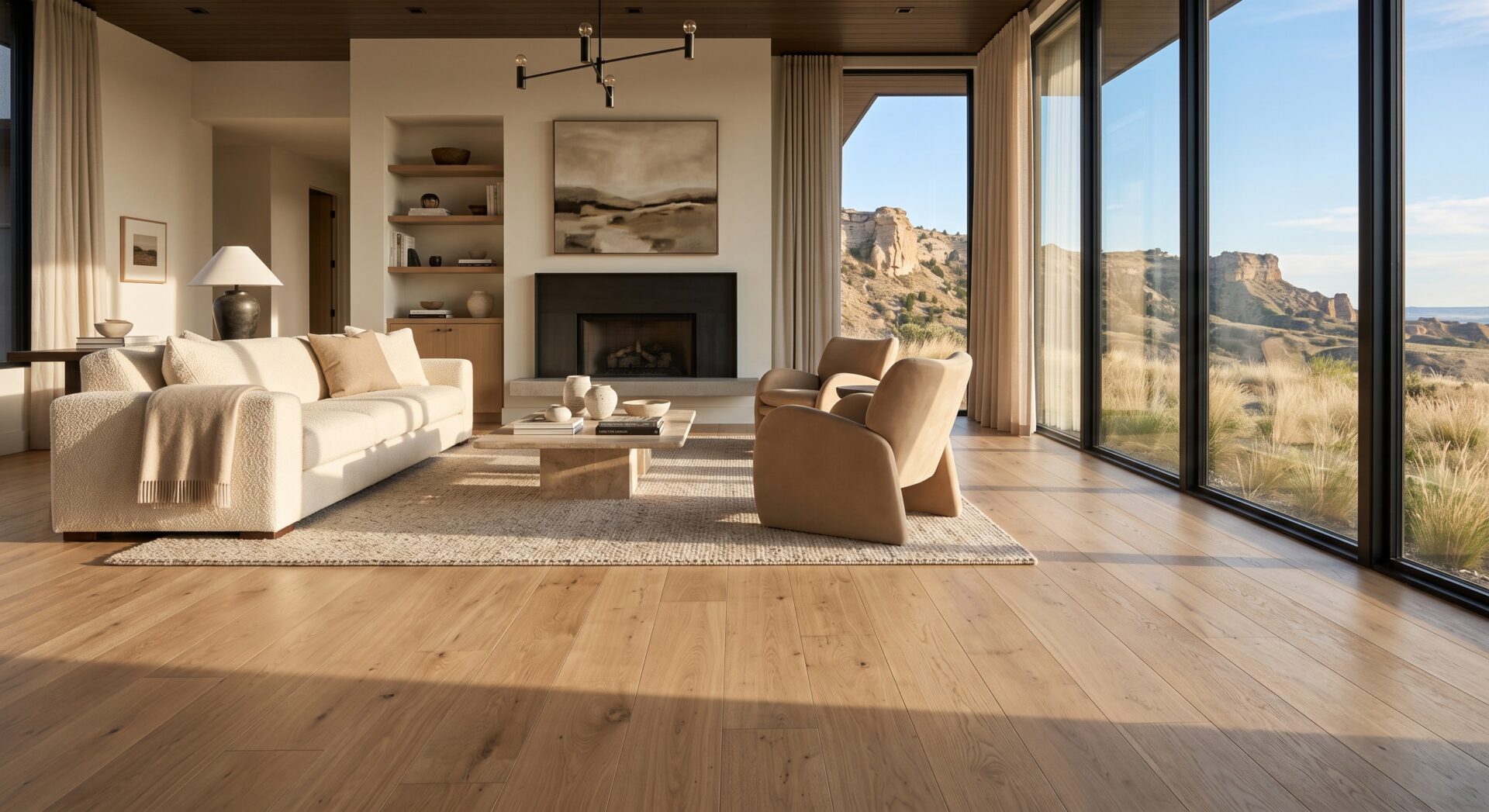
Walk through a Billings home in January and you will often hear it before you see it: the faint creak of hardwood boards that have contracted in the dry winter air, small gaps at the edges where tight summer joints have opened. It is not a sign of poor quality. It is solid hardwood doing exactly what solid hardwood does in a climate with a 40-point seasonal humidity swing.
The question for a Billings homeowner who loves real wood floors is not whether wood moves in this climate — it does — but whether engineered hardwood handles that movement better than solid hardwood, and in which situations solid hardwood is still the right call. This guide answers both questions honestly.
Come by our Billings showroom on King Avenue West or call (406) 652-4666 to talk through your specific project with a wood flooring specialist.
What Billings’ Climate Does to Wood Floors
Billings sits at approximately 3,100 feet in a semi-arid climate. Indoor relative humidity during the heating season — October through March — drops below 25% in most homes without active humidification. That is well below the National Wood Flooring Association’s (NWFA) recommended range of 35-55% for wood floor stability.
The physics are straightforward. Wood is hygroscopic — it absorbs and releases moisture as indoor humidity rises and falls. In a Billings home, that cycle runs from roughly 20% RH in January to 60-65% in late spring and summer. The resulting dimensional change across that range is measurable and, in the case of solid hardwood, sometimes audible.
Homes in the Heights neighborhood with baseboard electric heat face the worst of it. Baseboard systems produce very dry heat — they warm air without adding moisture — and rooms nearest to baseboard units can see indoor humidity drop below 20% on the coldest January days. In baseboard-heated Heights rooms, we specifically see the most callbacks on solid hardwood boards 4 inches and wider — the absolute dimensional change per board at those widths becomes visible even to a homeowner who was prepared for some movement.
Spring reverses the cycle. Snowmelt and summer humidity push indoor conditions toward 60% or higher in homes without dehumidification. A solid hardwood floor that gapped in January will push board edges together in May and, without room to expand, can cup upward at the joint.
Pro-Tip from the Pierce Flooring Billings Team: Homes with forced-air gas heat tend to do better than homes with baseboard electric heat — forced-air still dries indoor air but not as aggressively. The homes where solid hardwood causes the most concern are older Heights-area properties with electric baseboard throughout, especially in rooms where the baseboard runs continuously along exterior walls. In those rooms, we almost always recommend engineered hardwood regardless of the customer’s preference for solid. The performance difference in that specific environment is significant.
How Engineered Hardwood Handles What Solid Hardwood Cannot
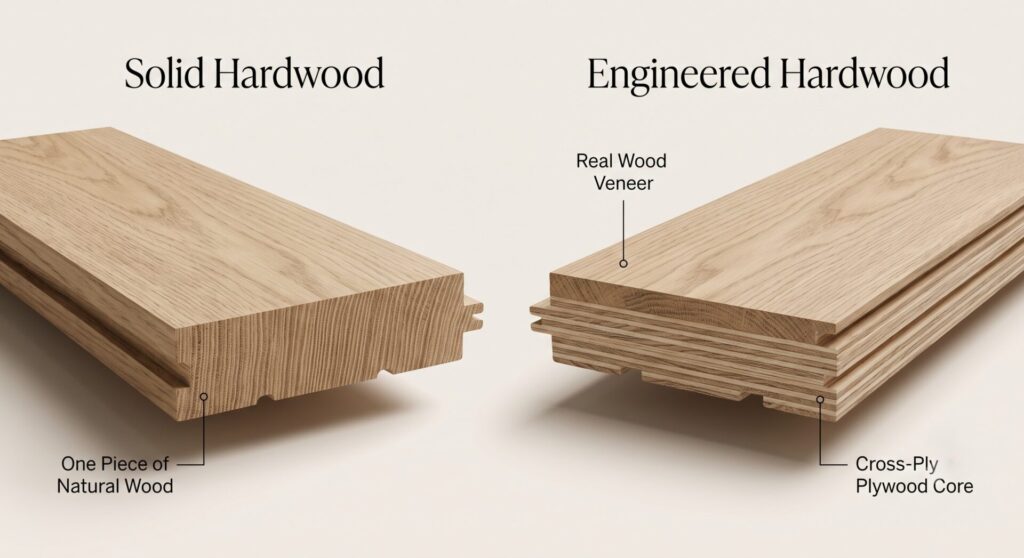
Solid hardwood is a single species from top to bottom. When it moves, the entire board moves as one unit. A 4-inch solid white oak board in a Billings home contracts as a single 4-inch piece of wood across every heating season.
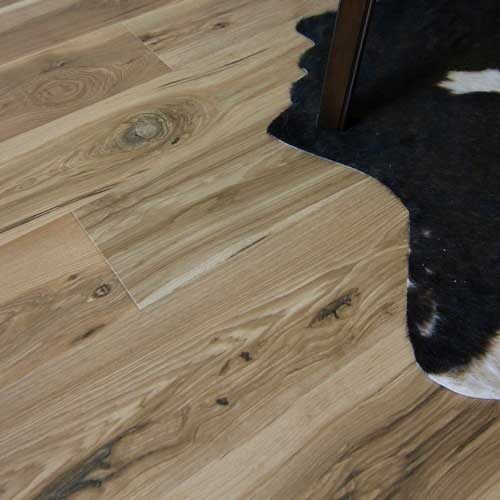
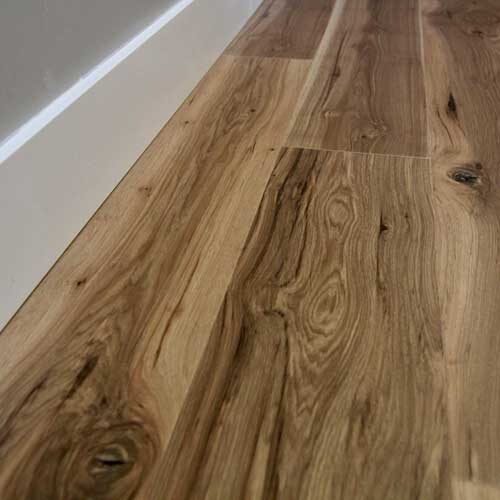
Engineered hardwood is constructed differently. A real wood veneer — the species the buyer sees and touches — sits atop a cross-ply plywood core. Those cross-plies run in alternating directions, constraining the veneer’s ability to expand and contract freely. The result is a floor that shows significantly less dimensional movement across a given humidity change than solid hardwood of the same species. The differential varies by species, core construction, and plank width, but is consistently meaningful in a Billings home’s seasonal humidity swing.
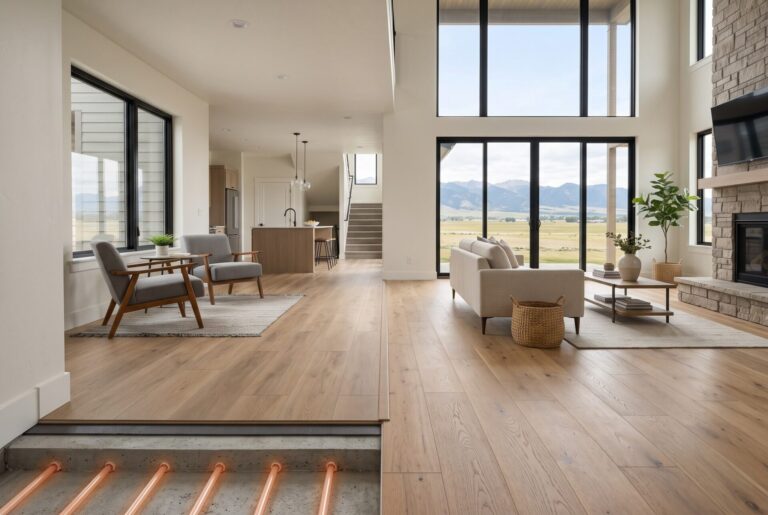
Engineered hardwood also offers installation flexibility that matters for Billings homes. It can be installed as a floating floor, glued down, or nailed down — which means it works over concrete slab construction, over radiant heat systems, and over the range of subfloor conditions that older Billings homes present. Solid hardwood requires a nailed or stapled installation over wood subfloor only. In a Billings home with a slab foundation — common in newer construction across the Heights and Lockwood — solid hardwood is not a viable option regardless of the homeowner’s preference.
For Billings homes on slab foundations, a vapor barrier between slab and engineered hardwood is required for floating installations — regardless of the slab’s moisture test result. Billings slab construction emits moisture vapor year-round, and omitting a barrier is an installation shortcut that shows up over time. For more on slab moisture management, see our guide to waterproof flooring for Montana basements.
Can Engineered Hardwood Be Refinished? The Answer Depends on Veneer Thickness
The most frequent concern Billings buyers raise about engineered hardwood is refinishability. The honest answer: yes, within limits defined by veneer thickness.
A 2mm veneer allows one very light sanding — enough to remove surface scratches and refresh the finish, but not enough for a full sand-down and restain. A 3-4mm veneer, available in better-tier products from Anderson Tuftex, Kahrs, and DuChateau, allows two to three light sandings over the floor’s life. Solid hardwood at 3/4-inch thickness can be sanded and refinished four to seven times — a significant advantage for a homeowner planning a 30+ year stay.
One technical detail most buyers miss: ask for ‘veneer thickness above the groove,’ not just total veneer thickness. Some products with a 4mm face veneer have only 2-2.5mm above the tongue-and-groove joint, which is the actual refinishable surface. That is the number that determines long-term refinishing potential, and it is frequently omitted from marketing materials.
For a homeowner planning a 15-20 year horizon, a quality 4mm veneer engineered hardwood is largely equivalent to solid hardwood in practical refinishing terms.
When Solid Hardwood Is Still the Right Answer in Billings
Engineered hardwood performs better than solid hardwood in Billings’ dry climate in most applications. That does not mean solid hardwood has no place here — it means the conditions need to be right.
Solid hardwood makes sense in a Billings home when the installation is above grade on a wood subfloor, the homeowner actively manages indoor humidity year-round with a whole-home humidifier and hygrometer maintaining 35-50% RH, and the species and width are matched to the climate. Narrower boards — 2.25 to 3 inches — change dimensions less in absolute terms than wide planks. Harder, denser species — white oak, hickory, hard maple — are more stable across humidity swings than soft species like pine, walnut, or cherry.
A 2.25-inch strip white oak floor installed correctly, with consistent humidification, performs well in a Billings home. A 7-inch wide-plank walnut floor without humidity management is a seasonal gapping guarantee.
“We just added new wood flooring and remodeled our kitchen. We purchased the flooring and the back splash tile from this business, and I love what we purchased, I enjoyed my relationship with Jeff, and the work was done when it was scheduled to be done.”
B. Miller — Wood Flooring
Choosing the Right Engineered Hardwood for Billings Conditions
Not all engineered hardwood handles Montana’s humidity range equally. The key specifications to evaluate before committing to a product:
Veneer species and Janka hardness. White oak (1,360 Janka), hickory (1,820 Janka), and hard maple (1,450 Janka) are the most appropriate for Billings households with pets, children, or significant daily traffic. Softer veneers scratch more visibly under the abrasive grit Billings mud season brings indoors. The NWFA’s Janka hardness guide provides full species comparisons.
Core construction and plywood grade. Better-tier engineered hardwood uses a Baltic birch or Russian birch plywood core — denser and more stable than the poplar or lower-grade plywood used in economy products. HDF (high-density fiberboard) cores are used in some products and offer different stability characteristics. Ask the Pierce Flooring specialist to identify the core construction on any product you are considering.
Finish type. Factory UV-cured finishes with aluminum oxide surface treatments are the standard for durability in Billings households. Oil-finished engineered hardwood has a beautiful matte appearance but requires periodic re-oiling — typically annually — and is more susceptible to staining. For a Billings household with pets or children, a UV-cured finish is the lower-maintenance choice.
Width relative to humidity range. In Billings’ climate, wider engineered planks are manageable — significantly more so than equivalent solid hardwood — but still show more visible seasonal movement than narrower planks at the same humidity swing. For households with dogs and outdoor access, our pet flooring guide for Montana homes covers scratch resistance alongside dimensional stability.
Anderson Tuftex, Kahrs, DuChateau, and Mannington all produce engineered hardwood collections appropriate for Billings’ humidity range. The Billings showroom at King Avenue West carries current samples of all four brands for side-by-side comparison.
Maintaining Wood Floors Through Billings’ Seasons
From October through March, run a whole-home or room humidifier to maintain indoor humidity between 35-50%. A hygrometer — not outdoor weather reports — tells you what your specific home reads. Homes with older construction or baseboard heat may need a humidifier in every room rather than a single whole-home unit. Without consistent humidification in winter, even quality engineered hardwood in Billings will show seasonal gapping.
From May through August, Billings’ humidity rises. A dehumidifier during this period protects engineered hardwood from the expansion side of the seasonal cycle and prevents the edge-cupping that can develop in homes without dehumidification.
Sweep or dry-vacuum daily during Billings’ mud season — late March through May. The red clay grit that comes in on boots and paws is abrasive to any wood finish. Wet mopping during high-humidity spring months compounds the moisture exposure your floor is already managing.
Use a pH-neutral hardwood-approved cleaner on a well-wrung damp mop only. Vinegar-based cleaning solutions, steam mops, and oil soap cleaners are incompatible with factory-finished engineered hardwood — they degrade the aluminum oxide surface treatment over time and typically void the manufacturer’s finish warranty.
According to the NWFA, maintaining consistent humidity is the single most impactful maintenance practice for wood floor longevity. In Billings, that means treating the humidifier as a year-round appliance, not a seasonal one.
“All of the staff at Pierce Flooring and Design were very knowledgeable and helpful in our decisions on choosing the perfect hickory laminate flooring, transition pieces and underlayment. All of Renee and Tracy’s suggestions were spot on. The warehouse staff were friendly and prompt in loading all our ordered items.”
Craig M. — Hickory Laminate Flooring
Frequently Asked Questions
Is engineered hardwood better than solid hardwood in Billings, Montana?
For most Billings applications, yes. Billings’ indoor humidity drops below 25% during the heating season without humidification — well below the NWFA’s recommended 35-55% range for wood floor stability. Engineered hardwood’s cross-ply core shows significantly less dimensional movement across that humidity swing than comparable solid hardwood. For above-grade wood subfloor installations with consistent humidity management, solid hardwood remains appropriate. For slab construction, baseboard-heated rooms, or homes without whole-home humidification, engineered hardwood is the more reliable choice.
Can engineered hardwood be refinished in Billings?
Yes, within limits set by veneer thickness above the groove. A 2mm usable veneer allows one light sanding; a 3-4mm usable veneer allows two to three refinishings over the floor’s life. Solid hardwood can be refinished four to seven times. For a 15-20 year planning horizon, a quality 4mm veneer engineered hardwood is practically equivalent to solid hardwood in refinishing terms. Always ask for ‘veneer thickness above the groove’ specifically — total face veneer and refinishable veneer are not always the same number.
Why does solid hardwood gap in Billings homes in winter?
Billings’ indoor humidity during the heating season drops below 25% without humidification — sometimes below 20% in rooms with baseboard electric heat. Wood contracts as humidity drops. A solid hardwood board installed at 45% summer humidity contracts measurably at 20% January humidity, opening visible gaps. Wider boards gap more visibly. Running a whole-home humidifier to maintain 35-50% RH eliminates most seasonal gapping in both solid and engineered hardwood.
What engineered hardwood brands does Pierce Flooring carry in Billings?
The Pierce Flooring Billings showroom on King Avenue West carries Anderson Tuftex, Kahrs, DuChateau, and Mannington engineered hardwood collections — all four produce lines appropriate for Billings’ humidity range. Stop by to see current samples and request a wood flooring consultation. The team can walk through veneer thickness, core construction, and finish options for your specific project.
Does engineered hardwood work over slab foundations in Billings?
Yes. Engineered hardwood can be glued down directly to a concrete slab or installed as a floating floor over slab with a moisture barrier and appropriate underlayment — solid hardwood cannot be installed over concrete. A vapor barrier between slab and engineered hardwood is required regardless of the slab’s moisture test result, as Billings slab construction emits vapor year-round. For Billings homes in newer construction on slab foundations in the Heights and Lockwood developments, engineered hardwood is effectively the only real-wood option.
Ready to Choose the Right Wood Floor for Your Billings Home?
The right wood floor for a Billings home is the one matched to the specific room, the subfloor type, the heat system, and how consistently the homeowner will manage indoor humidity. That conversation is one the Pierce Flooring team at 2950 King Ave West has every week.
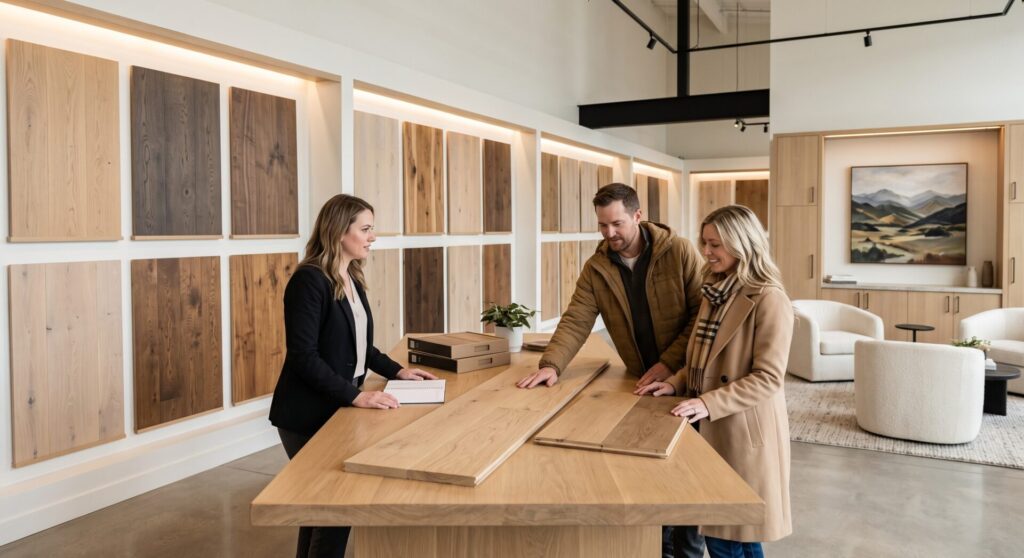
Come by any weekday or Saturday — no appointment needed. See Anderson Tuftex, Kahrs, DuChateau, and Mannington engineered hardwood alongside our solid hardwood options, and let a wood flooring specialist walk you through which products are engineered for Montana’s humidity range. Before you visit, use our Roomvo Room Visualizer to see how different wood floors look in your actual space.
Pierce Flooring & Cabinet Design Center — Billings
2950 King Ave West, Billings, MT 59102
(406) 652-4666
Monday through Friday, 8 AM to 6 PM. Saturday, 9 AM to 5 PM.
Browse engineered hardwood | Schedule a free in-home measurement
You Might Also Like
-
- Hardwood
July 19, 2026
LVP vs. Engineered Hardwood: Which Is Right for a Bozeman Home? (2026 Guide)
Ready to Transform Your Home?
Contact Us Today to Get Started on Your Dream Space