- Flooring
The Best Flooring for Montana Basements: Waterproof Options That Actually Work Below Grade
July 21, 2026
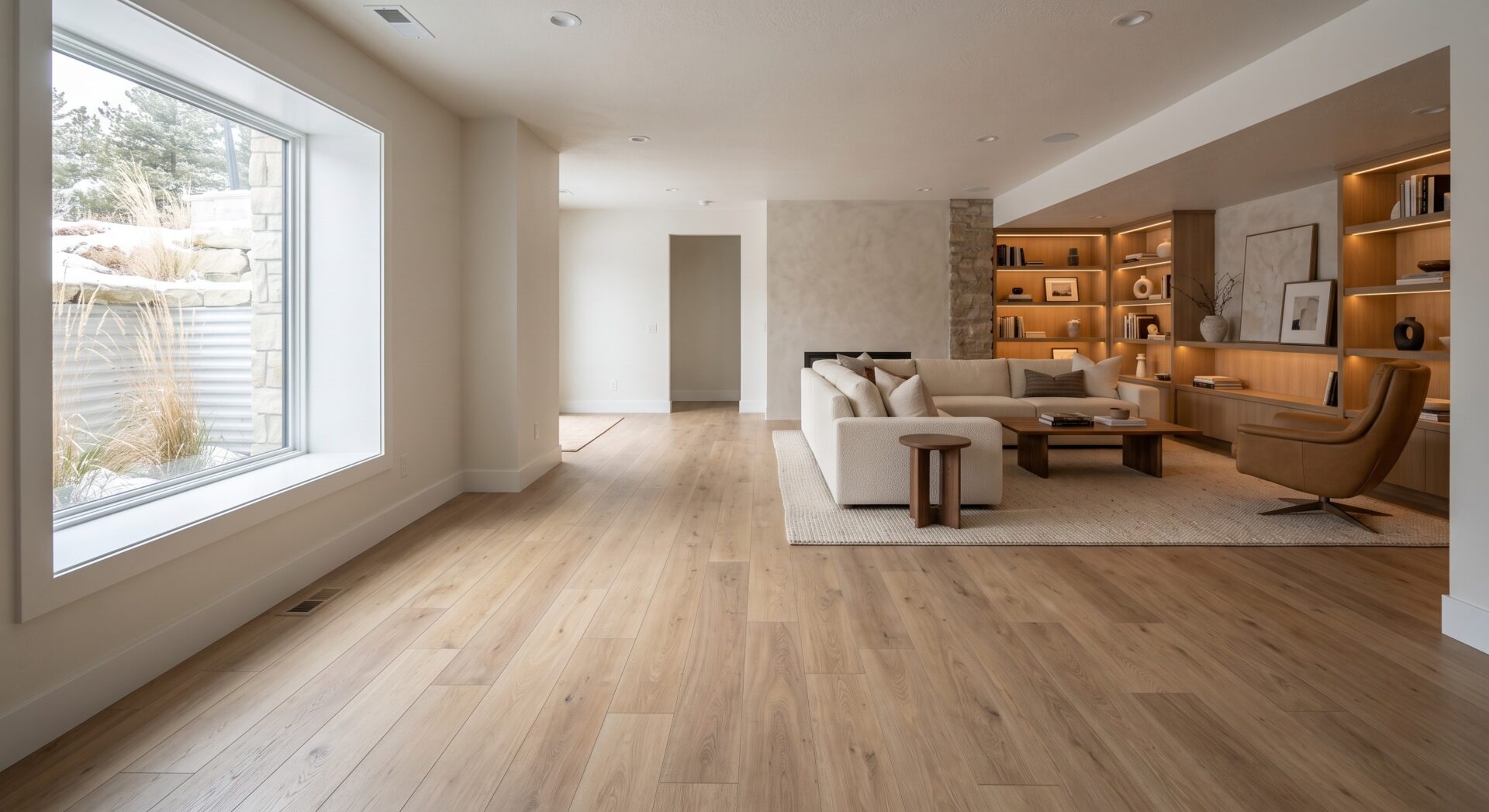
Most flooring labeled “waterproof” was not designed with a Yellowstone County basement in mind. The marketing language is written for surface spills. The reality below grade in Billings is something different, and the homeowners who discover this after installation tend to discover it the hard way.
This guide covers what actually survives a Montana basement, why LVP waterproofing claims have limits below grade, and which products, starting with SPC, tile, and sheet vinyl, are engineered for the conditions your slab creates. Ready to talk specifics? Schedule a free in-home measurement with the Pierce Flooring team at (406) 652-4666 and we will test your subfloor moisture before any product decision is made.
Why Billings Basements Create Problems Most Flooring Guides Ignore
The soil under most Billings homes is the first thing we check before recommending anything below grade. Much of Yellowstone County sits on expansive Haverson-Yawdim-Enbar clay soils. These clays hold moisture during wet seasons and release it as indoor humidity drops through Billings’ cold, dry winters. The result is not flooding. It is slow, invisible vapor migration through the concrete slab.
From October through March, heated basements in Billings see indoor relative humidity drop to 20-30% or lower without active humidification. That seasonal swing creates constant pressure on adhesives, click-lock joints, and any material that absorbs or responds to moisture. The same slab that tested dry in September can push vapor well above safe installation thresholds by February.
Billings sits at approximately 3,100 feet of elevation. Here’s the thing: the combination of semi-arid climate, wide temperature swings, and clay drainage behavior creates subfloor moisture dynamics that national flooring guides simply do not account for. Montana’s freeze-thaw cycles also cause slab edges to heave slightly at perimeter walls through the winter-to-spring transition. Floating floors installed without proper expansion gaps can buckle or separate at the walls by spring.
For a broader look at moisture-resistant options throughout your home, our guide to floors that handle moisture covers above-grade rooms and wet areas as well.
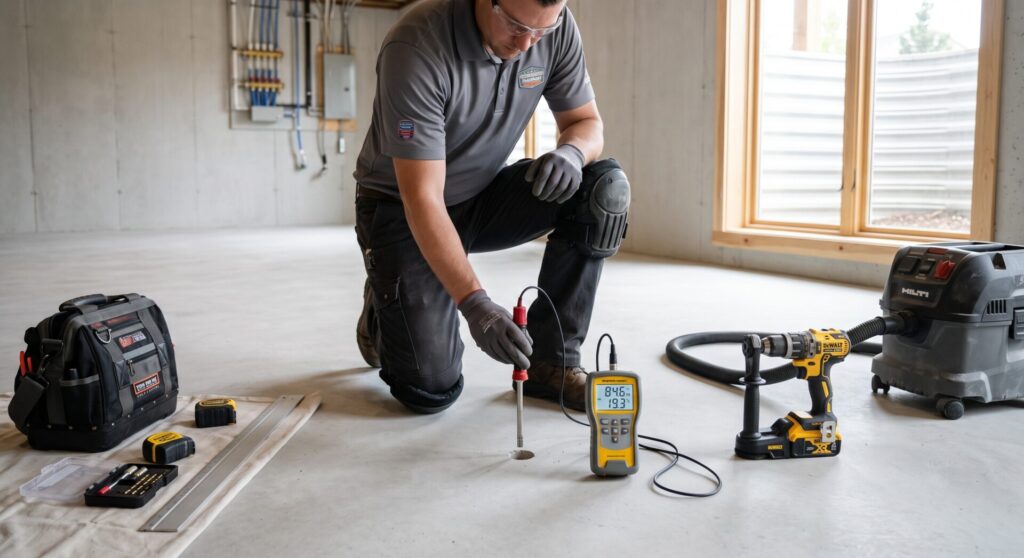
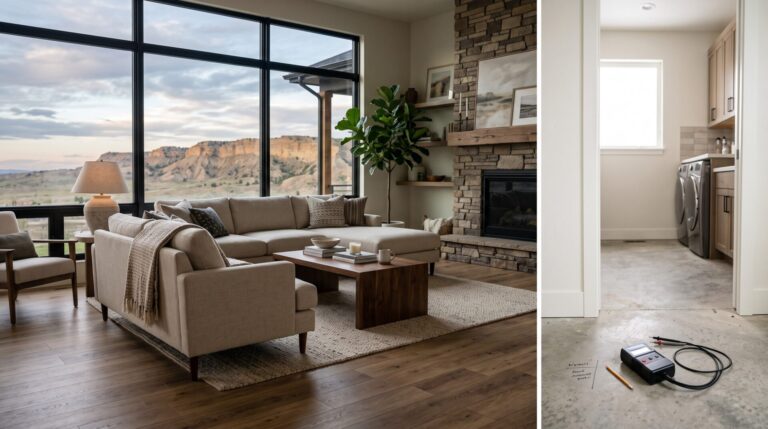
Pro-Tip from the Pierce Flooring Billings Team: In neighborhoods like the Westend and Lockwood, we routinely pull moisture readings from basement slabs that exceed safe thresholds, even in homes that have looked perfectly dry for years. We run an in-situ relative humidity probe on every basement project before product is ordered. It takes 72 hours and it has saved our customers from adhesive failures and cupped floors more times than we can count.
Book your free in-home measurement before you order anything.
What “Waterproof” Actually Means Below Grade
The waterproof label on LVP and SPC refers to the surface layer. These products will not absorb liquid spills, pet accidents, or tracked-in moisture from the top. That claim holds.
Below grade, the failure mode is different. Moisture migrates upward from the slab through vapor pressure, not from puddles. A floating LVP floor installed without a properly rated vapor barrier sits on top of that vapor pathway. Over time, the vapor works into the click-lock joints, causes edge swelling, and separates the panels. The product has not failed. The installation was incomplete for the conditions.
The Resilient Floor Covering Institute (RFCI) publishes moisture tolerance thresholds for LVP and SPC. The preferred method is an in-situ relative humidity (RH) probe per ASTM F2170, with most SPC manufacturers specifying an 80-85% RH threshold for floating installations. The older calcium chloride test (ASTM F1869) is still used as a secondary method. Many Billings basement slabs in older Westend and South Side homes exceed those thresholds. The only way to know is to test.
Vapor barriers also have perm ratings. The right barrier for your slab is the one matched to your specific measured vapor emission rate, not a generic product tossed in as a precaution. That detail separates a proper below-grade installation from one that looks fine for six months.
The Best Flooring for a Billings Basement, by Use Case
SPC for Finished Living Spaces
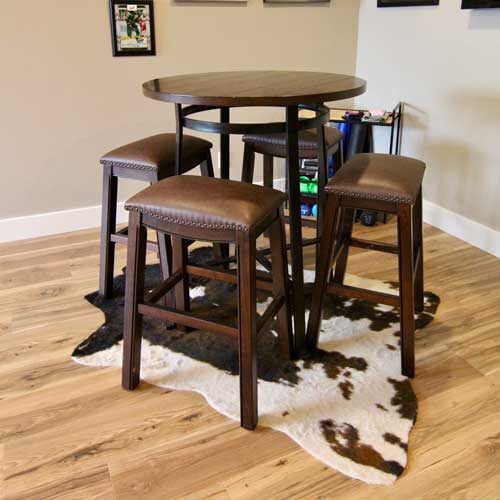
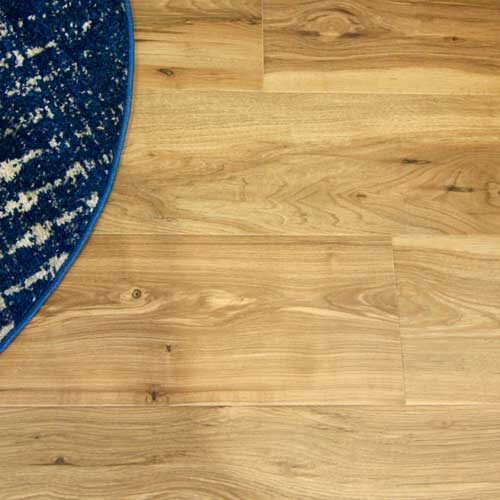
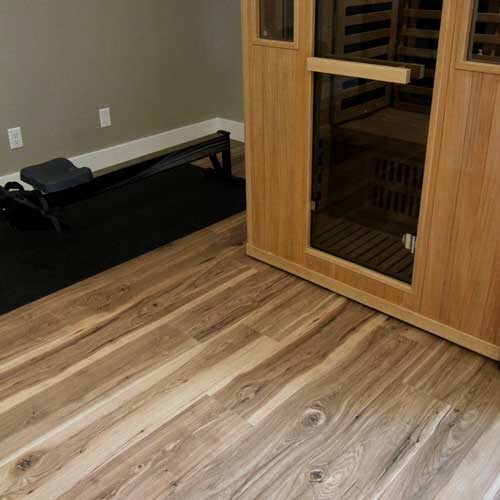
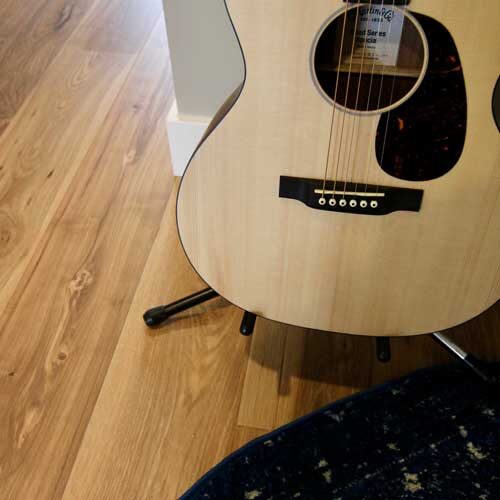
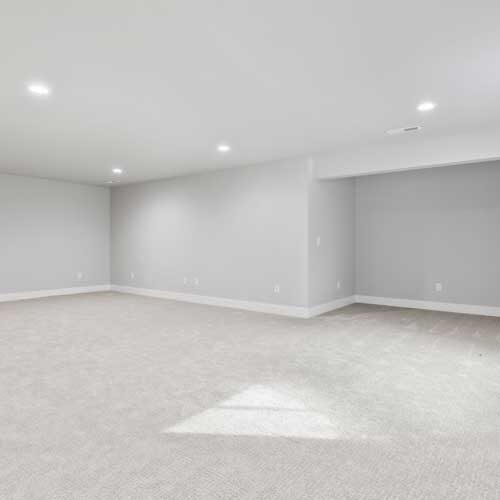
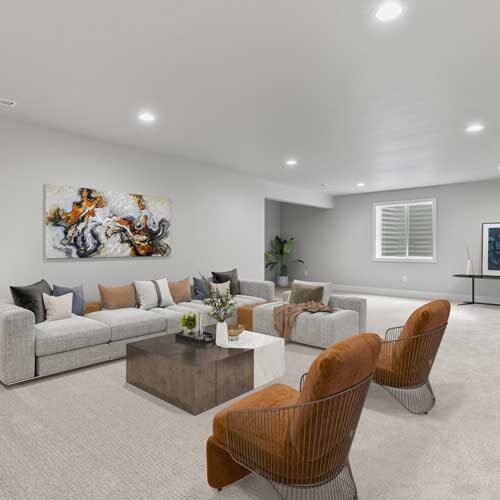
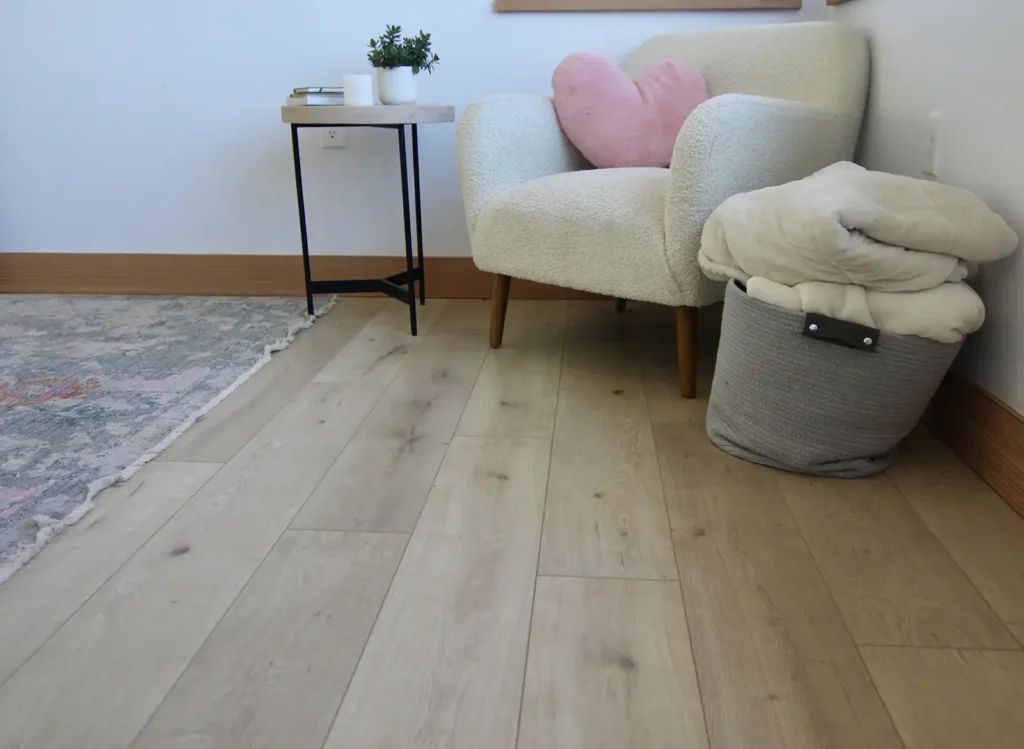
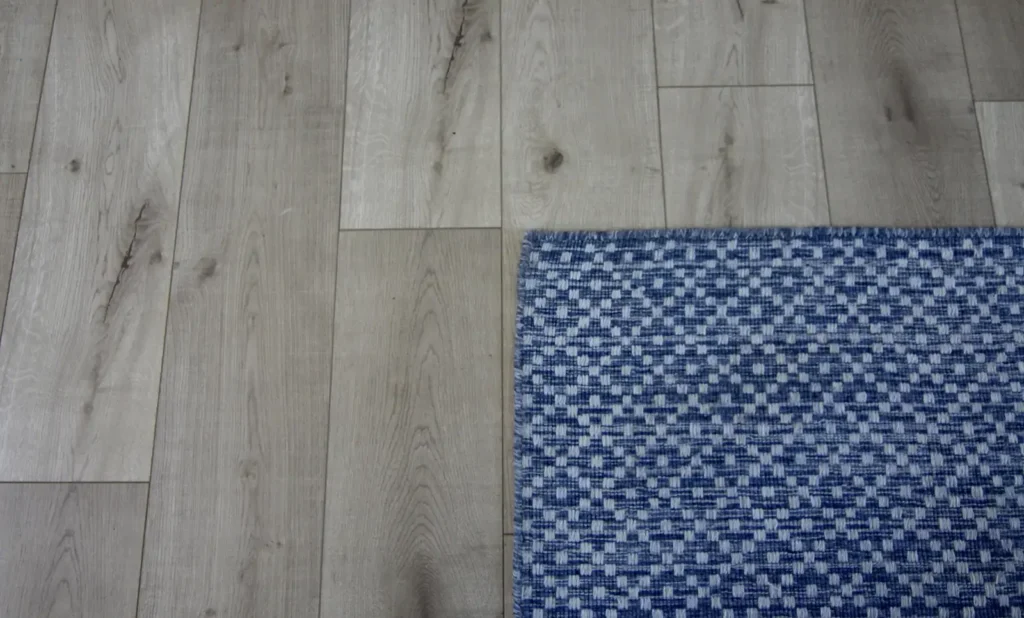
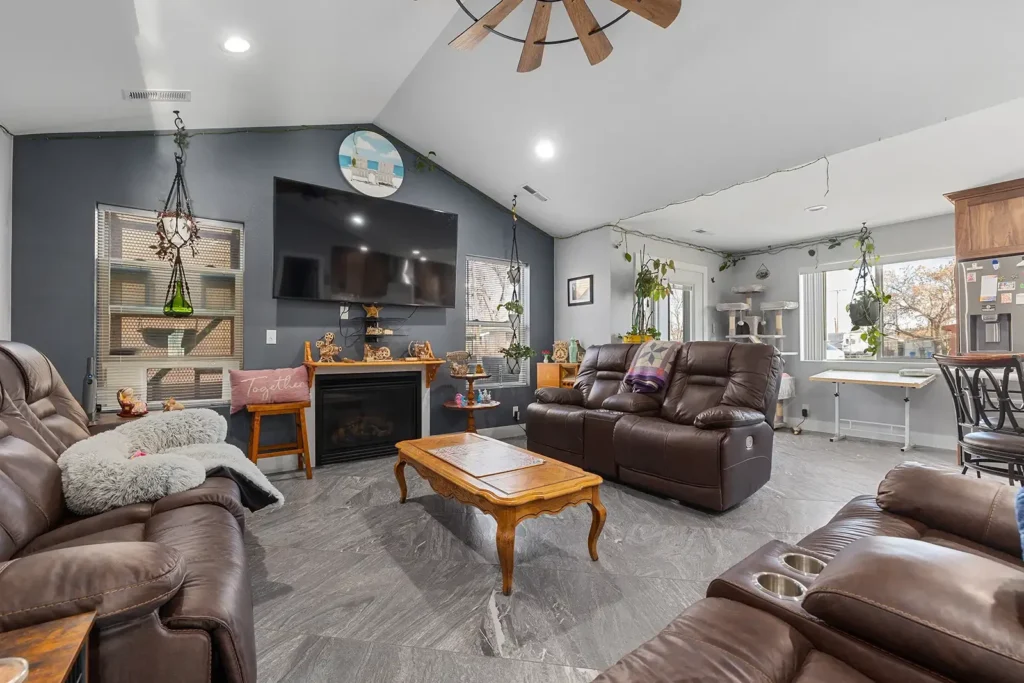
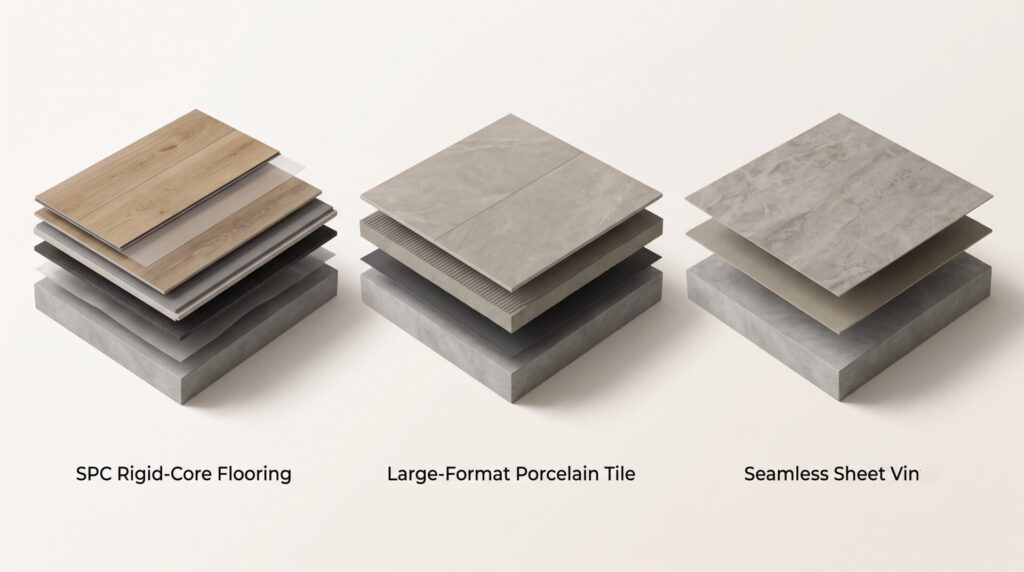
SPC (Stone Plastic Composite, or Solid Polymer Core in some product lines) is a rigid-core variant of LVP built specifically for conditions like this. Most homeowners searching for “waterproof LVP for basement” should be looking at SPC, not standard LVP. The flexible core in standard LVP responds to Montana’s temperature and humidity swings more than SPC’s rigid limestone-infused core does.
That rigidity is what matters in a Billings basement. SPC holds dimensionally stable through the season. Its surface is 100% waterproof. When paired with a properly rated vapor barrier matched to your slab’s measured emission rate, it handles the vapor migration that defeats standard floating LVP.
Cali and Mohawk both produce SPC collections with the dimensional stability and wear-layer thickness that Montana conditions demand. Start with the slab test, let the reading guide the barrier specification, then choose the SPC collection that fits your room.
“The basement flooring conversation always starts with the moisture reading. Once we know what your slab is doing, we can tell you exactly which product and which vapor barrier to pair with it. Guessing on that pairing is where most below-grade installations go wrong.”
Pierce Flooring Billings Team
Porcelain Tile for Zero-Compromise Moisture Resistance
Large-format porcelain tile with a proper mortar bed is the only floor that will never respond to below-grade vapor. There is no click-lock joint to swell, no adhesive that can fail from vapor pressure, no surface layer that can delaminate. The National Tile Contractors Association (NTCA) recommends minimum 95% mortar coverage for moisture-exposed installations. That standard applies directly to Billings basement conditions.
The tradeoff is a cold surface, harder underfoot feel, and longer installation time. Many homeowners pair tile in utility areas and entryways with SPC in the main finished zone.
Sheet Vinyl for Utility Spaces
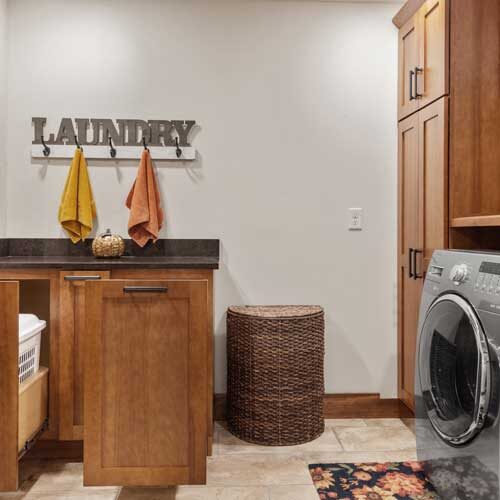
Sheet vinyl is the practical choice for laundry rooms, storage areas, and mechanical rooms. A single sheet covers most spaces without joins, which means no grout lines and no click-lock edges for vapor to work into. It is not the right choice for a finished living space, but for functional below-grade zones, it performs reliably.
“The office staff was friendly and answered all our questions. Ryan and Dexter were great. They were efficient and finished in a timely manner with good follow up to make sure all was right. I appreciated how they cleaned up when they finished. Of course we love the new floor!!!! Before was linoleum, now it’s LVP!”
Billings Homeowner — LVP Installation
Why Engineered Hardwood and Laminate Fail in Montana Basements
This is the most important section in the article, and the one most contractors skip.
Engineered hardwood below grade without a tested vapor barrier typically shows cupping or gapping within the first heating season. Billings’ clay-soil slabs create vapor pressure that works up through the adhesive bond and causes the wood veneer to cup at edges. We see this pattern on jobs where the previous contractor called it a “product defect.” It is an installation defect, and it is preventable.
We do not recommend standard laminate on or below grade, even varieties marketed as waterproof. The surface may resist liquid, but the subfloor conditions in a Montana basement create vapor exposure beyond what the core can handle. Most manufacturers explicitly exclude below-grade use from their laminate warranties. Solid hardwood is not warranted below grade by any reputable manufacturer.
If another contractor has recommended hardwood or laminate in your Billings basement, ask them for the manufacturer’s written below-grade installation authorization. If they cannot produce it, you have your answer.
Keeping Your Basement Floor in Good Shape Through Montana Winters
SPC and LVP floors in a Billings basement need pH-neutral cleaning products. Alkaline cleaners degrade the surface coating over time and void most manufacturer warranties. Sweep regularly to clear grit that acts like sandpaper underfoot. Damp mop only with a manufacturer-approved cleaner, wringing the mop until it is nearly dry before contact with the floor.
Excess moisture pooling at seams or edges can cause swelling in floating installations over time. Steam mops are off the table on any floating floor.
For tile, sanded grout in moisture-exposed areas should be resealed annually. If you chose epoxy grout, it does not require resealing and is a good choice for high-moisture basement applications. According to the NTCA, epoxy grout is specifically recommended for areas with prolonged moisture exposure.
“The maintenance mistake we see most often in Billings basements is a dehumidifier that only runs when there is a noticeable smell. By the time you smell it, the moisture has been working on your floor for months. Run it from May through September whether the basement feels humid or not.”
Pierce Flooring Billings Team
How to Evaluate Any Flooring Installer for Your Billings Basement
Ask these questions before any installer sets foot on your slab.
Do they test for moisture before recommending a product? A professional installer specifies the method (RH probe or calcium chloride) and the threshold they are working against. “We use a moisture meter” is not the same answer.
Do they assess subfloor flatness? The RFCI specifies no more than 3/16-inch variation over a 10-foot span for floating LVP and SPC. Skip this step and you build the punch-list into the schedule from day one.
Do they specify expansion gaps at perimeter walls? In Montana’s freeze-thaw climate, floating floors need room to move. An installer who does not mention expansion gaps has not worked many Montana basements.
What does their warranty cover? The Pierce Promise covers installation errors with a one-year warranty and supports manufacturer defect claims for the life of the product. Ask any contractor you consider what happens when something shows up three months after install.
Pierce Flooring has served Montana since 1924. The Billings team at King Avenue West has seen what Yellowstone County basements actually produce on a moisture meter, and every project begins with that assessment before any product is ordered.
Frequently Asked Questions
What is the best flooring for a finished basement in Billings?
SPC flooring paired with a properly rated vapor barrier is the most reliable choice for Billings finished basements. Its rigid limestone-infused core holds dimensionally stable through Montana’s temperature and humidity swings, and it handles the slow vapor migration from clay-soil slabs that defeats standard floating LVP. For maximum moisture immunity with no click-lock joints to swell, large-format porcelain tile is the alternative.
Can you put LVP in a Montana basement?
Yes, but the waterproof label refers to the surface layer, not the installation’s ability to handle below-grade vapor migration. Standard LVP in a floating installation needs a vapor barrier with a perm rating matched to your specific slab’s measured moisture emission rate. Without RH probe testing and a correctly specified barrier, LVP in a Billings basement carries real risk, particularly on older Westend and South Side construction where slab vapor emission commonly exceeds standard thresholds.
Does Billings’ clay soil affect basement flooring?
Yes, directly. Yellowstone County’s expansive clay soils hold and release moisture seasonally. That moisture migrates upward through concrete slabs, creating vapor pressure that works into adhesive bonds and click-lock joints over time. Montana’s freeze-thaw cycles also cause slight slab-edge heaving at perimeter walls. Homes in Lockwood and the Westend frequently test above safe thresholds even when the slab looks completely dry. Moisture testing before installation is not optional in this market.
What flooring should I avoid in a Billings basement?
Solid hardwood is not warranted below grade by any reputable manufacturer. Engineered hardwood below grade without a tested vapor barrier typically shows cupping or gapping within the first heating season. We do not recommend standard laminate on or below grade. The surface may resist liquid, but the subfloor conditions in a Montana basement exceed what the product’s core can handle. Ask any contractor recommending these products for the manufacturer’s written below-grade installation authorization.
How do I start a basement flooring project with Pierce Flooring?
Call the Billings showroom at (406) 652-4666 or schedule a free in-home measurement online. A Pierce project manager will visit your basement, run a moisture assessment, check subfloor flatness, verify perimeter expansion clearance, and recommend product and vapor barrier options matched to your specific conditions. Material confirmation and installation scheduling follow from there.
Ready to Get Your Billings Basement Right?
A basement floor installed without a moisture test is a floor installed on a guess. In Billings’ clay-soil, freeze-thaw, high-altitude environment, that guess has a familiar outcome.
Pierce Flooring’s Billings team includes the moisture assessment as part of every free in-home measurement. You will know your slab’s actual vapor emission rate before any product is ordered. Every recommendation matches that reading. Every installation is backed by the Pierce Promise.
Before you visit, try visualizing different floor options in your basement using the Roomvo Room Visualizer at pierceflooring.com. Upload a photo of your space and see SPC and tile options in your actual room.
Pierce Flooring & Cabinet Design Center — Billings
2950 King Ave West, Billings, MT 59102
(406) 652-4666
Monday through Friday, 8 AM to 6 PM. Saturday, 9 AM to 5 PM. No appointment needed for in-store consultations.
Browse LVP and SPC options | Schedule a free in-home measurement
You Might Also Like
-
- Flooring
October 7, 2026
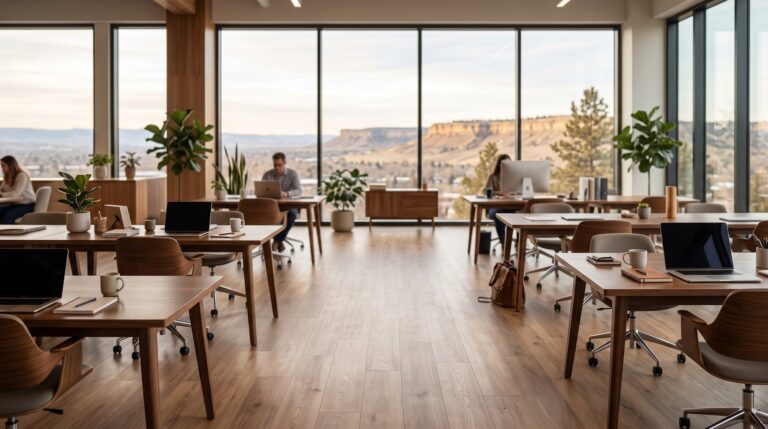
Commercial Flooring in Billings: What Property Managers and Business Owners Need to Know
-
- Flooring
September 16, 2026
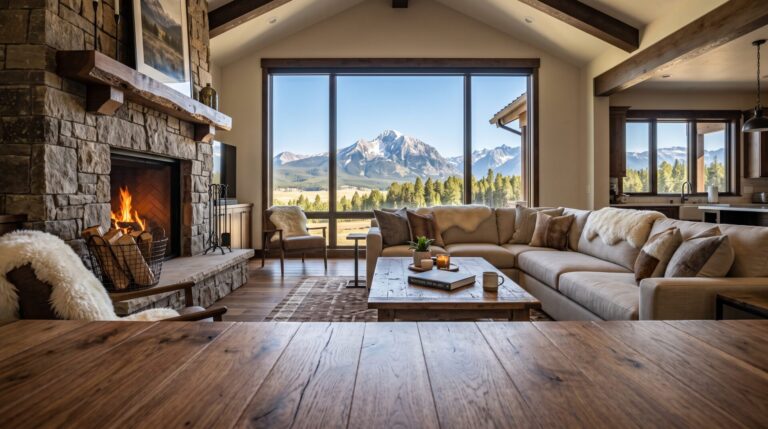
Flooring for New Homes in Ennis and the Madison Valley: What Builders and Homeowners Need to Know
-
- Flooring
August 25, 2026
What Does Waterproof Flooring Actually Mean? A Montana Homeowner’s Guide to LVP Claims
Ready to Transform Your Home?
Contact Us Today to Get Started on Your Dream Space