- Flooring
How to Match Flooring with Interior Paint Colors: A Room-by-Room Guide for Billings Homeowners
March 13, 2026
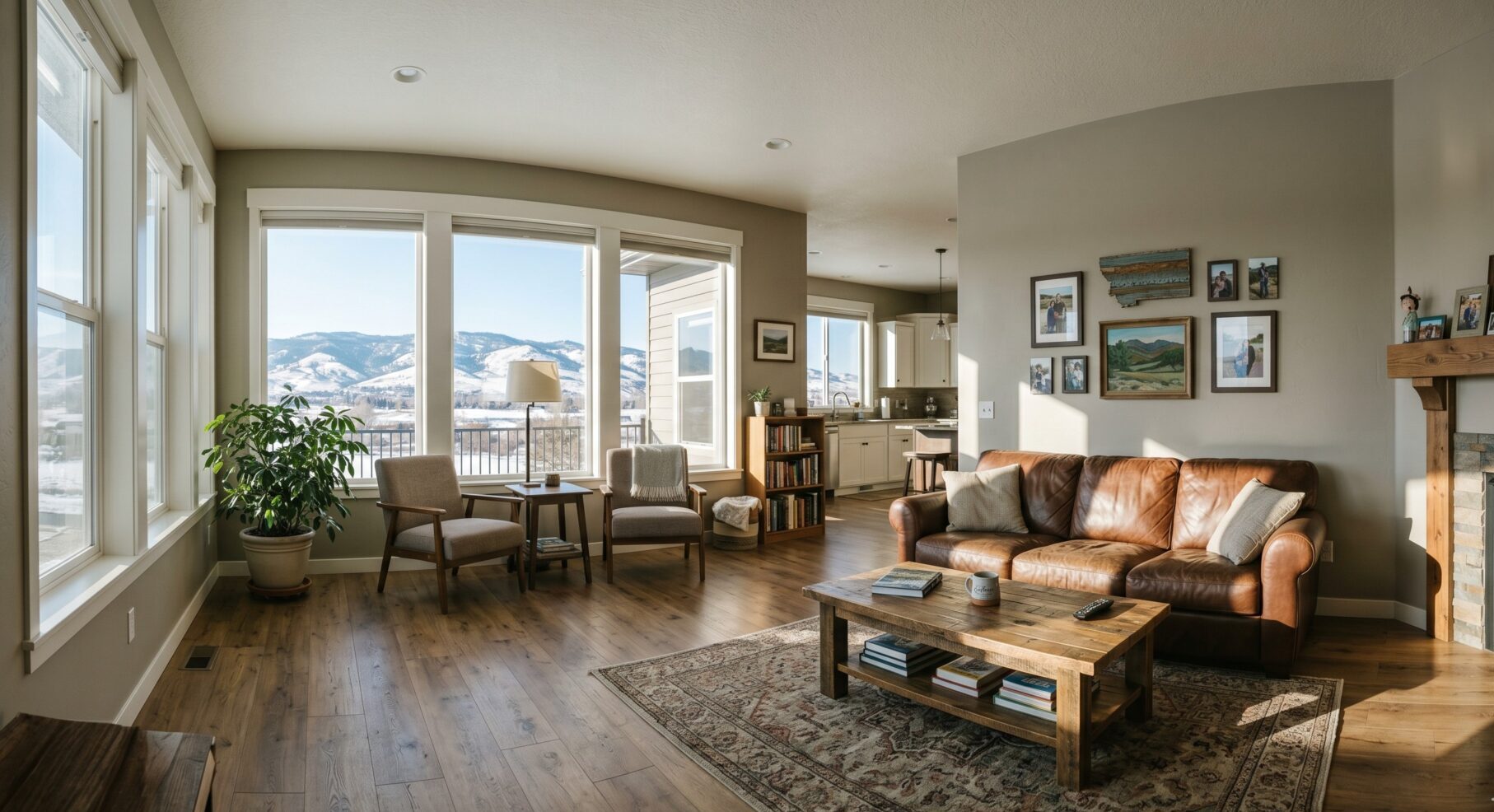
Most Billings homeowners pick their paint color first, then walk into a flooring showroom and try to make it work. That approach almost always creates one of two problems: rooms that feel flat because everything blends together, or rooms that feel chaotic because the contrast is off. The better sequence goes the other direction. Choose your flooring first, then build your wall palette around it.
Your floor covers more surface area than your walls when you account for trim, furniture, and visual weight. It anchors the room. Once you understand that, the question of how to match flooring and paint colors becomes much easier to answer. And here in Billings, where our wide-open natural light and dry, temperature-swinging climate affect how colors read inside your home, a few Montana-specific considerations will help you avoid choices that look perfect in the showroom but land wrong once you get them home.
Pierce Flooring has served Montana homeowners for over 100 years, and that history means we have seen every flooring-and-paint mistake there is. Ready to see how your floors and walls will work together before you commit? Visit our showroom at 2950 King Ave West in Billings, or call us at (406) 652-4666 to schedule a free design consultation.
Why Billings Light Changes Everything About Color Matching
Here is the thing about matching flooring and paint colors that most national design guides miss entirely: lighting is local.
Billings sits at roughly 3,120 feet in elevation and receives an average of 3,500-plus sunshine hours per year, making it one of the brighter cities in Montana. That intense, high-altitude sunlight hits your floors and walls very differently than the diffuse gray light common in Pacific Northwest or Midwest homes that most interior design content is written for.
What that means practically: warm undertones in your floor will read warmer here. Honey oak floors look almost amber in full afternoon sun through a south-facing Billings window. Light LVP with a cool gray base can turn surprisingly purple-gray in certain lighting — not because the product is defective, but because of how our high-plains sunlight interacts with pigment.
Billings runs in the BSk climate classification, a mid-latitude steppe with wide temperature swings. Winters average around 18–33 degrees Fahrenheit in January, summers push to 85-plus, and our annual humidity swings from a dry 40% in August to a relatively moist 76% in January. That swing matters for hardwood and engineered wood floors, which expand and contract with moisture. A floor that looks mid-brown in January can show slightly lighter tones in summer when the wood contracts and grain opens up. Choose your paint with that seasonal shift in mind.
North-facing rooms present a specific challenge in Billings. Without direct sun, cool-toned floors (gray LVP, white oak, slate tile) read even cooler and can make a room feel clinical. Bump your wall tone toward warm greige, creamy off-white, or soft sage in those spaces, rather than a bright white or blue-gray that will amplify the coolness of both surfaces.
Pro Tip from the Pierce Flooring Team
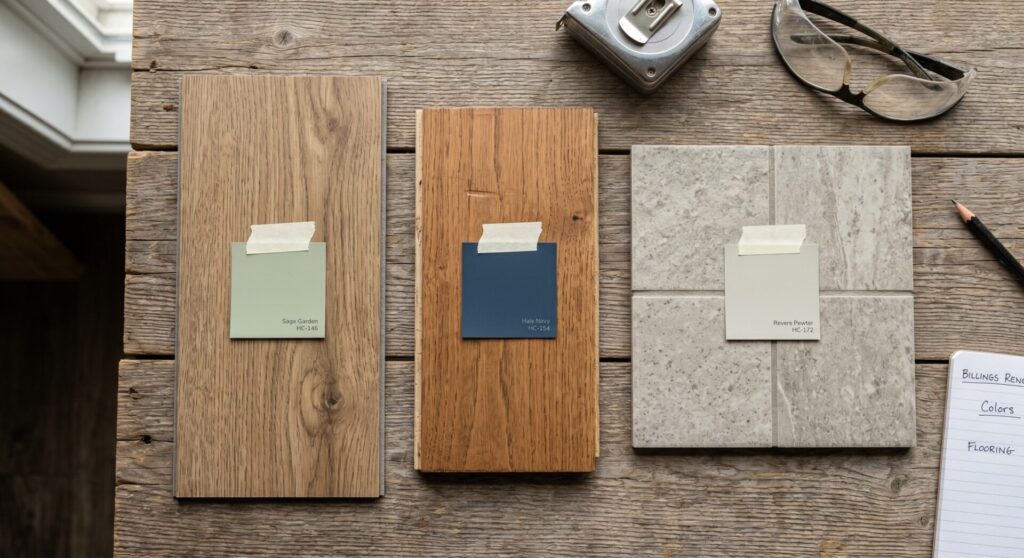
“In the Heights and on the south end of Billings, we see a lot of homes with large windows that flood the main living areas with afternoon sun. Customers often come in with a cool-gray LVP in mind because it looked great in a showroom with fluorescent lighting. When we take samples home with them and look at how that floor reads under their specific afternoon light, about half the time they shift to a warmer tone. Always test your sample in your actual space, morning and afternoon, before you commit.”
Should Your Floor Be Darker or Lighter Than Your Walls?
This is the question most Billings homeowners type into Google at some point during a renovation, and the honest answer is: both work, but for different rooms and different goals.
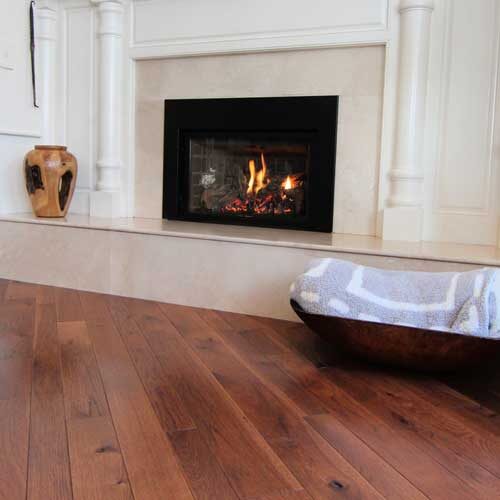
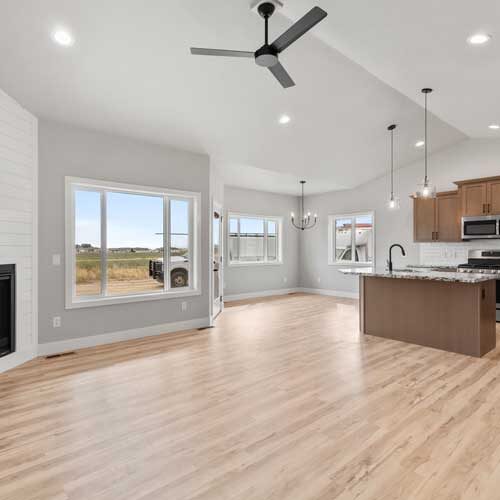
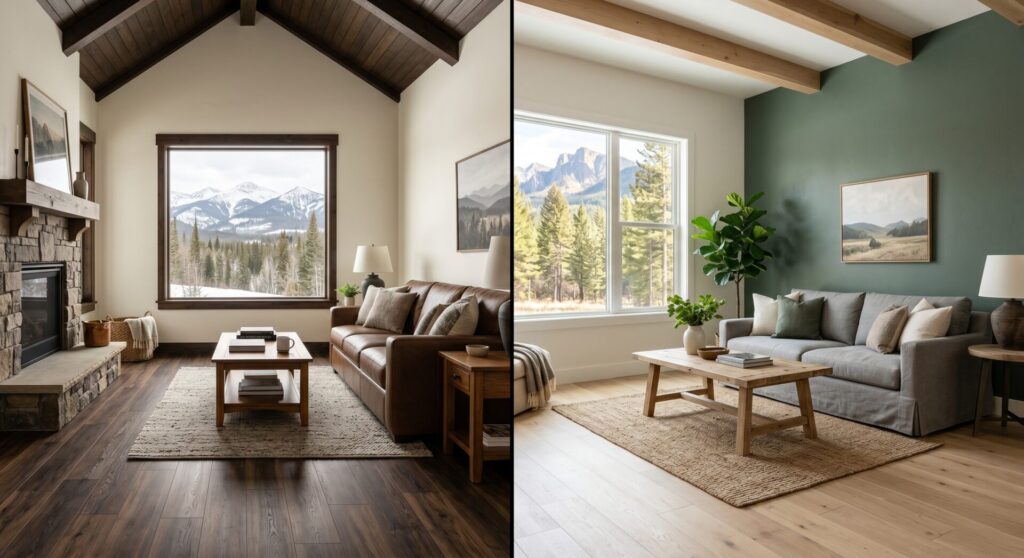
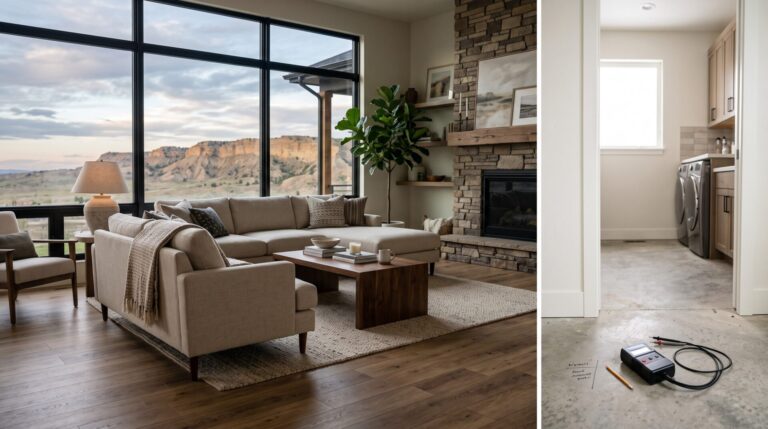
Lighter floors, darker walls create a grounding effect. The ceiling feels higher because the heaviest visual weight sits low and transitions upward to a rich wall color. This works well in dining rooms, offices, and bedrooms where you want intimacy without making the space feel small. In Billings new construction, where open-concept great rooms are common, a medium-dark wall behind a focal point (fireplace, built-in) pairs beautifully with a lighter wide-plank engineered hardwood or whitewashed LVP.
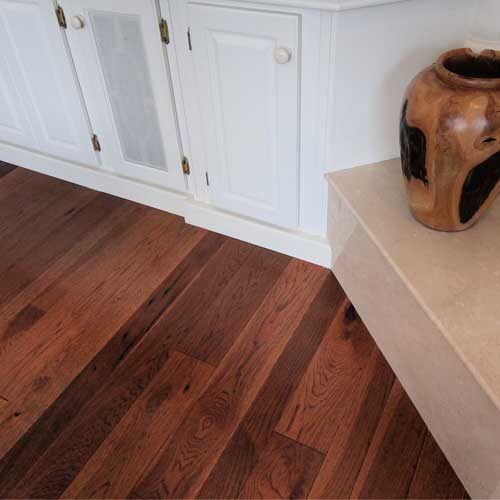
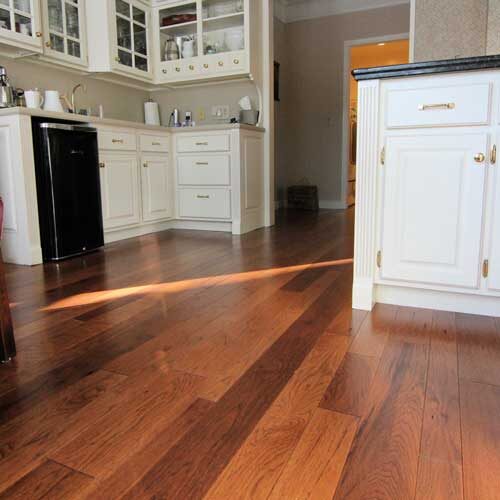
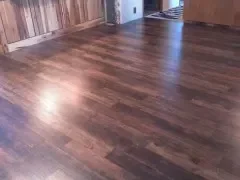
Darker floors, lighter walls is the classic pairing and the most forgiving. It works in virtually every room type and never feels out of style. A warm espresso-toned hardwood or rich walnut-look LVP paired with creamy off-white or warm greige is the combination we see most often in Billings remodels. The contrast is clear, the warmth reads as inviting, and it photographs beautifully.
Same-tone layering (what designers call “tonal layering” in 2026) is gaining traction in master bedrooms and primary bathrooms. The goal is not to match floor and wall exactly, but to choose tones within the same color family at different values. A soft blonde oak floor with a warm oat or linen wall color creates depth without contrast. This approach requires careful attention to undertones: orange-based oak next to pink-based beige creates a clash that is subtle enough to be hard to diagnose but obvious enough to feel wrong.
“We always tell people: don’t bring paint swatches to the showroom. Bring your flooring sample home. You need to see how your actual light source interacts with the floor, not the showroom’s lighting. Once we figured that out, the whole design process got so much easier.” B.M., Billings — Engineered Hardwood
Matching Floor Types to Wall Colors in Billings Homes
Hardwood and Engineered Hardwood
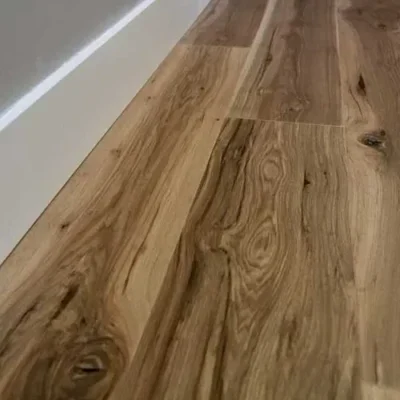
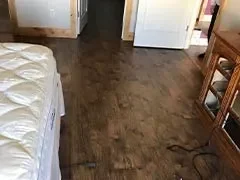
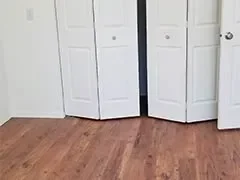
Hardwood floors are the most nuanced to color-match because natural wood grain introduces multiple undertones at once. Here is how to read your floor correctly.
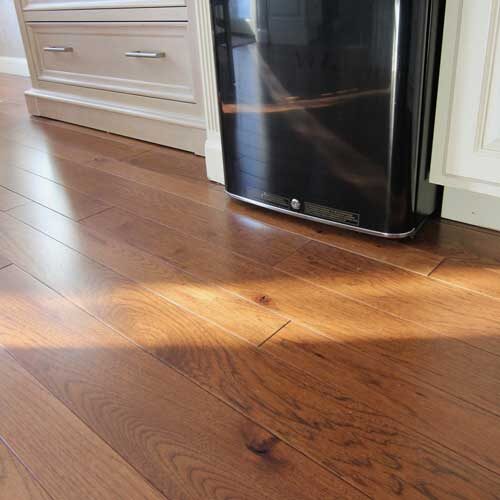
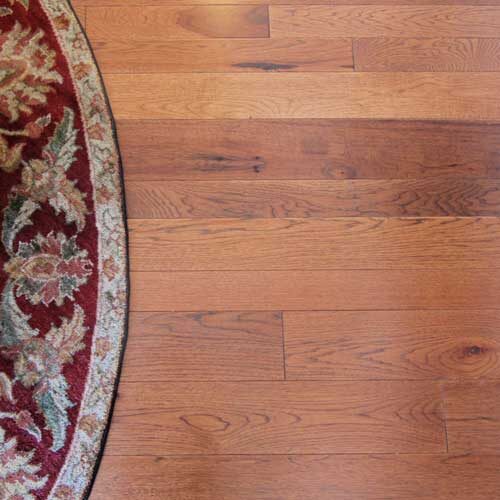
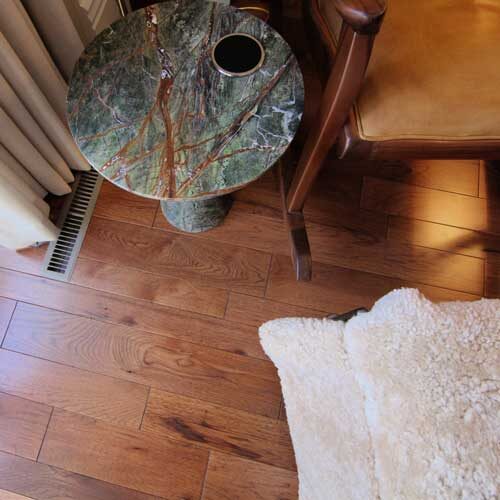
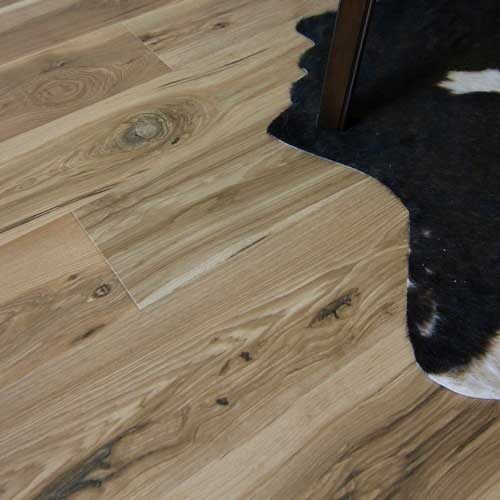
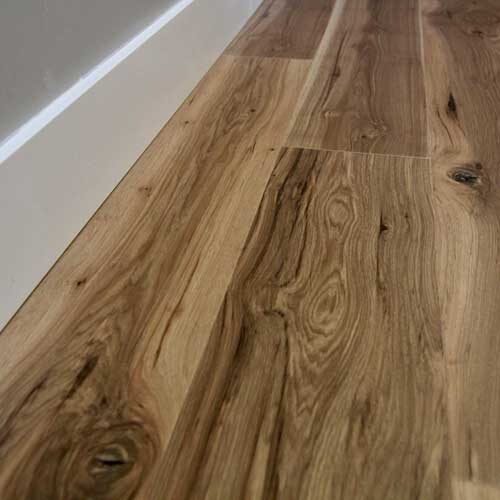
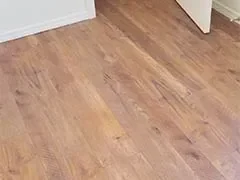
Hold a sample chip in the room where it will be installed and look at it in both morning and afternoon light. Most oak floors carry either a pink/orange undertone (common in red oak) or a yellow/golden undertone (common in white oak and many engineered products). Pink-leaning floors clash with warm walls that share a pink base — go instead toward greens, soft terracottas, or cool off-whites. Golden-leaning floors pair beautifully with warm whites, creamy beiges, mushroom grays, and muted sage greens.
The 2026 shift toward warm minimalism suits Billings homes well. Light-to-medium natural oak paired with warm white walls (think Benjamin Moore White Dove OC-17, or Sherwin-Williams Alabaster) gives a bright, airy result that reads well in our high-altitude sunlight without feeling stark. This combination is currently the most requested pairing at our Billings design center.
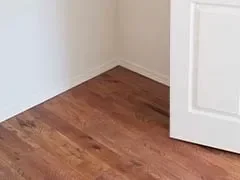
For homeowners in older neighborhoods like the South Side or Lockwood, where many homes have red oak strip floors installed decades ago, the orange undertone can be challenging. Deep cool tones like slate blue or forest green actually neutralize the orange rather than fighting it. Avoid warm creams or tans next to red oak unless the floor has been refinished with a cool gray stain.
Before installation, hardwood and engineered hardwood should acclimate on-site for 48–72 hours. In Billings winters, warehouse and job-site humidity can differ dramatically, and skipping acclimation is one of the most common causes of post-install floor failure in dry climates like ours. Ask your installer about their acclimation protocol before scheduling your install date.
Brands like Anderson Tuftex, Kahrs, and DuChateau offer engineered hardwood with more neutral undertone profiles that are easier to color-match, which is one reason they appear frequently in higher-end Billings remodels.
Luxury Vinyl Plank (LVP)
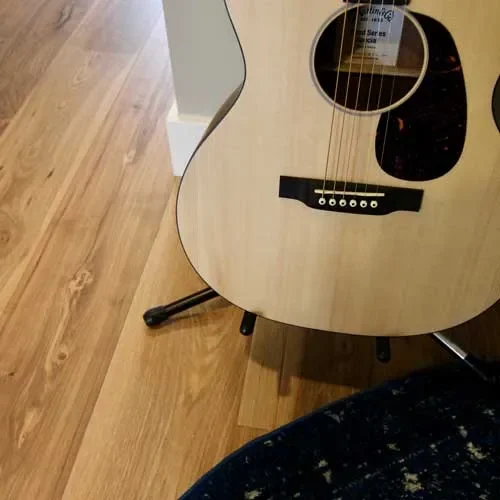
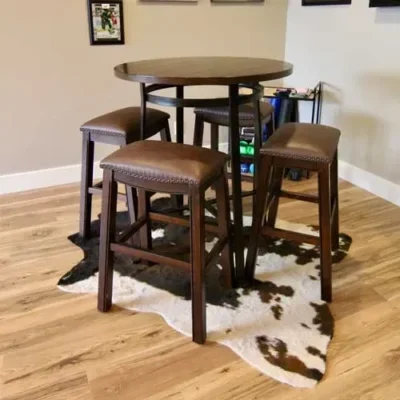
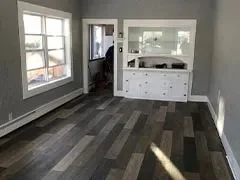
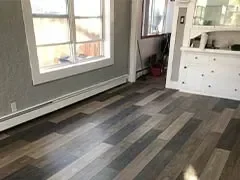
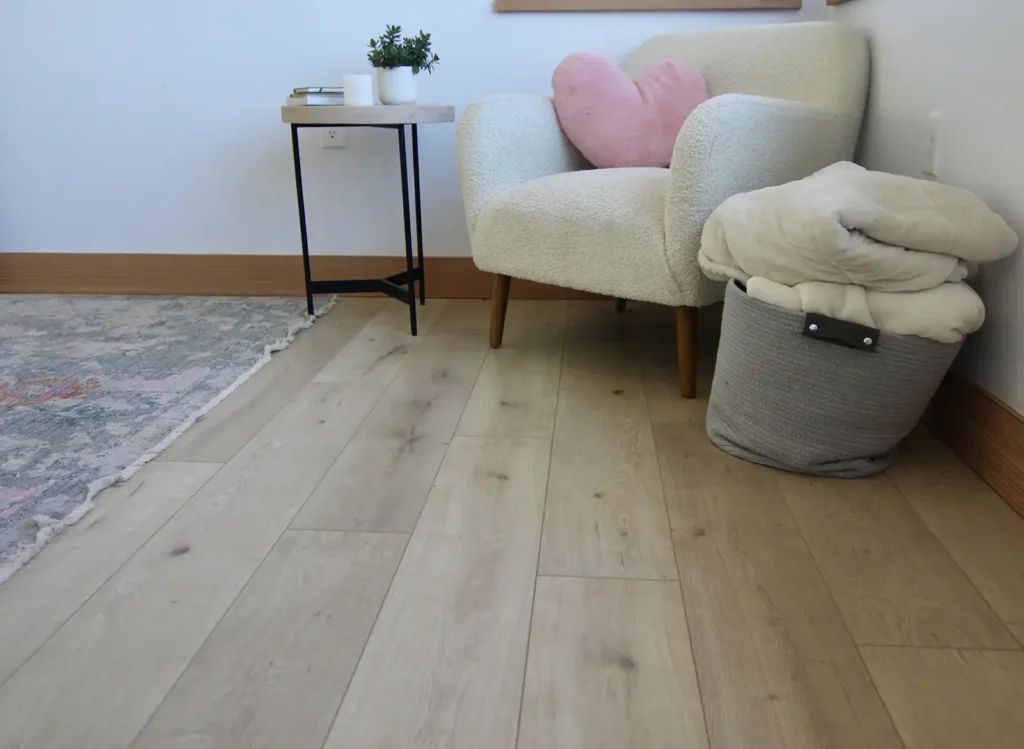
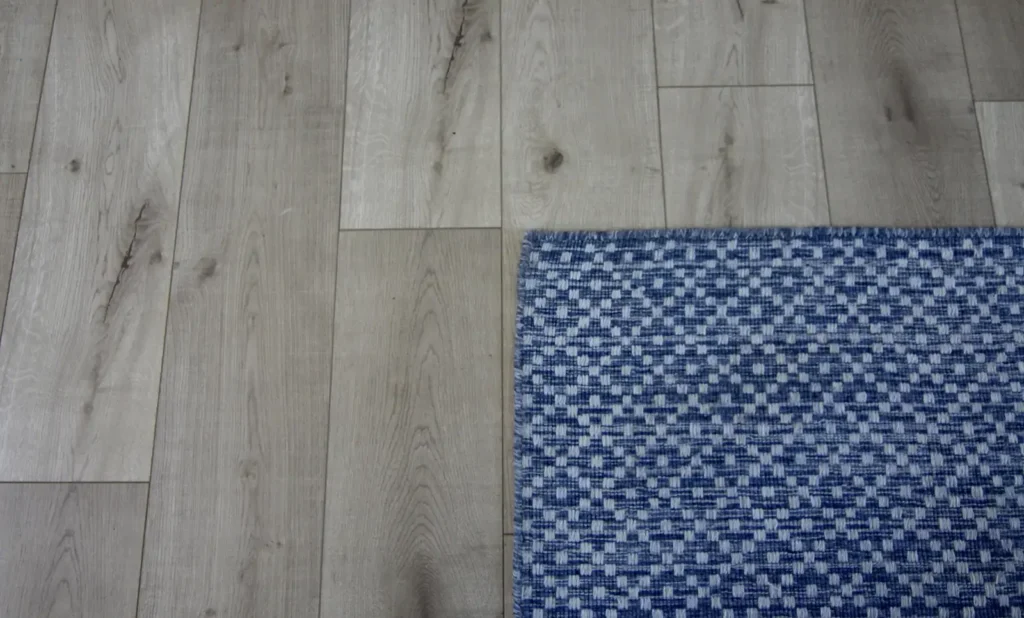
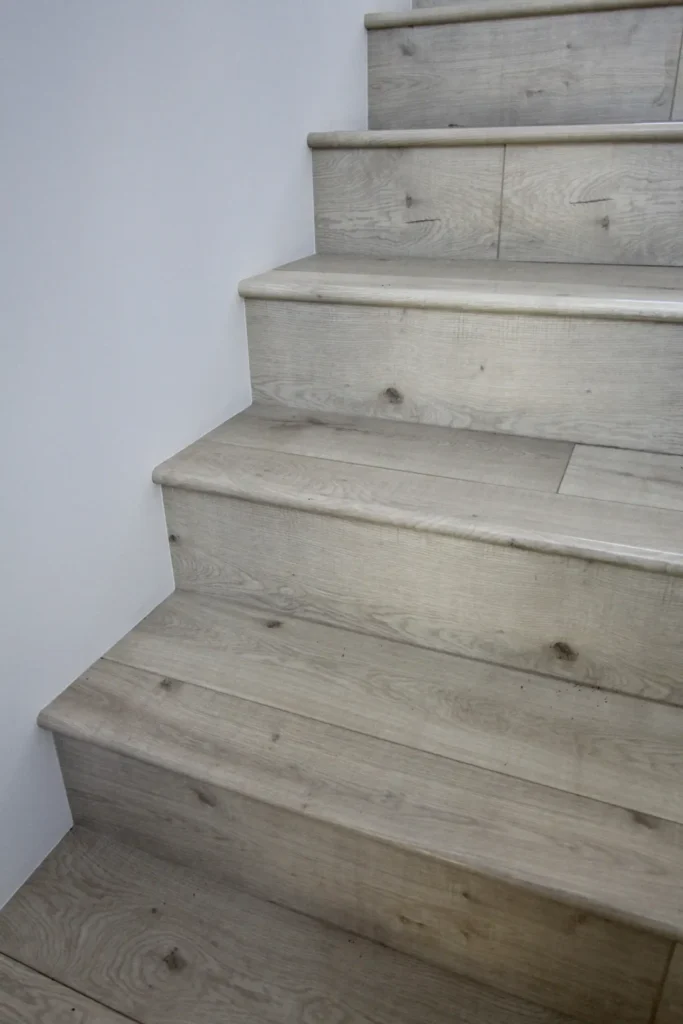
LVP in 2026 has moved decisively away from the cool gray aesthetic that dominated the early 2020s. The most popular profiles today are warm oak looks in medium-to-light tones, pairing well with a wider range of wall colors because the wood texture is less literal than real hardwood.
The undertone challenge with LVP involves how the wear layer responds to light. Many products carry a slight undertone cast that reads differently under strong natural sunlight than under artificial light. This is often due to how the wear layer’s UV stabilizers interact with direct sunlight — a known product characteristic, not a defect. In sun-heavy rooms, ask your dealer about UV inhibitor specs if long-term color stability is a priority.
Always take LVP samples home and check them near a window before purchasing. A floor with a cool or purple-leaning undertone combined with warm beige walls can read as gray or blue-gray rather than the warm brown you saw in the store. Good LVP pairings for 2026: warm greige walls work with most medium-tone profiles; sage green creates a biophilic look popular in open-concept Billings homes; warm whites are the safest choice for light LVP.
For rooms where moisture is a concern — mudrooms, basements over concrete slabs, or laundry areas — a waterproof-core LVP is the right call. The planks themselves resist water, but proper installation with sealed edges and perimeter caulking matters: water that reaches the subfloor through seams can cause damage even under a waterproof floor. See our flooring overview page for help choosing the right product by room.
Tile and Stone
Tile is the most forgiving category for color matching. Its texture and pattern create their own visual interest, reducing the pressure on wall color to carry the room.
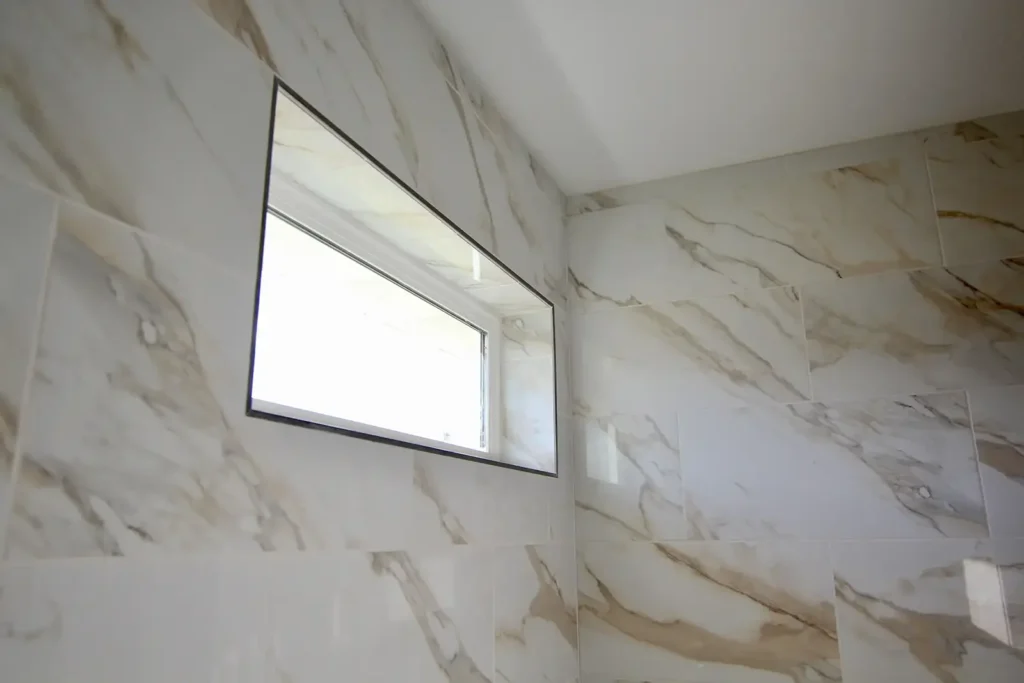
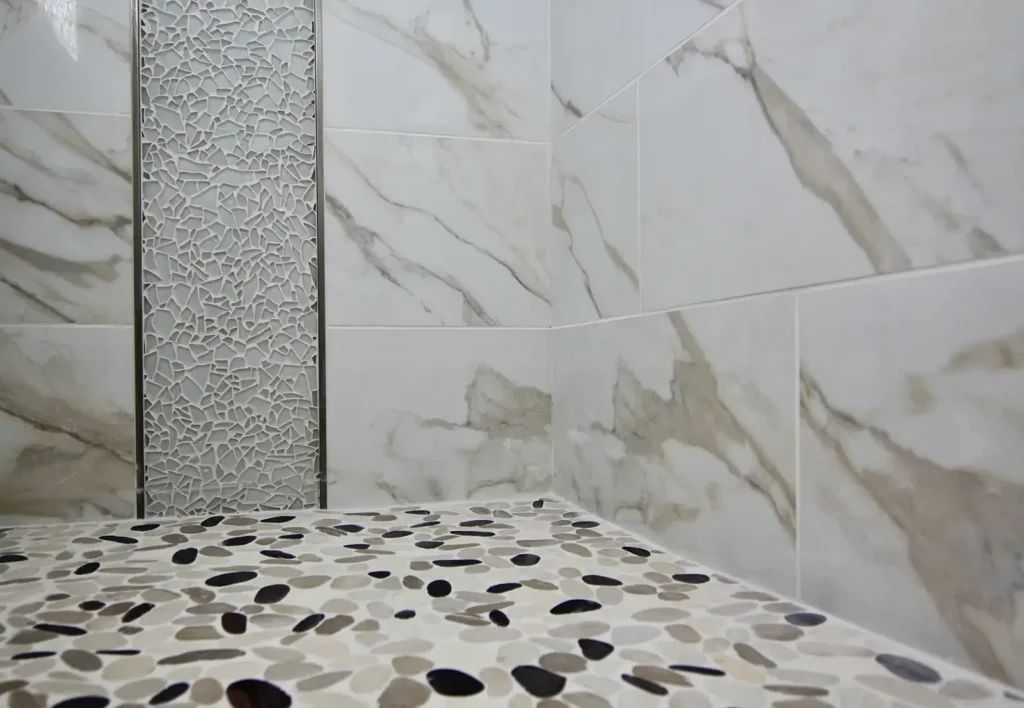
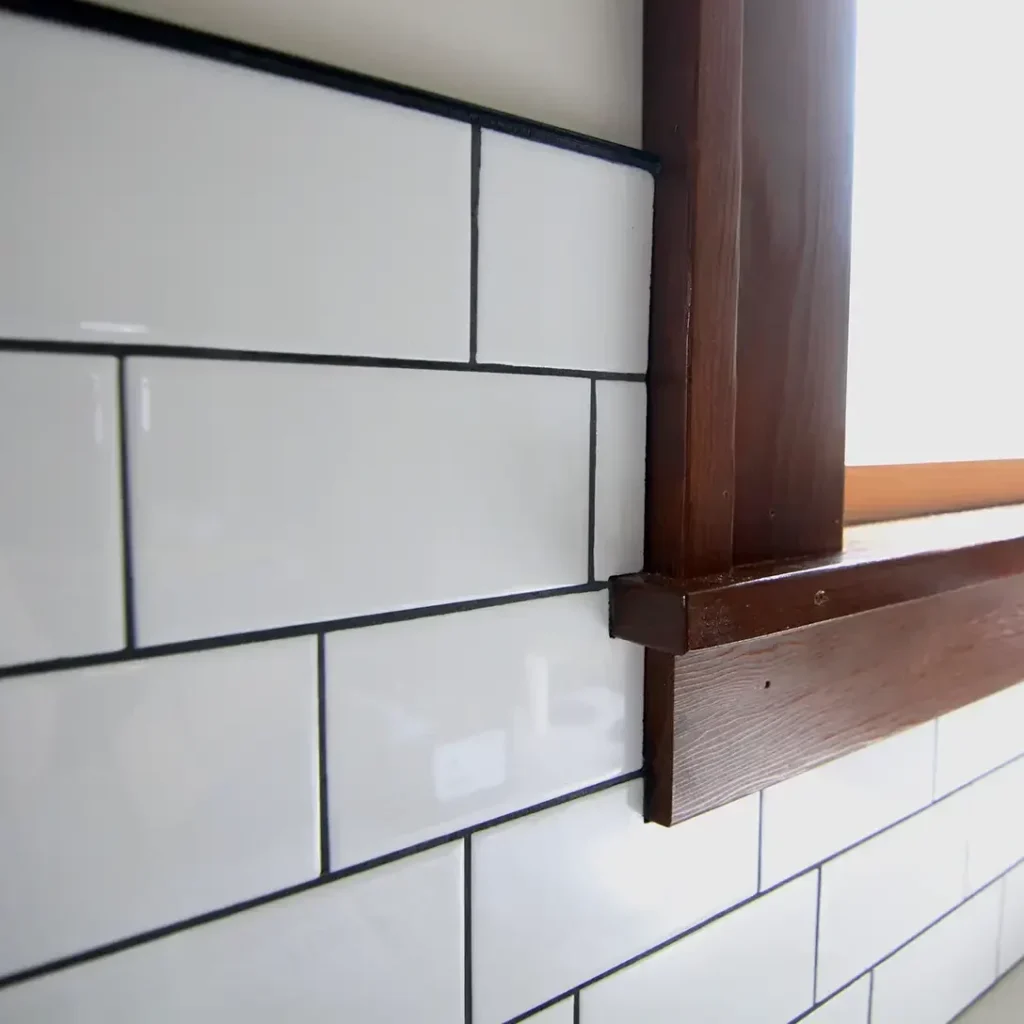
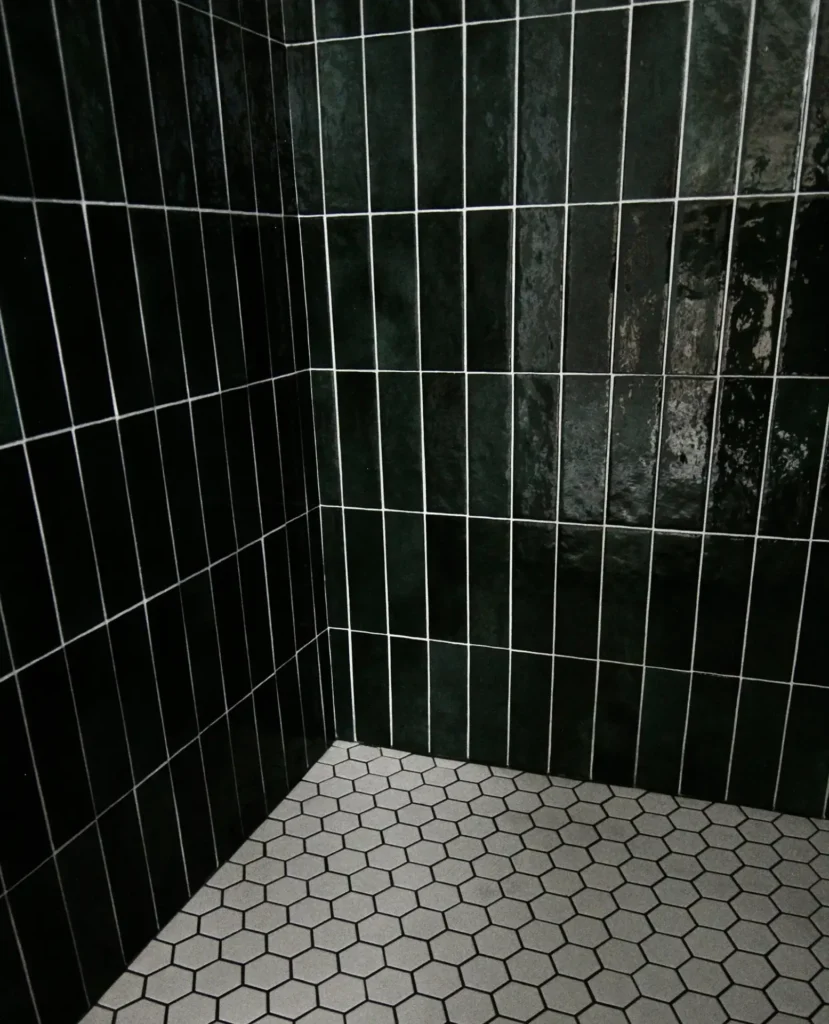
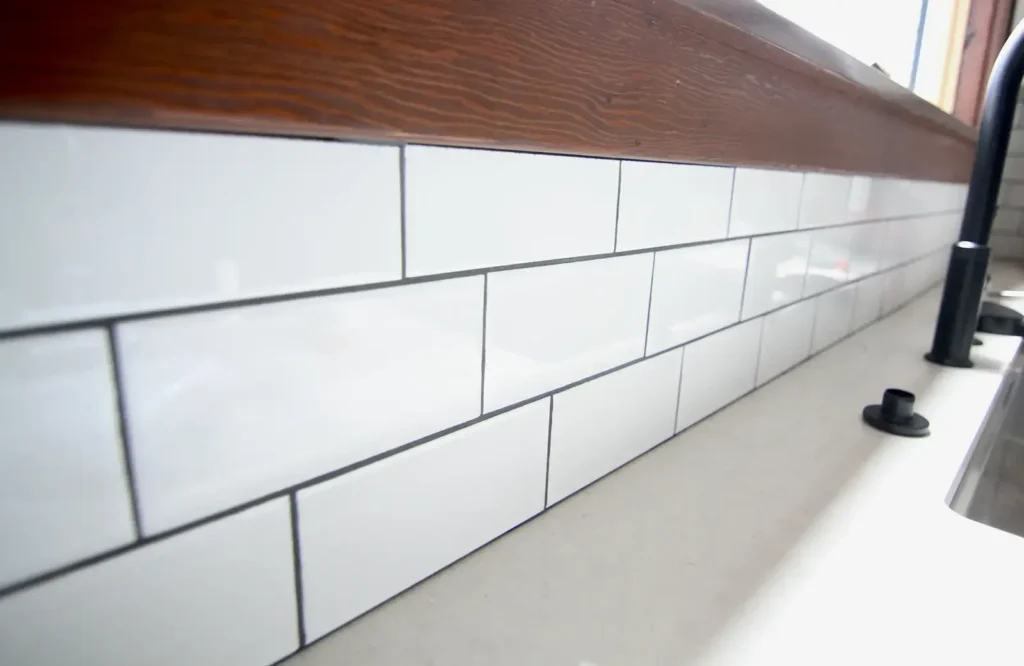
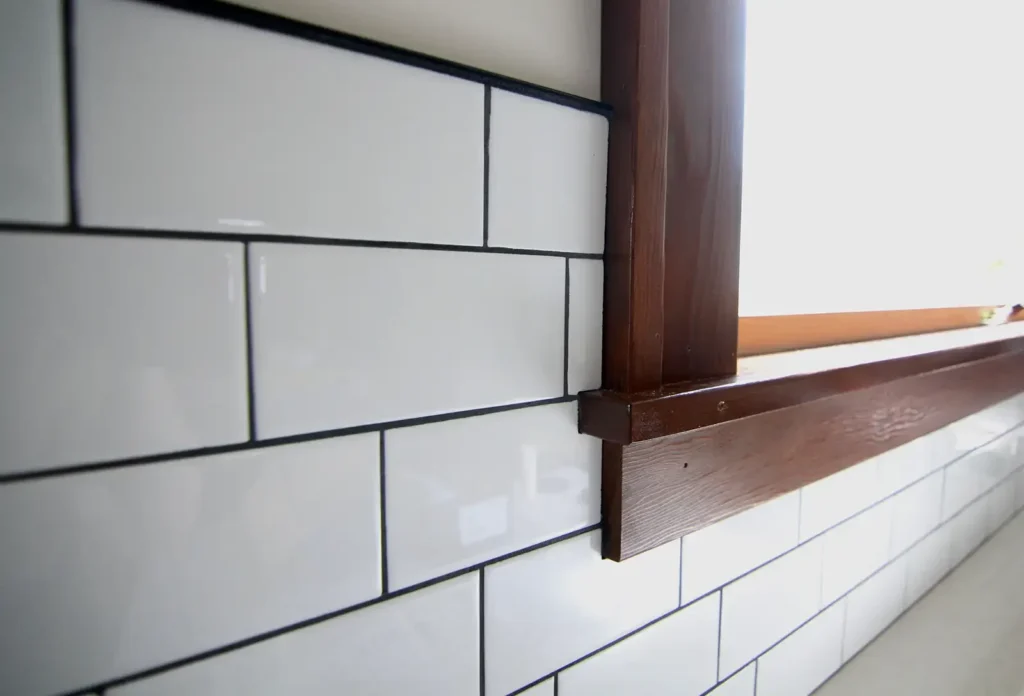
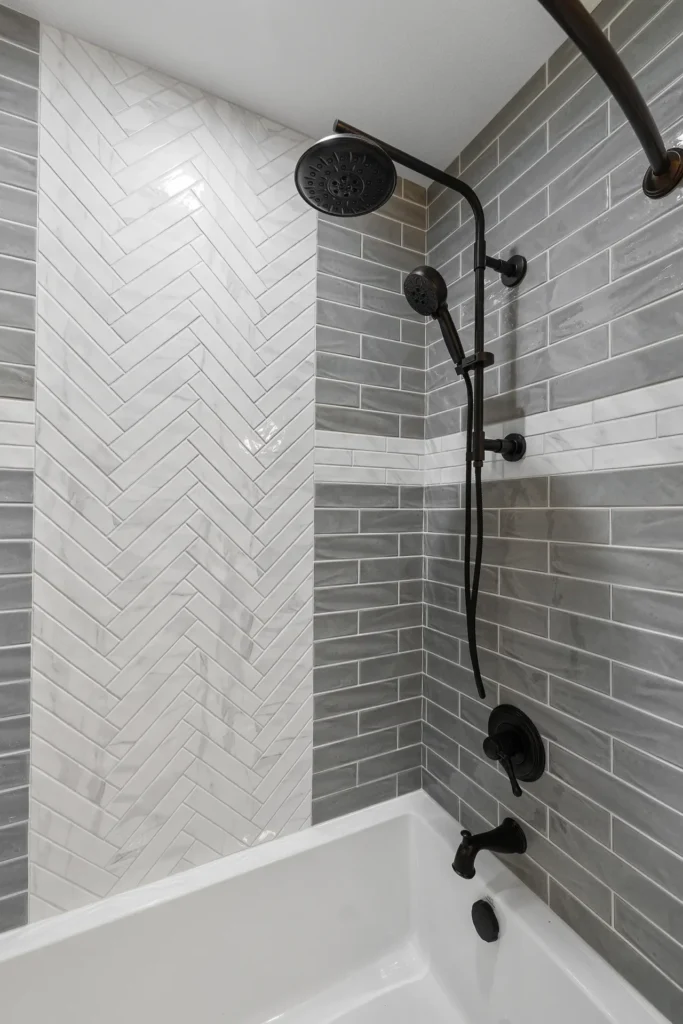
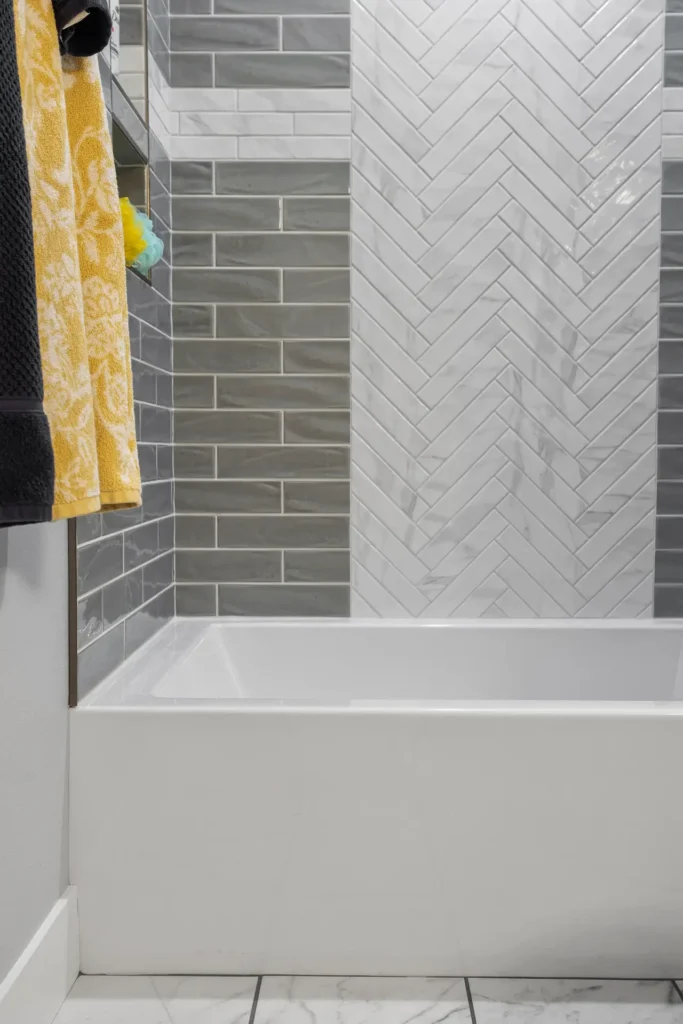
The key is reading the grout line color alongside the tile itself — together they create the visual tone of the floor. A warm white tile with light gray grout reads as soft and neutral; the same tile with bright white grout reads noticeably cooler. In Billings kitchens and baths, choose your grout color alongside your wall paint, not as an afterthought.
For travertine or natural stone tile, look at the veining rather than the base color. Travertine with cream and mocha veining can carry warm terracotta walls beautifully. The same tile with darker, more dramatic veining may need a quieter backdrop — soft white or greige — to let the floor breathe.
Patterned tile (black-and-white checkerboard, Moroccan-style encaustic) needs neutral walls, period. A heavily patterned floor is already doing all the design work, and any wall color beyond soft white, linen, or light greige will compete and create visual noise.
Stone, tile, and countertops are all connected in the kitchen and bath workflow at Pierce Flooring’s Billings showroom. Coordinating all three surfaces in one visit is easier than buying them piecemeal from different suppliers.
Browse our full flooring and tile selection at the Billings showroom.
What the 60-30-10 Rule Actually Means for Floors and Walls
Interior designers use the 60-30-10 rule as shorthand for color proportion: 60% dominant color (usually the floor and large wall areas), 30% secondary color (walls, main furniture), and 10% accent (textiles, accessories). Most homeowners are surprised to learn that the floor belongs in the dominant 60% — not the walls.
The rule breaks down in open-concept floor plans. If your living room, dining room, and kitchen share continuous flooring, that floor may represent closer to 80% of the visual field. Think of it like a painting with too much canvas and too little restraint: a highly patterned or extremely dark floor becomes overwhelming, and your wall color needs to stay fairly quiet to compensate.
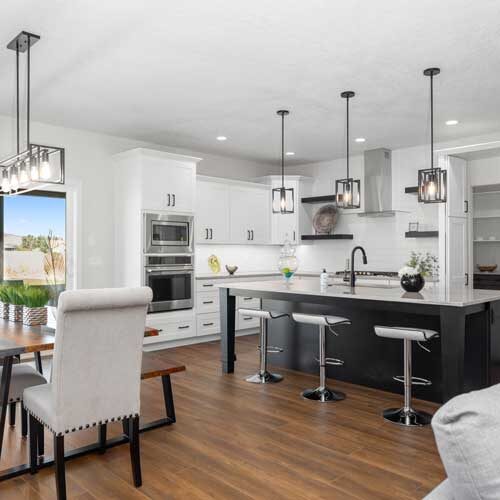
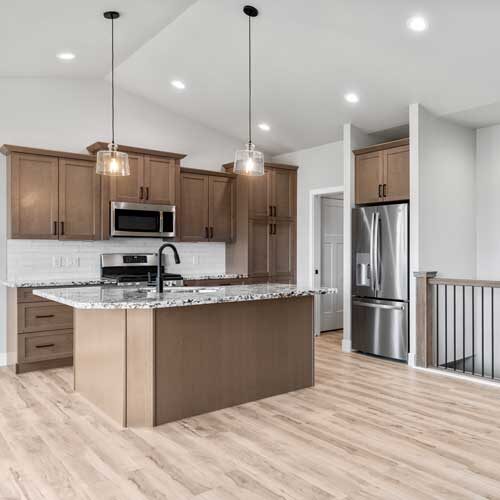
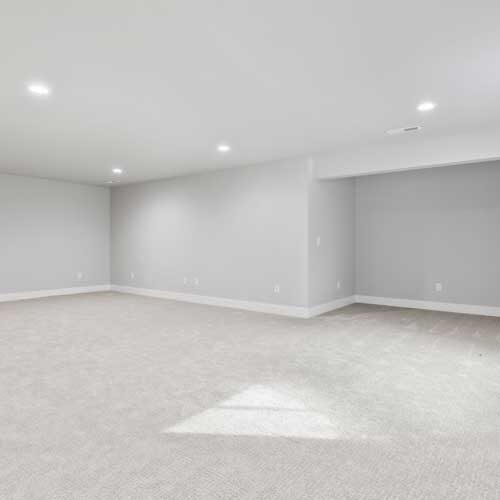
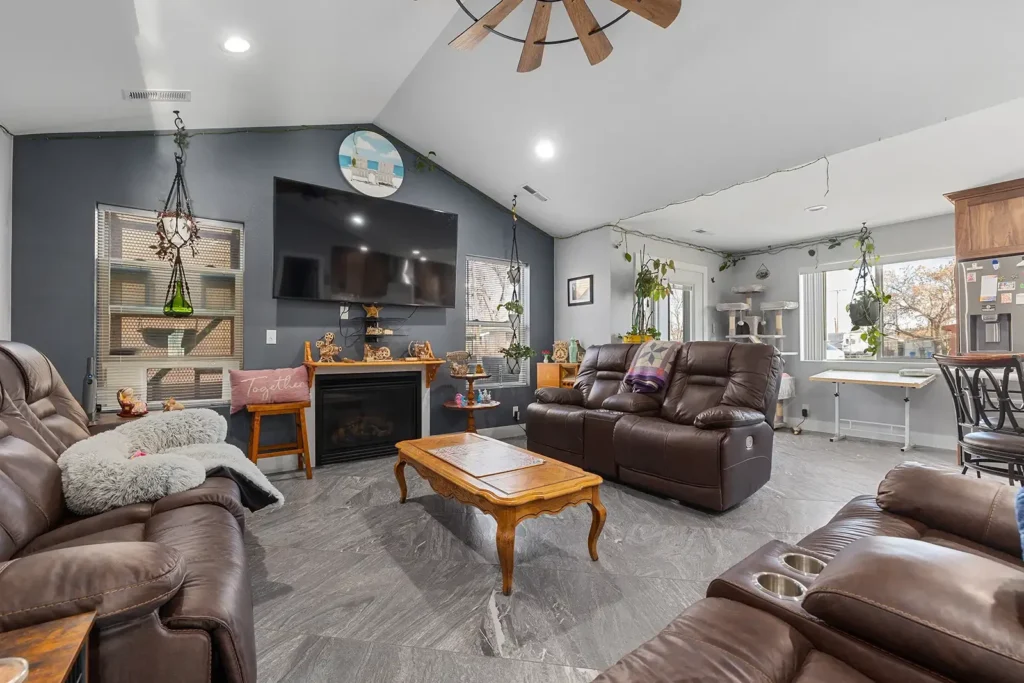
In open-concept Billings homes, establish a consistent floor tone throughout the main level. Differentiate rooms through wall color and furniture rather than floor color. A single, flowing LVP or hardwood gives the space cohesion, while different wall tones per zone (warm cream in the living area, a deeper green in the dining space) create definition without the visual awkwardness of flooring transitions mid-room.
For tips on managing color in tighter spaces, read our post on flooring tips for small rooms.
Baseboards, Trim, and the Details That Make or Break the Room
One question comes up in nearly every design consultation: do baseboards need to match the floor or the wall?
Neither, technically. Baseboards work best as a visual transition — standing slightly apart from both surfaces rather than blending into either one. Traditional white trim next to warm wood floors and greige walls is a classic for a reason: it creates a clean line that lets both the floor and wall read correctly.
The trouble comes from trying to match baseboards to the floor color. Dark walnut floors with dark-stained wood baseboards look heavy and dated, and they erase the natural light-reflection line that white trim provides at the base of a room. Painting baseboards the wall color is a current minimalist trend and can look elegant, but it requires very clean installation because gaps or seams become obvious without the contrast of a white border.
Match trim to wall color if you are going for a full monochromatic look. In all other cases, white or off-white trim is the most durable and flexible choice.
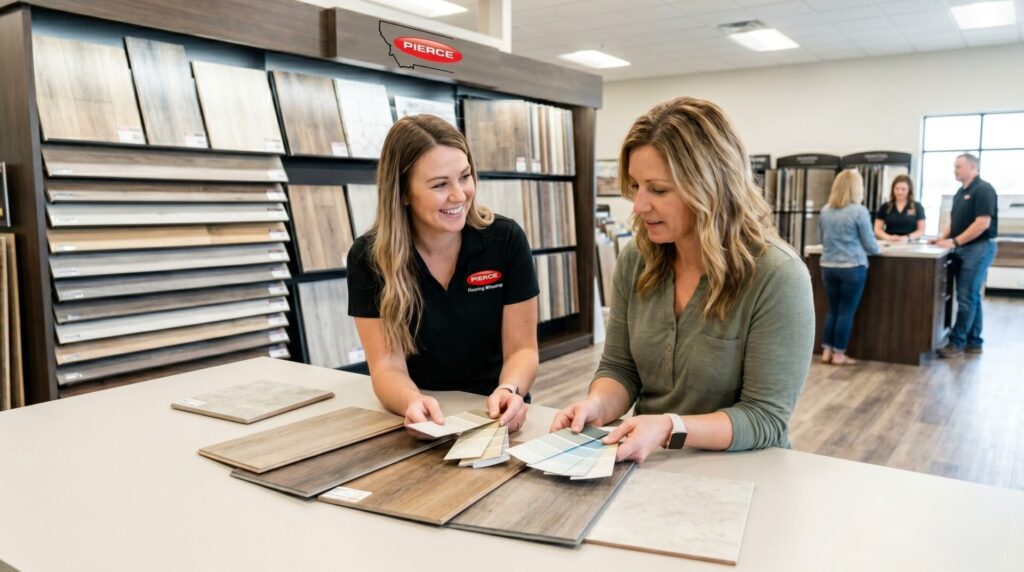
“One of the most common mistakes we see is people choosing flooring and paint separately, buying both, and only then trying to reconcile them. Our design consultants are here to help you work through all of it at once — trim, cabinetry, area rugs, all of it. The Room Visualizer on our website is a great starting point, but nothing replaces bringing samples home and seeing them together in your actual light.” Kimberly Wynia, Store Manager, Pierce Flooring Billings
Try our Room Visualizer to upload a photo of your space and preview how different products interact with your walls before you visit the showroom.
Room-by-Room Color Matching for Billings Homes
Living Room and Open-Concept Areas
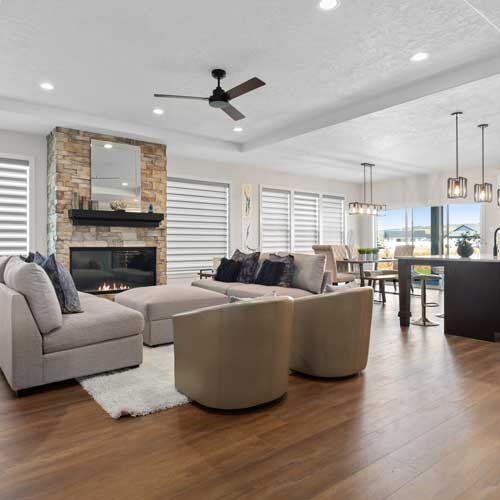
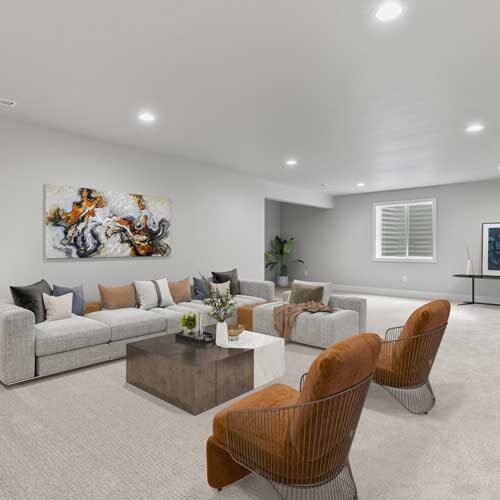
Cohesion across a large space is the priority. Choose flooring that reads consistently in all three lighting conditions you will experience: bright morning sun, artificial evening light, and overcast-day light. LVP and wide-plank engineered hardwood are the most forgiving options here. Wall colors in the warm neutral range (soft white, greige, warm cream) let the floor anchor the space and give you flexibility to update accent pieces over time without repainting.
Bedrooms
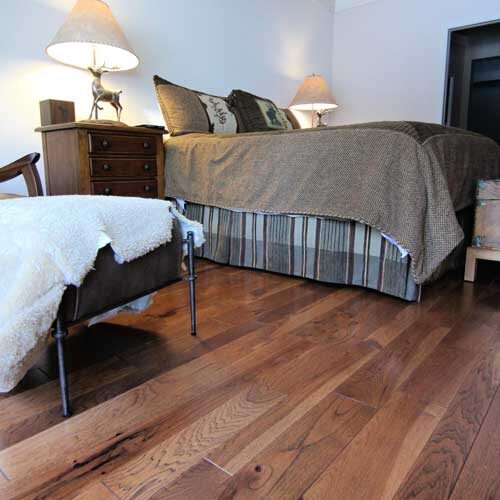
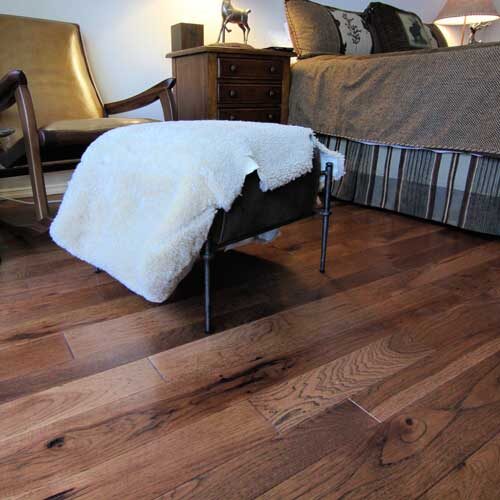
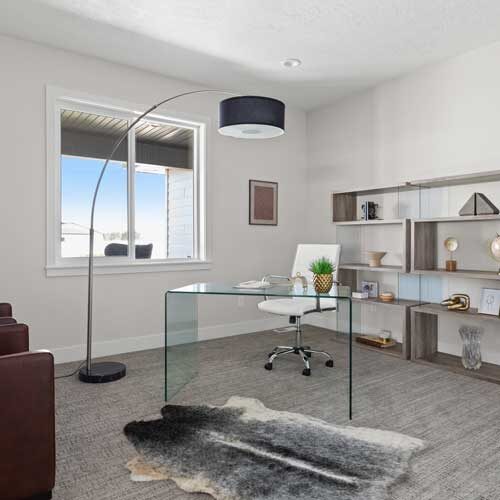
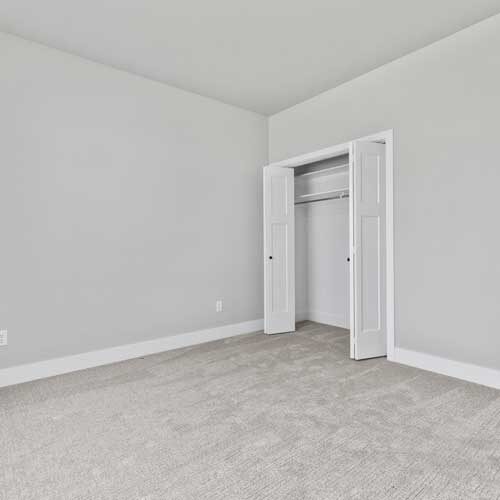
Warmth and comfort drive the bedroom decision. Carpet remains the preferred choice for Billings master bedrooms because it reads warmer visually and underfoot, which matters in our cold winters. For bedrooms with hardwood or LVP, go with warmer, slightly deeper wall tones — muted sage, soft terracotta, warm taupe — rather than bright whites, which feel too alert for a sleep space.
Kitchen
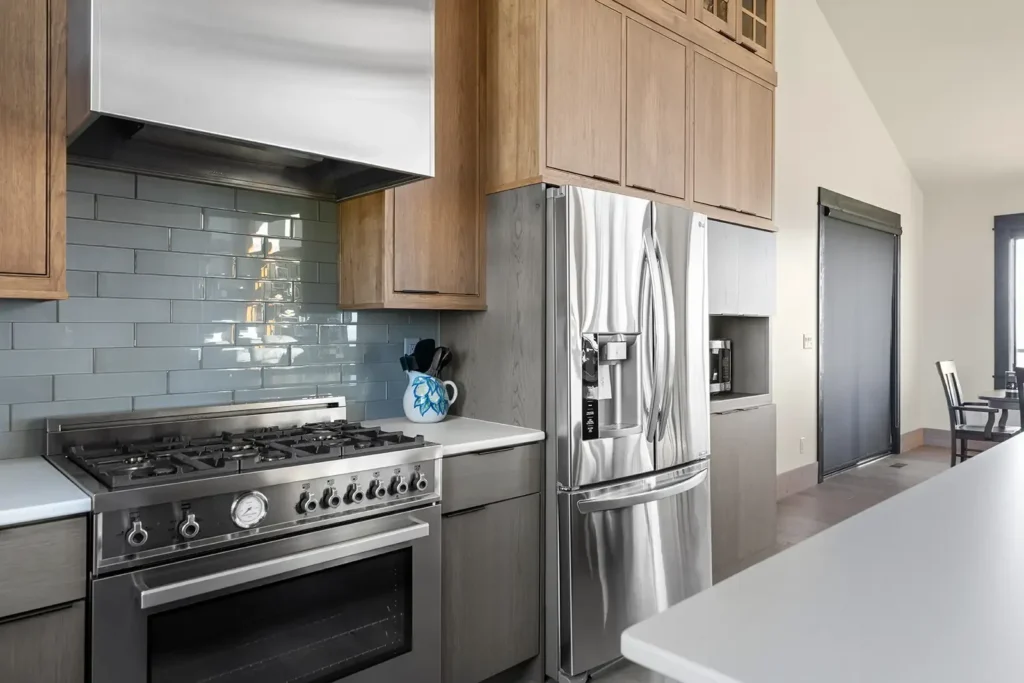
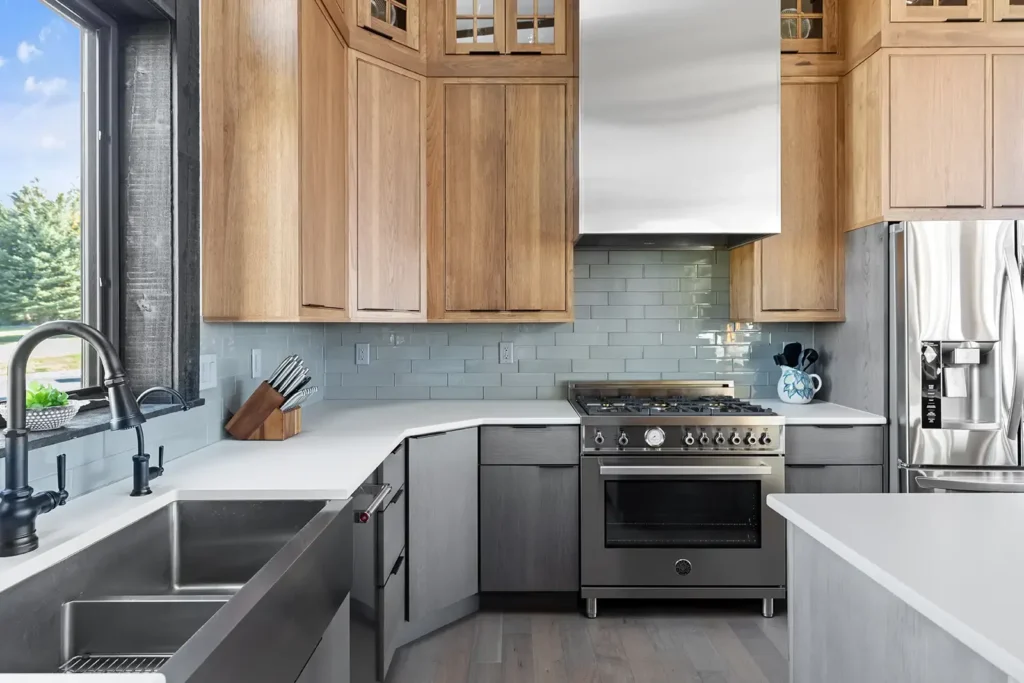
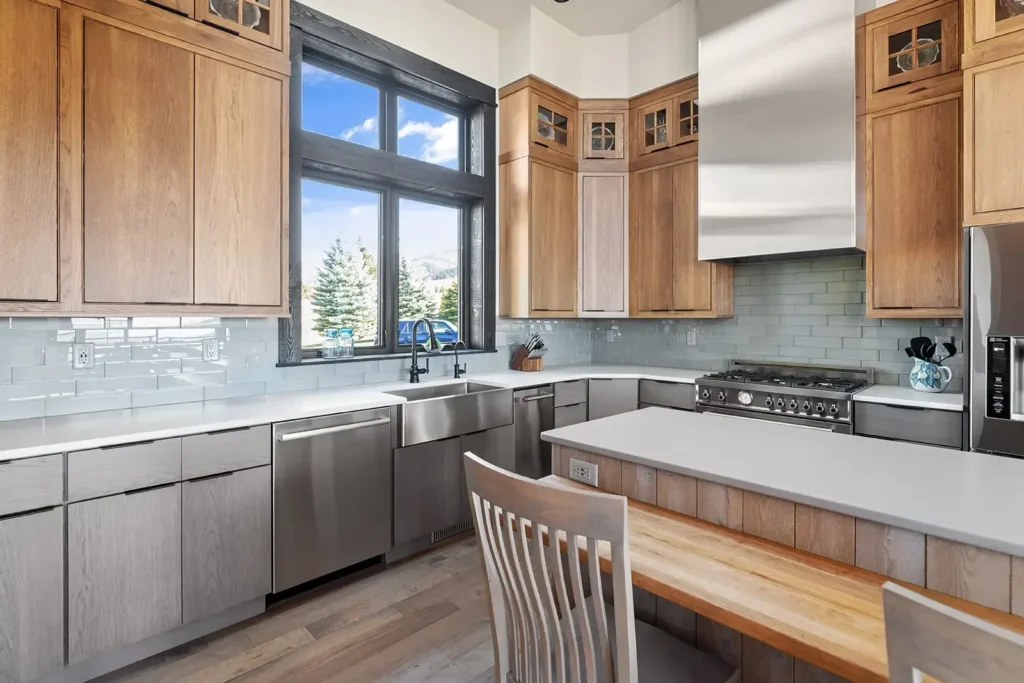
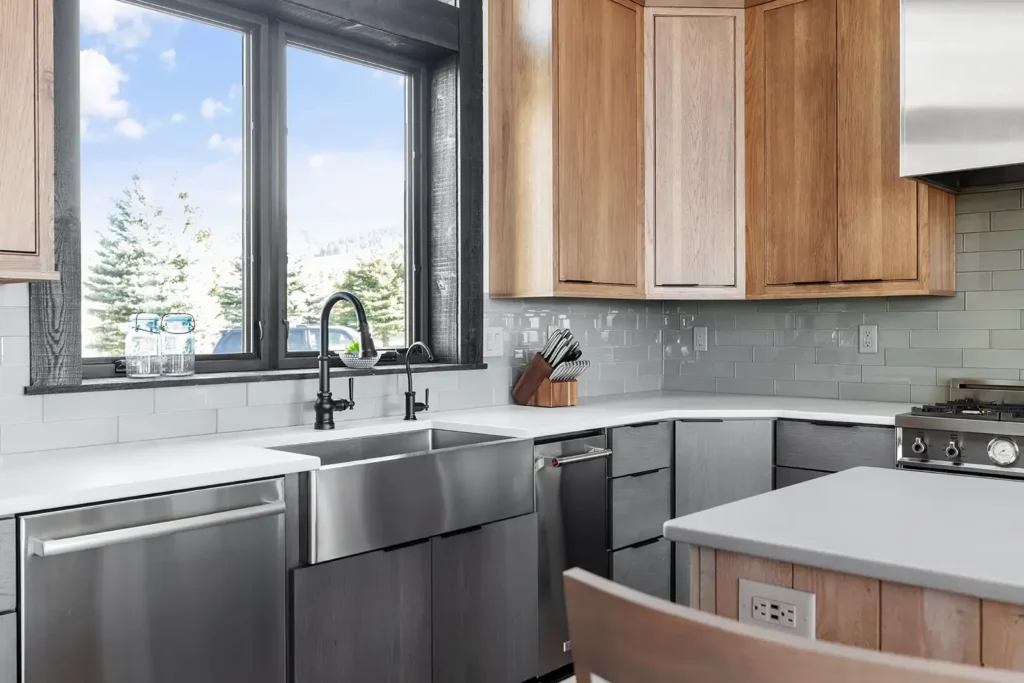
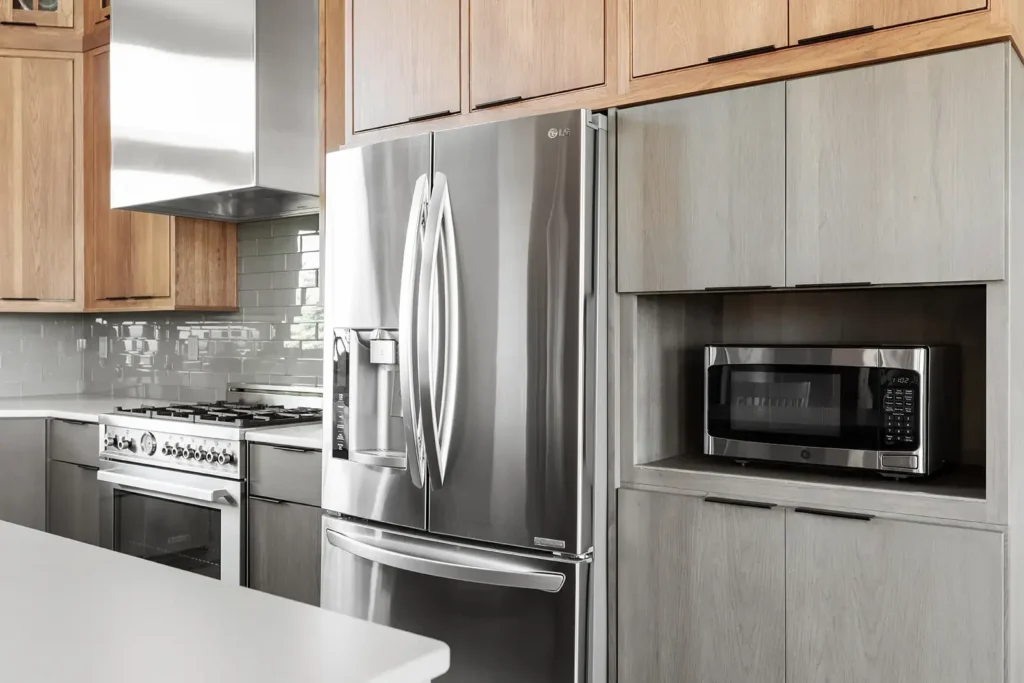
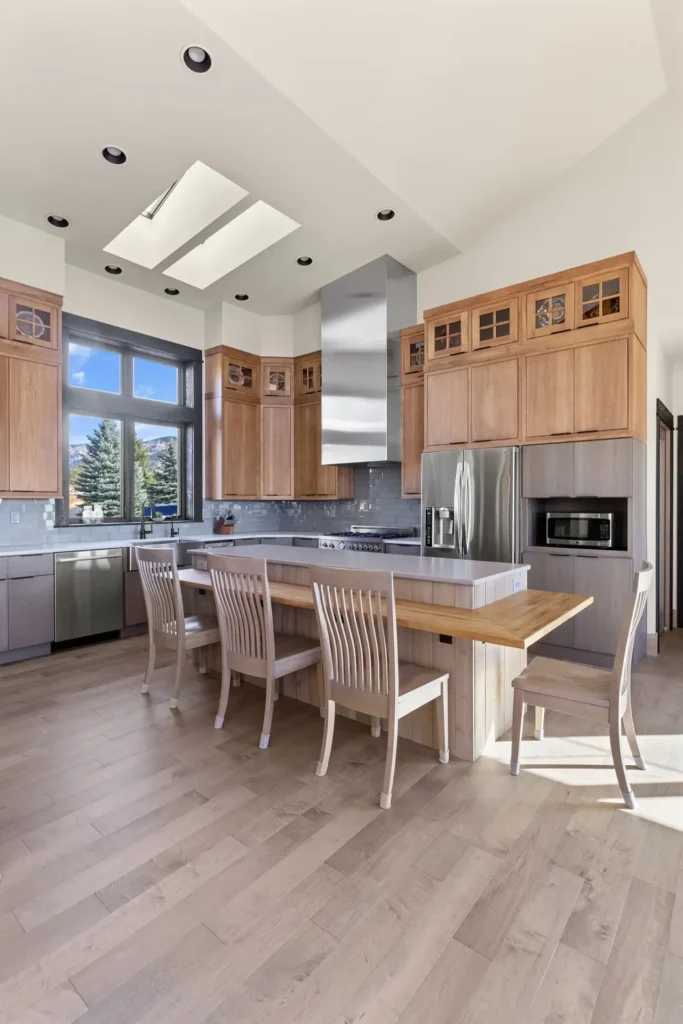
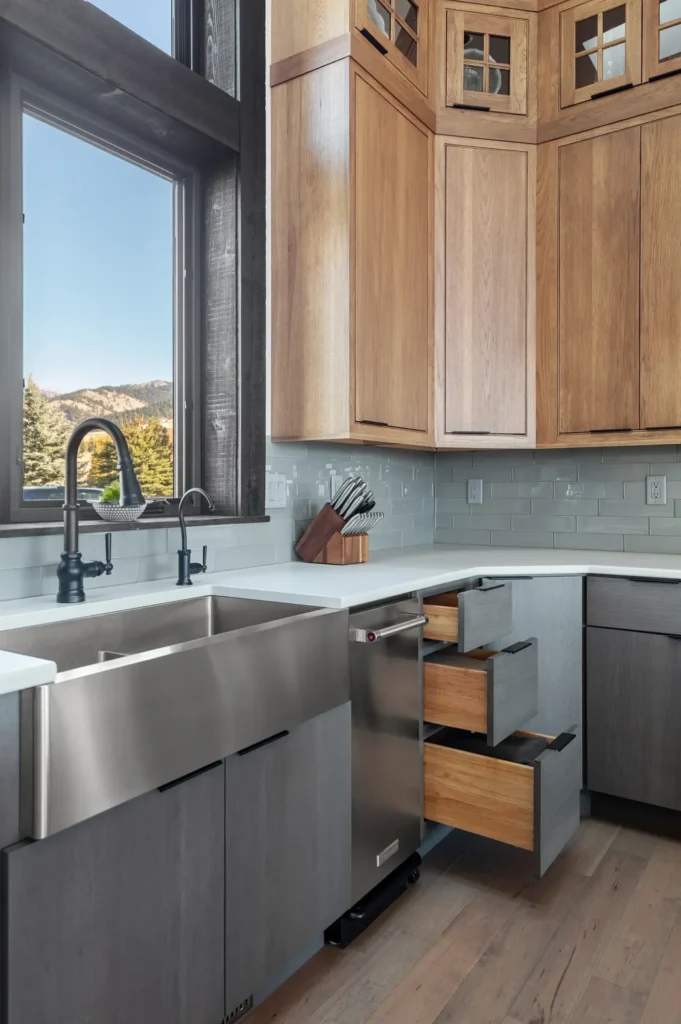
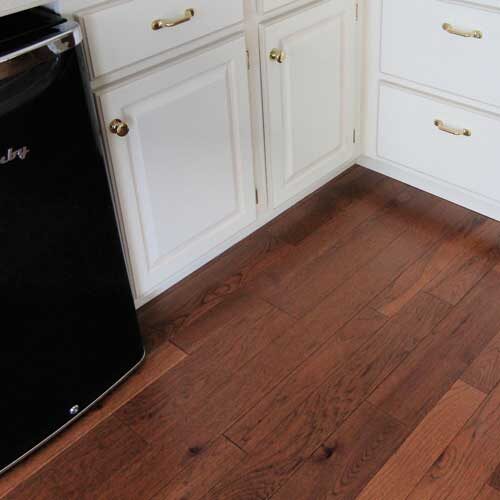
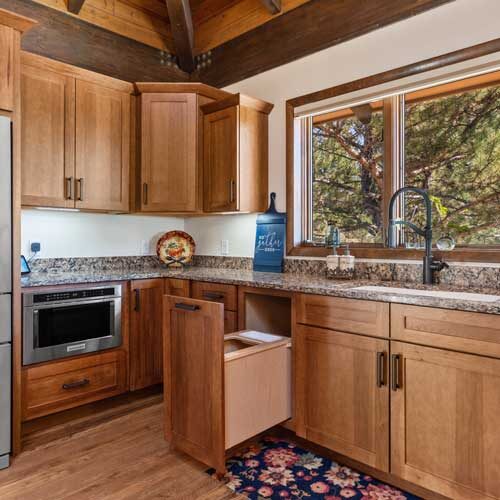
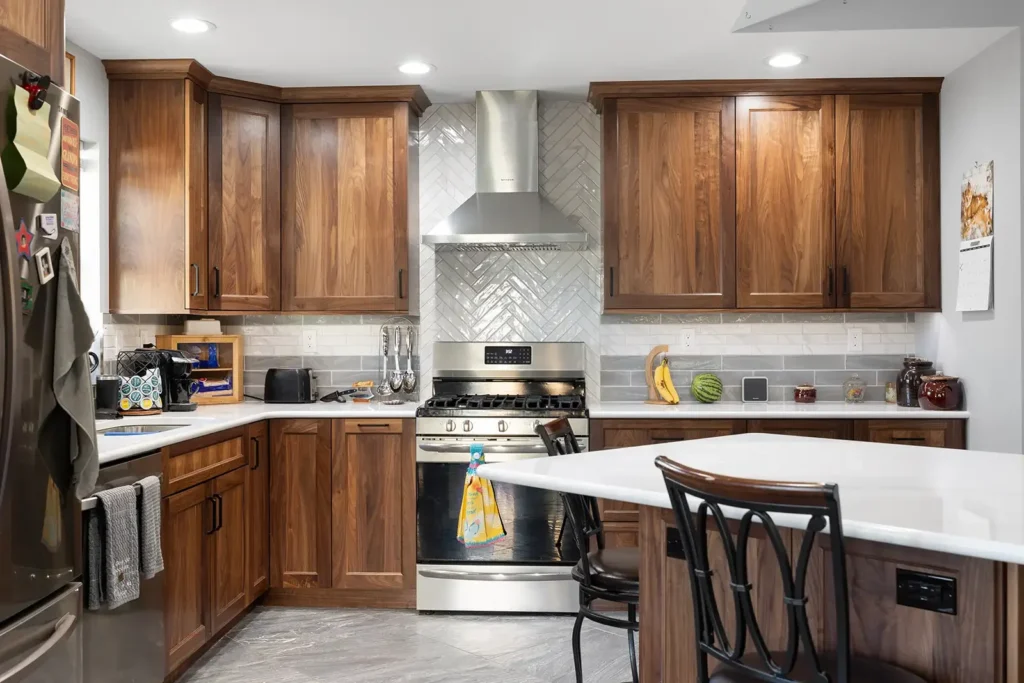
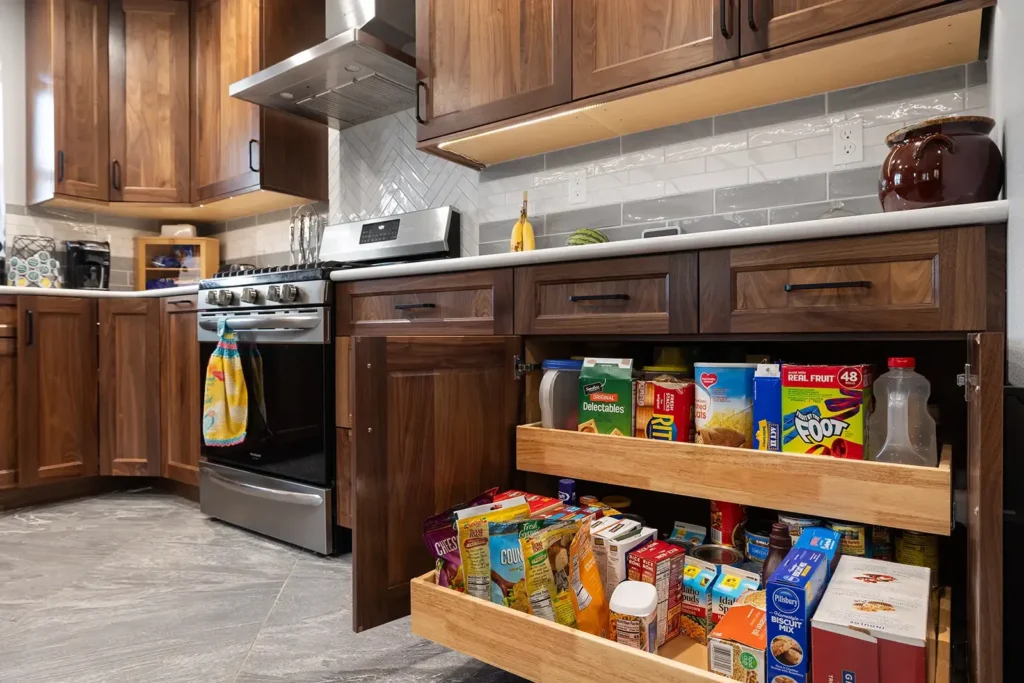
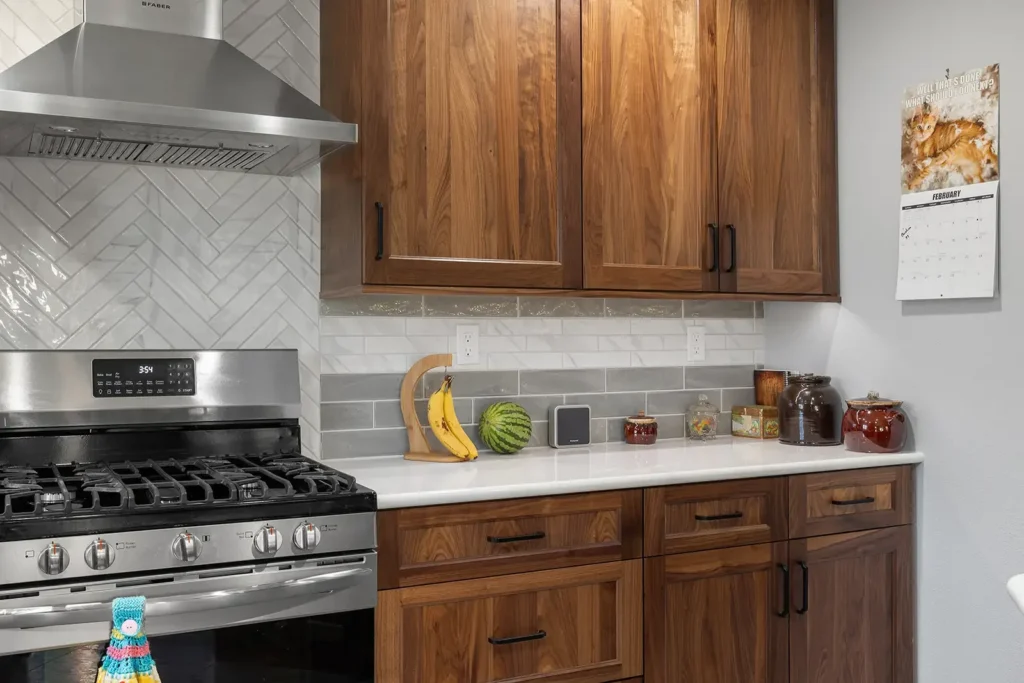
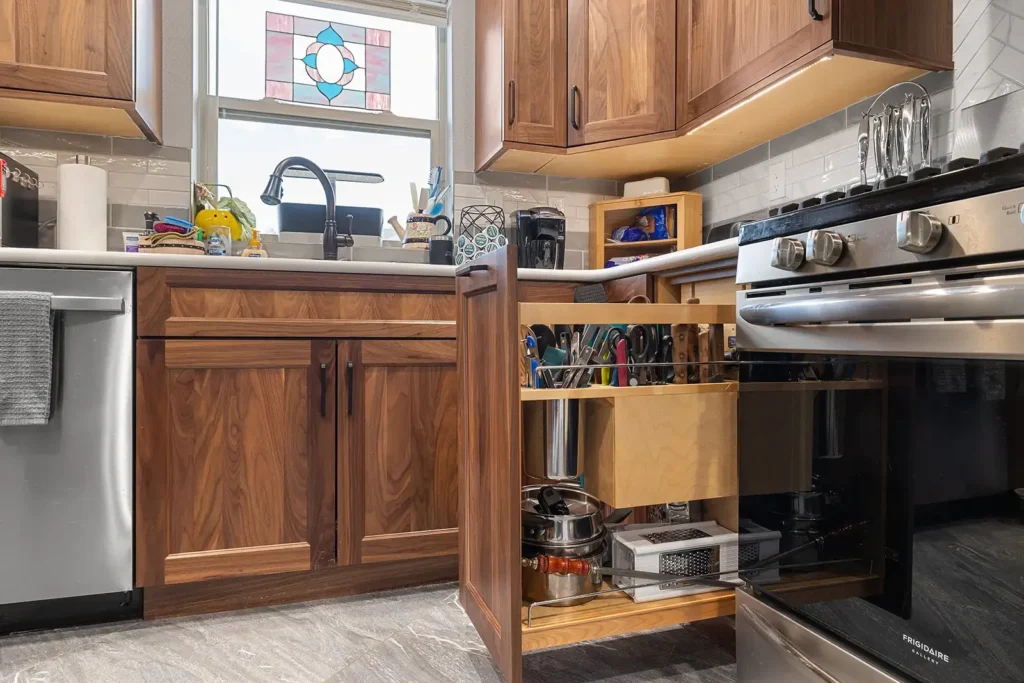
Durability and cleanability sit alongside aesthetics in the kitchen. Tile and LVP are the practical choices. Match your floor undertone to your cabinet finish and countertop color first, then choose wall color last. A kitchen has too many fixed surfaces to coordinate paint around a floor-and-cabinet combination that has not yet been established.
Bathroom
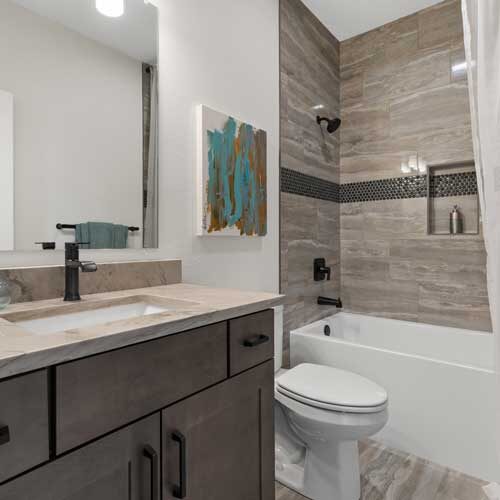
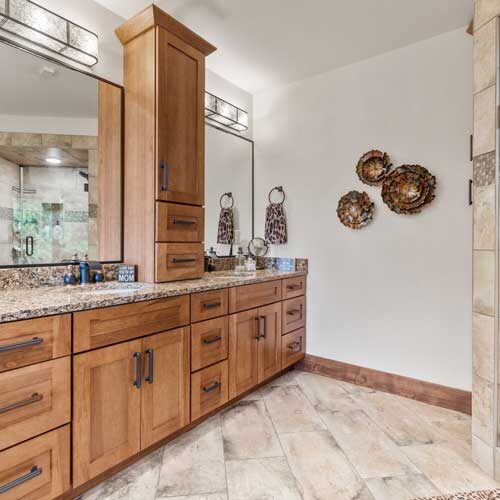
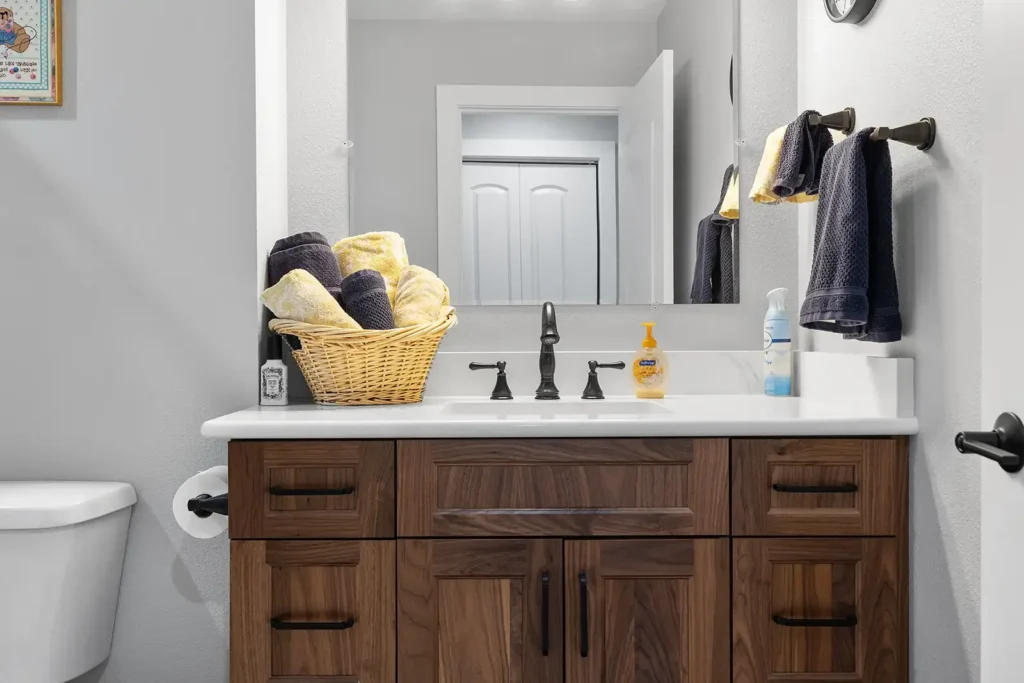
Tile and grout are the design anchor in the bathroom. Choose wall color after your tile is set. In small Billings bathrooms, lighter floors and walls create the illusion of more space. A bold, moody wall (deep green, navy) works in a larger primary bath where the tile does not visually dominate.
Have questions about which flooring works best for a specific room? Schedule a free in-home consultation with a Pierce Flooring project manager — we come to you.
What Does New Flooring Actually Cost in Billings?
Pricing for flooring installed in Billings follows regional labor and materials rates. The table below reflects current local market ranges and should be used as a planning guide. Your actual quote will depend on subfloor condition, room complexity, and product selection.
| Flooring Type | Material (per sq ft) | Labor (per sq ft) | Total Installed | Billings Notes |
|---|---|---|---|---|
| Carpet (mid-grade) | $2.00–$5.00 | $1.00–$2.00 | $3.00–$7.00 | Preferred for bedrooms; warm underfoot in cold Montana winters |
| Luxury Vinyl Plank | $2.50–$6.00 | $1.50–$3.00 | $4.00–$9.00 | Waterproof-core recommended for basements over concrete slabs |
| Engineered Hardwood | $4.00–$10.00 | $3.00–$5.00 | $7.00–$15.00 | Acclimate on-site 48–72 hrs; humidity swings expand/contract wood |
| Solid Hardwood | $5.00–$12.00 | $4.00–$6.00 | $9.00–$18.00 | Not recommended for below-grade or high-moisture Billings basements |
| Porcelain / Ceramic Tile | $2.00–$8.00 | $4.00–$8.00 | $6.00–$16.00 | Grout selection critical; freeze-thaw cycling affects grout longevity |
| Waterproof Laminate | $2.00–$5.00 | $1.50–$2.50 | $3.50–$7.50 | Wipe seam spills promptly; edge moisture can reach core even in waterproof products |
Ranges sourced from regional contractor and dealer data for the Billings, MT market, March 2026. Prices vary with product grade, subfloor complexity, and seasonal labor availability. Always request a site-specific quote.
Subfloor condition is the single largest price variable in Billings. Many homes in older neighborhoods have subfloor moisture issues from freeze-thaw cycling, and leveling work adds $1.50–$4.00 per square foot before any material is installed. Get a full subfloor assessment before signing any installation quote.
Flexible financing options are available through Pierce Flooring, including zero-interest programs on approved credit. The floor that fits your design does not have to wait for your renovation budget to catch up.
Want a quote built around your actual space? Visit our showroom this week at 2950 King Ave West.
How to Choose a Flooring Installer in Billings
The right flooring-and-paint pairing cannot compensate for a bad installation. Here is how to vet any flooring contractor in the Billings area before you sign.
Ask about subfloor assessment before they price anything. A reputable installer will not give you a firm quote without seeing the subfloor. If someone quotes you over the phone without a site visit, that is a red flag.
Ask what a moisture test involves. In Billings, moisture readings are not optional. Our January-to-August humidity swing of 40–76% creates subfloor movement risk, especially in older homes and in basements over concrete slabs. A proper moisture assessment uses a moisture meter, not a visual inspection. Skipping this step is the most common installer shortcut and the leading cause of floor failures within the first year.
Look for vague warranty language. Manufacturer warranties and installation warranties are different things. Make sure any quote you receive specifies both. At Pierce Flooring, the Pierce Promise covers installation errors for one year and provides manufacturer warranty support for the life of the product. Any contractor who cannot separate these two warranties clearly in their paperwork should be asked to do so in writing.
Verify that installers are licensed and insured. Montana does not have a statewide flooring-specific license board, but any professional installation contractor should carry general liability insurance and workers’ compensation coverage. Ask for certificates before work begins.
Pierce Flooring has served Montana since 1924 — over 100 years of flooring experience across every climate zone this state offers. That longevity matters when national chains come and go and you need a company that will still be here when you have a warranty question five years from now. We operate four design center locations in Billings, Bozeman, Missoula, and Ennis. Our free in-home measurement service is handled by trained project managers, not salespeople — there to assess your space accurately, not to upsell you on product you do not need.
“We just remodeled our entire house with Pierce Flooring. Angie was able to help choose the right cabinets for us and gave us many helpful tips to organize our kitchen. Julene helped us choose flooring and carpeting that matched our tastes perfectly. Every installation team was courteous, competent, and did a great job from start to finish. If you have a project to do we highly recommend Pierce Flooring!”Brenda D., Billings — Full Home Remodel, Flooring and Cabinetry
Frequently Asked Questions About Matching Flooring and Paint Colors
Should my floor be darker or lighter than my walls?
Either approach works, but they create different effects. Darker floors with lighter walls give a clean, airy look that suits open-concept layouts and smaller rooms. Lighter floors with darker walls create intimacy and drama, well suited for dining rooms and bedrooms. The 2026 trend toward tonal layering uses similar values for both with subtle variation in texture and finish rather than relying on dark-versus-light contrast. The most important factor is your undertone match, not your value contrast.
What is the best wall color to pair with LVP in a Billings home with a lot of natural light?
Warm greige (a beige-gray blend with yellow rather than blue undertones) is the most versatile and locally proven choice. In Billings high-light environments, cool grays on the wall combine with even slightly cool-toned LVP to create a room that feels cold rather than contemporary. A soft, warm greige reads as balanced, modern, and welcoming across our wide range of lighting conditions throughout the day. If you want something with more personality, warm sage green has emerged strongly in 2026 as a complement to natural oak-look LVP.
How long does the full process take, from consultation to installation?
Plan for two to four weeks for a typical residential project. The process at Pierce Flooring starts with an in-home measurement visit, then product selection at the showroom, then order confirmation and scheduling. In-stock products can often be installed within one to two weeks of measurement. Custom or special-order items may take four to six weeks. Your project manager will give you a specific timeline after the initial consultation.
How do I maintain my floor so the color stays accurate over time?
For hardwood and engineered wood, control indoor humidity. The National Wood Flooring Association recommends maintaining 35–55% relative humidity for most hardwood installations. In a Billings winter, indoor RH can drop well below that threshold without a whole-house humidifier, leading to gapping, face-checking, and cupping. Run a humidifier in winter and ensure adequate ventilation in late spring as outdoor humidity climbs. For LVP, clean with a pH-neutral cleaner and a damp mop — avoid steam mops entirely, as steam penetrates locking joints, swells the core, and voids the manufacturer warranty on most products. For tile with sanded or unsanded cement grout, apply a penetrating sealer annually. Epoxy grout requires no sealing — ask your installer what type was used. For waterproof laminate, wipe spills promptly and avoid wet-mopping near transitions, as standing water at seams can reach the core.
Is it true you should always choose flooring before paint?
Yes, in most cases. Paint comes in thousands of colors and can be custom-mixed to match any reference point. Flooring comes in a fixed set of options and is significantly harder and more expensive to replace. Choosing flooring first gives you a stable anchor and makes the paint decision straightforward. The one exception is if you have an existing fixed element — kitchen cabinetry or a fireplace surround, for example — that is not being changed. In that case, start with the fixed element, choose flooring second, and paint last.
Ready to Get Your Floor and Paint Working Together?
Color matching flooring and paint is one of those decisions that feels overwhelming at the start but becomes clear once you see your actual options together in your actual space. Bringing samples home, testing them in your specific light conditions, and working through the undertone logic takes the guesswork out of it.
The Pierce Flooring showroom at 2950 King Ave West carries an extensive selection of hardwood, engineered hardwood, LVP, laminate, tile, and area rugs — all available as samples to take home today. Our design consultants are here to help you coordinate your floor, your walls, and your entire space, not just sell you a product. Before choosing an area rug to pull the room together, read our area rug placement guide to make sure your flooring and wall tones are set first.
Billings homeowners searching for a flooring store nearby, hardwood flooring installation in Billings, or LVP installation in Billings, MT will find that Pierce Flooring offers something no national chain can match: over a century of Montana-specific knowledge, a showroom stocked with samples you can take home today, and a project management team that treats your renovation like it matters. Whether you are remodeling a home in the Heights, updating a kitchen in Lockwood, or building new on the south end of town, we know this market because we have been in it longer than anyone.
Stop in any day this week — no appointment needed for showroom visits. To schedule a free in-home measurement and consultation, call (406) 652-4666. Flexible financing options are available, including zero-interest programs on approved credit, so the floor you actually want does not have to wait.
Pierce Flooring & Cabinet Design Center — Billings 2950 King Ave West, Billings, MT 59102
(406) 652-4666 | pierceflooring.com
Pierce Flooring & Cabinet Design Center has served Montana since 1924. Family-owned, locally operated, and a proud member of the National Floorcovering Alliance.
- Hardwood
- |
- Luxury Vinyl Plank
- |
- Tile & Stone
You Might Also Like
-
- Flooring
October 7, 2026
Commercial Flooring in Billings: What Property Managers and Business Owners Need to Know
-
- Flooring
September 16, 2026
Flooring for New Homes in Ennis and the Madison Valley: What Builders and Homeowners Need to Know
-
- Flooring
August 25, 2026
What Does Waterproof Flooring Actually Mean? A Montana Homeowner’s Guide to LVP Claims
Ready to Transform Your Home?
Contact Us Today to Get Started on Your Dream Space